A dataset of radar-recorded heart sounds and vital signs including synchronised reference sensor signals
Published in Research Data

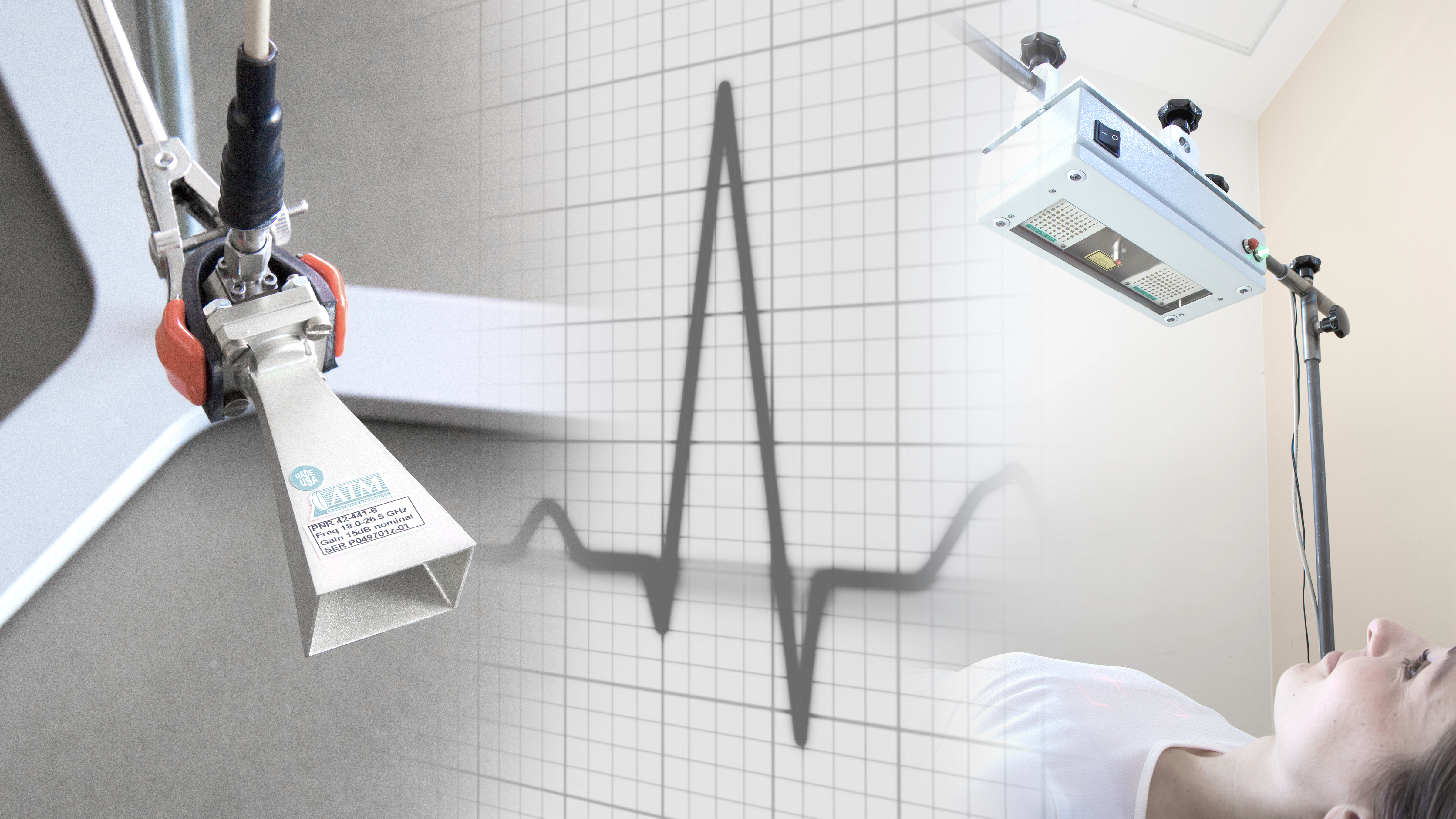

The most common devices, which are used in a clinical environment to monitor vital signs such as heart rate and respiration rate, are the electrocardiograph (ECG) or the photoplethysmograph (PPG). However, all current devices have the common disadvantage that they need to be in permanent contact with the person. Apart from severely restricting the independence and mobility, irritation by the electrodes might lead to undue distress and even increase the symptom burden. Furthermore, the manipulation of the probes might lead to false alarms, which in turn leads to a decreased responsiveness of medical personnel to automated alarms, a phenomenon that is called alarm fatigue. Nonetheless, continuous monitoring is essential to detect anomalies and diseases.
In recent years, radar systems have been studied extensively to overcome the aforementioned disadvantages. They have proven to be capable to measure human vital signs from a certain distance without the need to be in contact with the person. Patients in a clinical but also domestic environment could greatly benefit from such a technology since it would allow for a burden-free but still continuous monitoring.
In our research project GUARDIAN, which is supported by the Federal Ministry of Education and Research in Germany, we want to research the non-contact detection of respiration and heartbeat of critically ill persons in need of care over short and medium distances by means of radar. The project aims to develop a compact, mobile and cost-effective module to improve the quality of life of persons in need of care, relieve the burden on nursing staff, and increase diagnostic certainty by means of permanent recording and automated evaluation and documentation in the hospital information system.
To reach our goal, we teamed up with several partners, including the renowned university hospital in Erlangen. By combining our technical and their medical knowledge and through finding a common language, we are not only discovering new and exciting findings but are also making great progress towards a real medical product which could potentially be used in hospitals and domestic settings and facilitate rehabilitation, recovery, and monitoring of patients
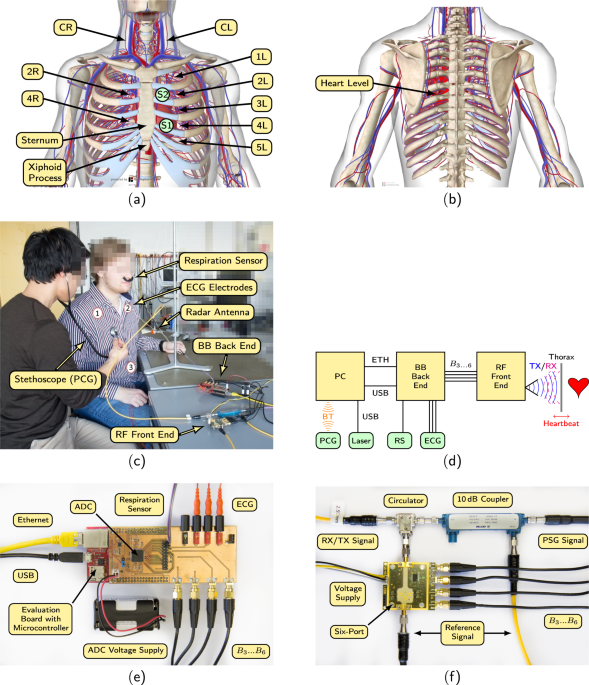
In an early stage of our project, we recorded synchronised radar and reference sensor signals from 11 test subjects. When looking through the data, we detected a high-frequency component in the radar signal that had the same frequency as the pulse wave signal but had a completely different morphology. We found out that we were able to record the heart sounds, an exciting discovery which we shared on Scientific Reports (https://www.nature.com/articles/s41598-018-29984-5). We now want to share our data with the community to enable other researchers to have a look on this exciting research area (https://www.nature.com/articles/s41597-020-0390-1). Until now, there are no publicly available data from this domain. This way, it is often difficult to compare results from different publications, e.g., when comparing the performance of algorithms for heartbeat detection.
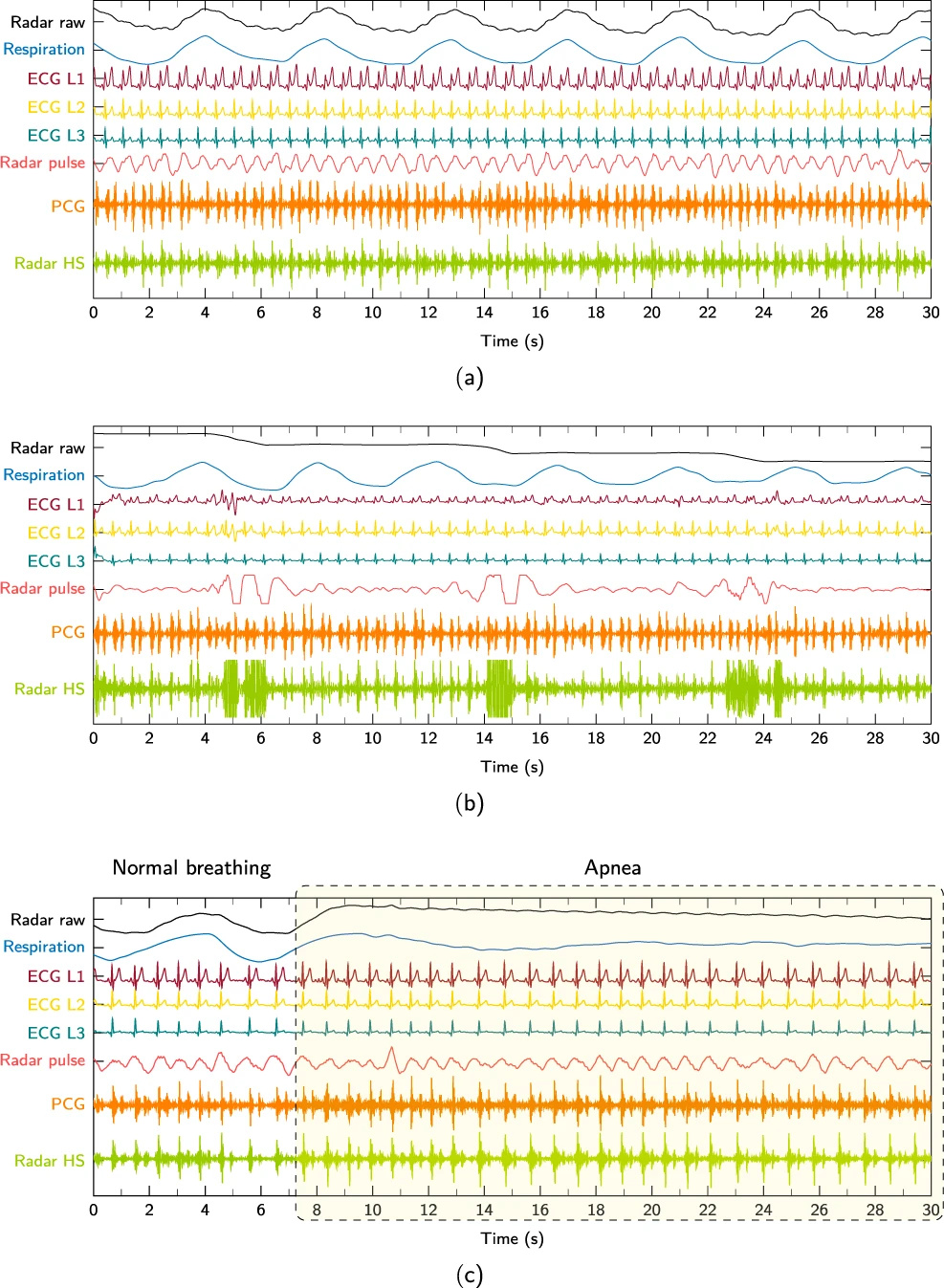
Exemplary radar and reference signals of different scenarios (default, distance variation, apnea)
We also plan to publish the data from our upcoming stages of the project so that the community can participate in the discovery of new physiological phenomena. These data will comprise the phase 1 (30 test subjects with synchronised radar and reference signals) and phase 2 (long-term patient data from the hospital) data. We hope that our data can be useful to other researchers and also encourage them to share their information. We always welcome feedback from any users!
Follow the Topic
-
Scientific Data
A peer-reviewed, open-access journal for descriptions of datasets, and research that advances the sharing and reuse of scientific data.

Related Collections
With Collections, you can get published faster and increase your visibility.
10 years of the FAIR principles
Publishing Model: Open Access
Deadline: Nov 14, 2026
Data to support cancer treatment, diagnosis, and disease understanding
Publishing Model: Open Access
Deadline: Jan 02, 2027