A deep dive into herbal extraction: Techniques, trends, and technological advancements
Published in Bioengineering & Biotechnology, Chemistry, and Research Data

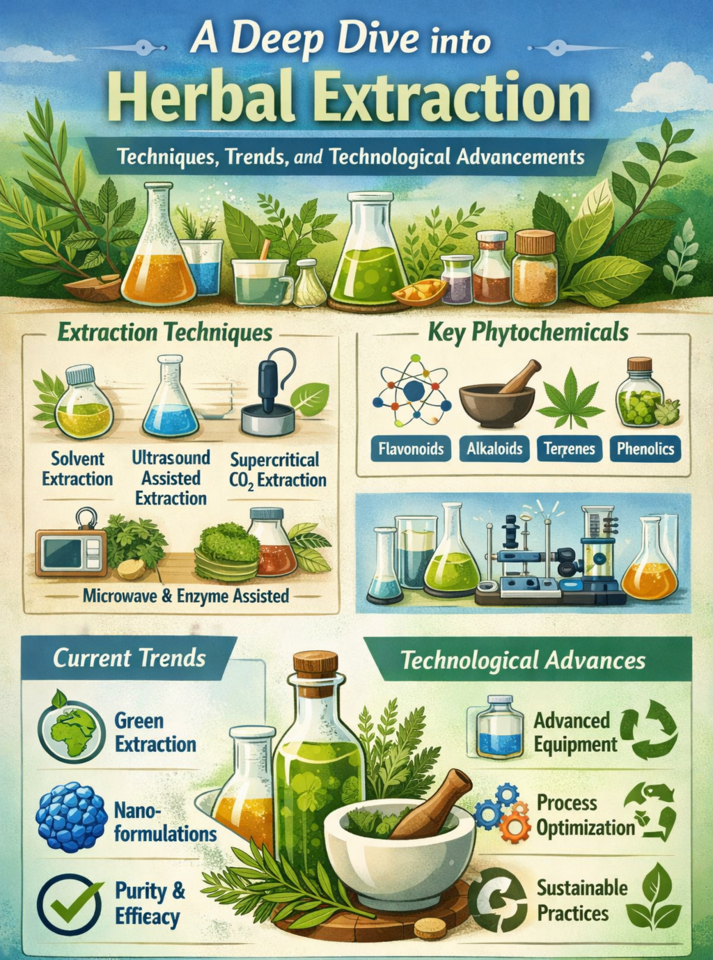
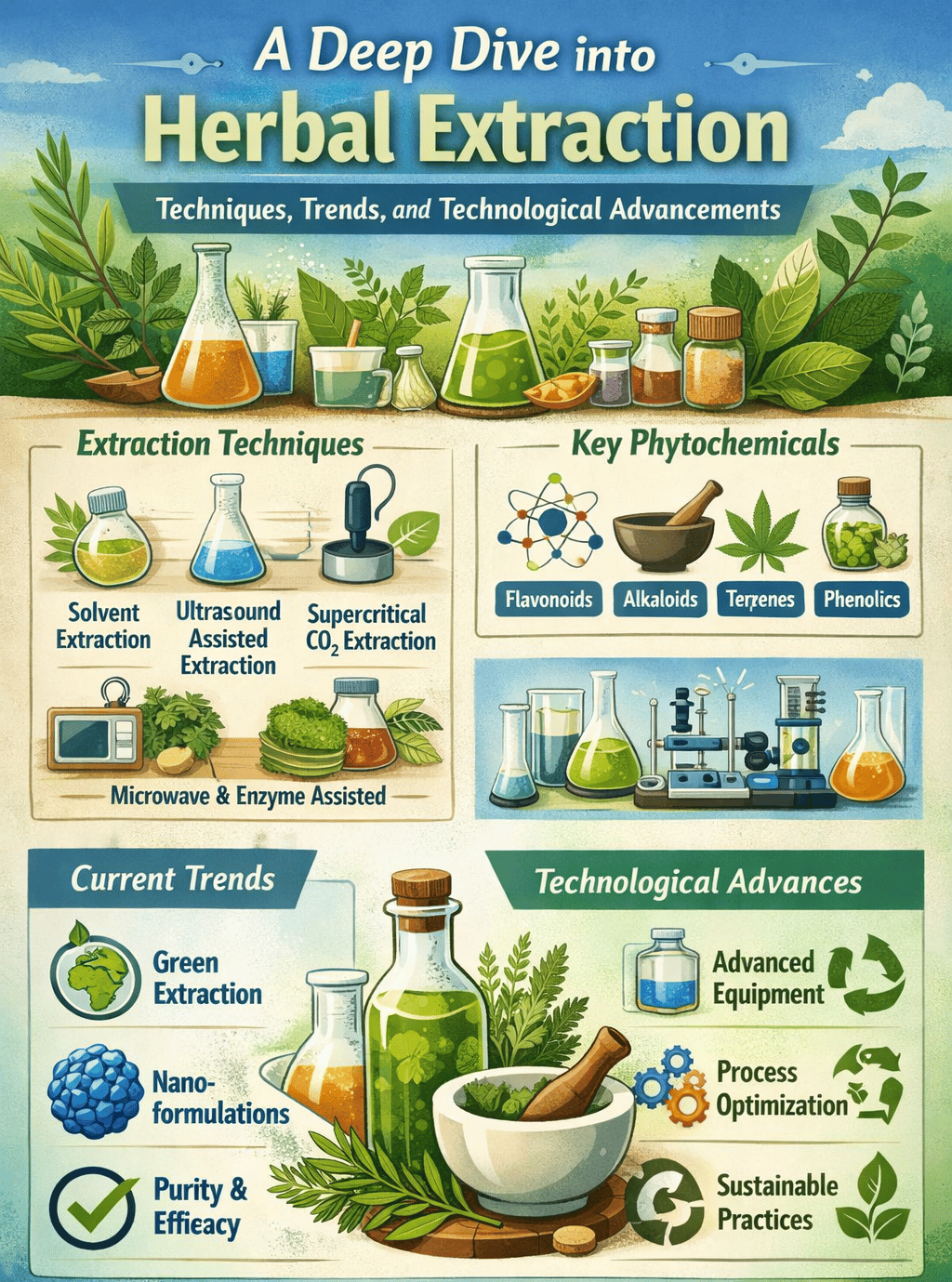
When I first stepped into the world of herbal drug research, I believed extraction was a straightforward step—grind the plant, add a solvent, and collect the extract. Years of research, failed experiments, unstable extracts, and unexpected results quickly taught me otherwise. Extraction is not just a technical step; it is the heart of herbal medicine, shaping efficacy, safety, and reproducibility.
This blog post reflects my journey through herbal extraction research and why I believe this field urgently needs a more unified, strategic approach.
Why Extraction Matters More Than We Think
Extraction determines what actually reaches the patient or consumer. A medicinal plant may be rich in bioactive compounds, but without the right extraction strategy, those compounds may never make it into the final formulation—or worse, may degrade during processing.
In both pharmaceutical and nutraceutical industries, extraction is increasingly viewed as a precision process, rather than a routine laboratory step. Yet, research in this area remains surprisingly fragmented.
From Leaves to Liquids: The Often-Ignored Early Steps
One of the biggest gaps I noticed in the literature is how casually early processing steps are treated.
Drying, particle size reduction, filtration, and concentration are often mentioned briefly—if at all. In practice, these steps can dramatically affect:
- Extraction yield
- Chemical stability
- Oxidation and enzymatic degradation
- Batch-to-batch reproducibility
I have personally seen thermolabile compounds vanish simply because drying temperatures were too high or grinding generated excess heat. These “minor” steps deserve far more attention than they currently receive.
Solvent Choice: More Than Just Polarity
Traditionally, solvents like water, methanol, ethanol, and hydroalcoholic mixtures dominate herbal extraction. While effective, solvent choice is rarely guided by a holistic framework that considers:
- Compound polarity and matrix compatibility
- Toxicological safety and GRAS status
- Environmental impact and sustainability
- Cost and industrial scalability
Emerging alternatives, such as natural deep eutectic solvents (NADES), have been a turning point in my thinking. These solvents, often derived from natural metabolites, offer exciting possibilities for green extraction—yet they remain underexplored, especially in standardized, comparative studies.
Traditional vs. Modern Techniques: A False Dichotomy?
One of the most rewarding realizations in my research journey is that traditional and modern extraction methods are not competitors—they are collaborators.
- Infusion and decoction continue to offer simplicity, cultural relevance, and low energy input.
- Modern techniques like pressurized liquid extraction (PLE), microwave-assisted extraction (MAE), and ultrasound-assisted extraction (UAE) provide speed, precision, and improved reproducibility.
Rather than replacing traditional approaches, modern technologies allow us to refine and validate them, ensuring better control over temperature, pressure, and solvent penetration.
The Power of Combination: Methods and Extracts
Some of the most promising results I’ve encountered came from combining approaches:
- Sequential extraction using solvents of increasing polarity
- Hybrid techniques (e.g., ultrasound followed by solvent extraction)
- Blended extracts from multiple plants to enhance synergistic effects
Yet, synergy is often assumed rather than systematically evaluated. Protecting oxidation-sensitive or thermolabile compounds while preserving multi-component interactions remains a major challenge—and opportunity.
The Missing Links in Current Research
Despite the growing volume of publications, several critical gaps persist:
- No standardized criteria linking plant matrix properties to extraction method selection
- Limited side-by-side comparisons for specific phytochemical classes
- Minimal optimization for compound stability during extraction
- Little integration of scalability, energy efficiency, and waste minimization
- Sparse discussion of regulatory and commercialization constraints
These gaps make it difficult for researchers and industry professionals to translate laboratory findings into real-world applications.
What Patents Are Telling Us
Interestingly, patent databases paint a different picture from academic literature. They reveal rapid growth in:
- Novel solvent systems
- Assisted extraction technologies
- Process intensification and hybrid methods
However, these innovations are rarely synthesized into broader trend analyses. By studying patents more systematically, we can better identify where the field is heading—and where opportunities lie.
Looking Ahead: Smarter, Greener Extraction
The future of herbal extraction lies in integration.
Emerging tools such as:
- AI-driven process optimization
- Microfluidic extraction platforms
- Carbon-neutral and waste-minimized processes
are still in their infancy within herbal research. Yet, they hold immense promise for creating extraction systems that are not only effective but also sustainable and regulatory-ready.
Final Reflections
For me, herbal extraction has evolved from a laboratory technique into a strategic science—one that connects chemistry, biology, engineering, sustainability, and traditional knowledge.
By bridging fragmented research, embracing both old and new technologies, and focusing on process optimization from leaf to final extract, we can unlock the true potential of medicinal plants.
I hope this perspective resonates with fellow researchers, early-career scientists, and practitioners navigating the complex—but deeply rewarding—world of herbal medicine.
Follow the Topic
-
Nature Methods

This journal is a forum for the publication of novel methods and significant improvements to tried-and-tested basic research techniques in the life sciences.
-
Nature Reviews Gastroenterology & Hepatology

The basic, translational and clinical content in this journal is written by internationally renowned basic and clinical academics and researchers and targeted towards readers in the biological and medical sciences, from postgraduate level upwards.
-
BMC Complementary Medicine and Therapies

An open access journal publishing original peer-reviewed research articles on interventions and resources that complement or replace conventional therapies, with a specific emphasis on research that explores the biological mechanisms of action, efficacy, safety, costs and/or implementation.
-
Chinese Medicine

-
Journal of Ethnobiology and Ethnomedicine

This journal publishes original research focusing on cultural perceptions of nature and of human and animal health. It invites research articles, reviews and commentaries concerning the investigations of the inextricable links between human societies and nature, food, and health.
-
Dr. Sulaiman Al Habib Medical Journal

Introducing the Palgrave Macmillan Campaign for the Humanities
At Palgrave Macmillan we publish cutting-edge humanities research that has real-world impact. This research community brings together the voices of our authors and editorial team to highlight and publicize the value of the humanities and humanities research in our world today.
Continue reading announcementRelated Collections
With Collections, you can get published faster and increase your visibility.
Natural therapies for menopause symptom management
BMC Complementary Medicine and Therapies is calling for submissions to our Collection on Natural therapies for menopause symptom management.
The menopausal transition marks a significant phase in a woman's life, characterized by various physiological and psychological changes. Symptoms such as hot flashes, mood swings, and sleep disorders can profoundly affect quality of life. With increasing interest in non-hormonal and holistic approaches, many women are exploring natural therapies to manage menopausal symptoms.
This Collection seeks to deepen our understanding of natural therapies in menopause care, integrating traditional practices with modern research insights. The topics of interest include the use of herbal medicine, such as phytoestrogens and adaptogens, to support hormonal balance; mind-body practices like yoga, meditation, and acupuncture for symptom relief; and dietary strategies to improve bone health, cardiovascular health, and overall well-being. The Collection also aims to address the psychosocial aspects of menopause, exploring how natural therapies can enhance emotional resilience and mental health during this transitional phase.
Continued research in this area could lead to the development of standardized protocols for natural therapies, allowing healthcare providers to better support their patients through the menopausal transition.
All manuscripts submitted to this journal, including those submitted to collections and special issues, are assessed in line with our editorial policies and the journal’s peer review process. Reviewers and editors are required to declare competing interests and can be excluded from the peer review process if a competing interest exists.
All manuscripts submitted to this journal, including those submitted to collections and special issues, are assessed in line with our editorial policies and the journal’s peer-review process. Reviewers and editors are required to declare competing interests and can be excluded from the peer review process if a competing interest exists.
Publishing Model: Open Access
Deadline: May 28, 2026
Integrative pediatric medicine
BMC Complementary Medicine and Therapies is calling for submissions to our Collection, Integrative pediatric medicine
Integrative pediatric medicine is an evolving field that combines conventional medical practices with complementary therapies to enhance the health and well-being of children. This approach recognizes the unique physical, emotional, and developmental needs of pediatric patients and seeks to provide holistic care that addresses both the body and mind. By incorporating a variety of therapeutic modalities, such as nutritional interventions, mind-body therapies, and herbal medicine, integrative pediatric medicine aims to create personalized treatment plans that foster optimal health outcomes for children.
The significance of this field is underscored by a growing body of research demonstrating the efficacy of complementary therapies in managing pediatric conditions. Advances in this area have shown that therapies like acupuncture, yoga, and mindfulness can effectively alleviate symptoms of anxiety, pain, and chronic illnesses in children. Furthermore, integrative approaches have been linked to improved patient satisfaction and engagement in care, highlighting their potential to transform traditional pediatric healthcare practices.
Continued research in integrative pediatric medicine could pave the way for innovative treatment strategies that better address the complex health needs of children. As we deepen our understanding of how complementary therapies interact with conventional treatments, there is potential for developing comprehensive care models that not only enhance physical health but also promote emotional and psychological well-being in pediatric populations.
We invite submissions on topics including, but not limited to:
- Complementary therapies for pediatric patients
- Mind-body interventions in pediatric care
- Nutritional interventions for children's health
- Yoga therapy for pediatric conditions
- Herbal medicine in pediatric practice
This Collection supports and amplifies research related to SDG 3 (Good Health and Well-being).
All manuscripts submitted to this journal, including those submitted to collections and special issues, are assessed in line with our editorial policies and the journal’s peer-review process. Reviewers and editors are required to declare competing interests and can be excluded from the peer review process if a competing interest exists.
Publishing Model: Open Access
Deadline: Sep 15, 2026
Please sign in or register for FREE
If you are a registered user on Research Communities by Springer Nature, please sign in