A New Global Method for Measuring Food Self-Sufficiency: Introducing SSFSSR
Published in Agricultural & Food Science
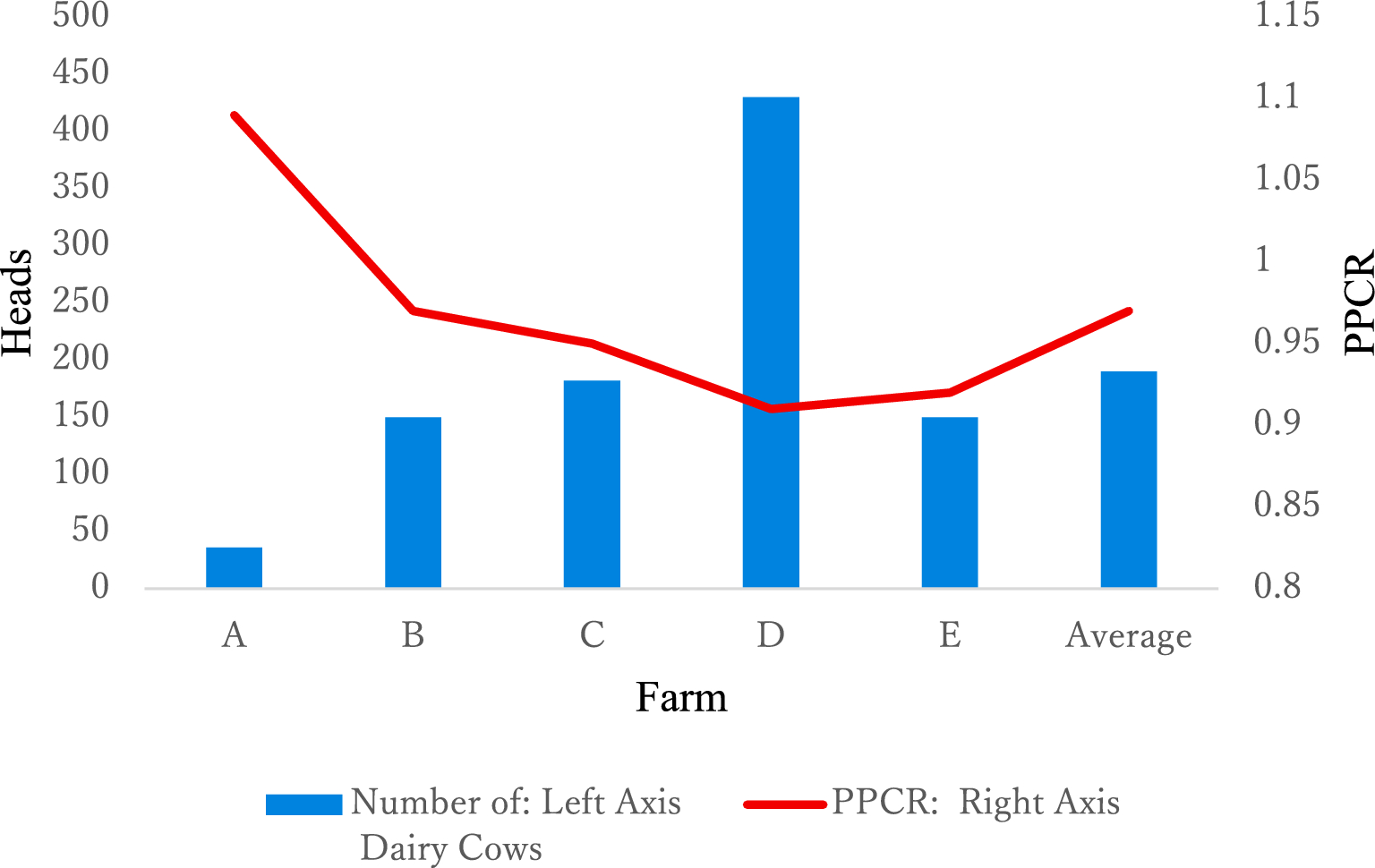

For many years, there has been no unified global method to measure national food self-sufficiency using standardized datasets and a common formula. Existing indicators—such as the conventional cereal-based self-sufficiency ratio—are limited in scope and fail to capture modern food systems.
I developed a new metric, the Supply-Side Food Self-Sufficiency Ratio -Supply side Food Self-sufficiency Ratio (SSFSSR), which was accepted by Agriculture and Food Security (BMC, Q1) in August 2025.
SSFSSR uses FAOSTAT data to calculate annual food self-sufficiency for 64 items, including cereals, livestock products, vegetables, fruits, edible oils, sugar, and aquatic products.
Two major contributions of this study are:
-
Development of the Primary Product Conversion Rate (PPCR), enabling the conversion of secondary products into primary equivalents.
-
A new finding that lowering PPCR increases a country's food self-sufficiency ratio without increasing actual food production.
This method provides a globally standardized and reproducible approach for policymakers, researchers, and international organizations concerned with food security.
Preprint:
Zenodo: https://doi.org/10.5281/zenodo.13740850
Researcher Square: https://doi.org/10.21203/rs.3.rs-5013312/v2
SSRN: http://dx.doi.org/10.2139/ssrn.4943561
agriRxiv: https://doi.org/10.31220/agriRxiv.2024.00274
Published (Agriculture & Food Security):
https://doi.org/10.1186/s40066-025-00570-z

I am Professor Emeritus at Aichi University, Japan, specializing in Chinese agricultural economics, food security, and land systems. I developed the Supply-Side Food Self-Sufficiency Ratio (SSFSSR) and Primary Product Conversion Rate (PPCR), innovative methods for measuring global food security. My research combines historical and empirical approaches, covering Chinese land regimes, rural economy, and international food balance. I am committed to advancing academic and policy discussions on sustainable food systems.
Follow the Topic
-
Agriculture & Food Security
This is a peer-reviewed open access journal that addresses the challenge of food security.

Related Collections
With Collections, you can get published faster and increase your visibility.
Strategies for Balancing Security and Sustainability of Agri-Food Systems
This collection explores the complex interplay between agri-tech innovation, sustainable resource management, market participation, and multi-level governance frameworks in shaping resilient food systems. It aims to bring together interdisciplinary research examining how regions such as the African Union and the European Union are navigating the transition toward sustainable, digitally enabled agri-food sectors. Central to this collection is the question of how nations and agricultural stakeholders can balance resource efficiency with productivity gains while maintaining environmental integrity and social equity. Emerging technologies, ranging from precision agriculture and biotechnology to digital supply-chain tools, are promising, yet their adoption requires careful consideration of accessibility, scalability, and regional policy environments. The collection also emphasizes the importance of food preparedness, encompassing early-warning systems, risk-mitigation strategies, and adaptive governance structures capable of responding to shocks such as supply disruptions, extreme weather events, and geopolitical pressures. Topics of interest include, but are not limited to:
- Agri-tech innovation for resilient and climate-smart agriculture
- Comparative policy frameworks: African Union and European Union approaches to food security
- Resource efficiency in agri-food systems: water, energy, soil, and biodiversity
- Digital transformation and precision technologies in smallholder and industrial farming
- Food preparedness and early-warning systems for supply-chain disruption
- Governance, regulation, and cross-regional cooperation in sustainable agri-food productivity
- Socio-economic implications of technology adoption and market participation in agriculture
- Integrating circular economy principles into agri-food value chains
- Risk assessment and resilience-building for environmental and market shocks
This Collection supports and amplifies research related to SDG 15: Life on Land.
All submissions in this Collection undergo the journal’s standard peer review process. Similarly, all manuscripts authored by a Guest Editor(s) will be handled by the Editor-in-Chief. As an open access publication, this journal levies an article processing fee (details here). We recognize that many key stakeholders may not have access to such resources and are committed to supporting participation in this issue wherever resources are a barrier. For more information about what support may be available, please visit OA funding and support, or email OAfundingpolicy@springernature.com or the Editor-in-Chief.
Publishing Model: Open Access
Deadline: Jan 29, 2027