Flying on Mars starts with understanding Mars
Published in Astronomy, Electrical & Electronic Engineering, and Mathematical & Computational Engineering Applications
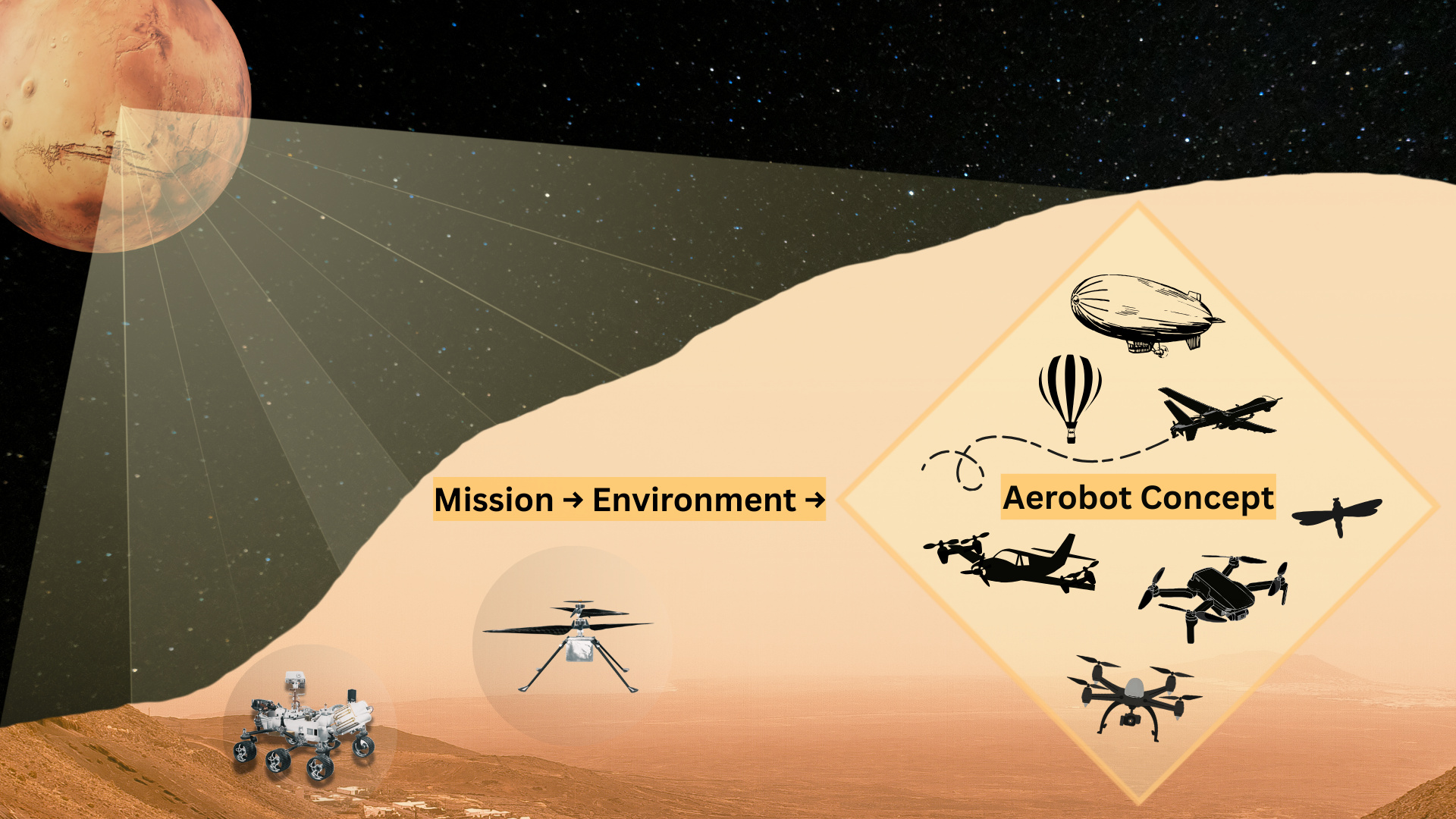

Mars has no shortage of aircraft ideas.
Over the years, researchers have proposed helicopters, fixed-wing aircraft, balloons, gliders, hoppers and hybrid concepts for exploring the red planet. When I began my PhD, I was also drawn to the technical challenge of designing an aerial robot for Mars. But as I went deeper into the literature, I found myself asking a different kind of question: which of these ideas actually make sense, where, and why?
That question became my way of putting some philosophy back into the Doctor of Philosophy.
From flying machines to planetary systems
NASA’s Ingenuity helicopter proved that powered flight on another planet is possible. That achievement changed the conversation around Mars exploration. But it also raised a larger question: what comes next?
Future Martian aerobots will need to do more than demonstrate flight. They may need to survey large regions, scout landing sites, reach cliffs and canyons, investigate difficult terrains, support rovers, and eventually assist human exploration. To do that, they cannot be designed only as aircraft. They need to be designed as planetary exploration systems.
That shift in thinking became the starting point for my Perspective article, “Mars planetary insights and design framework for future in-situ aerial robotic missions,” published in Communications Engineering.
Rather than beginning only with the aircraft, I wanted to begin with Mars itself.
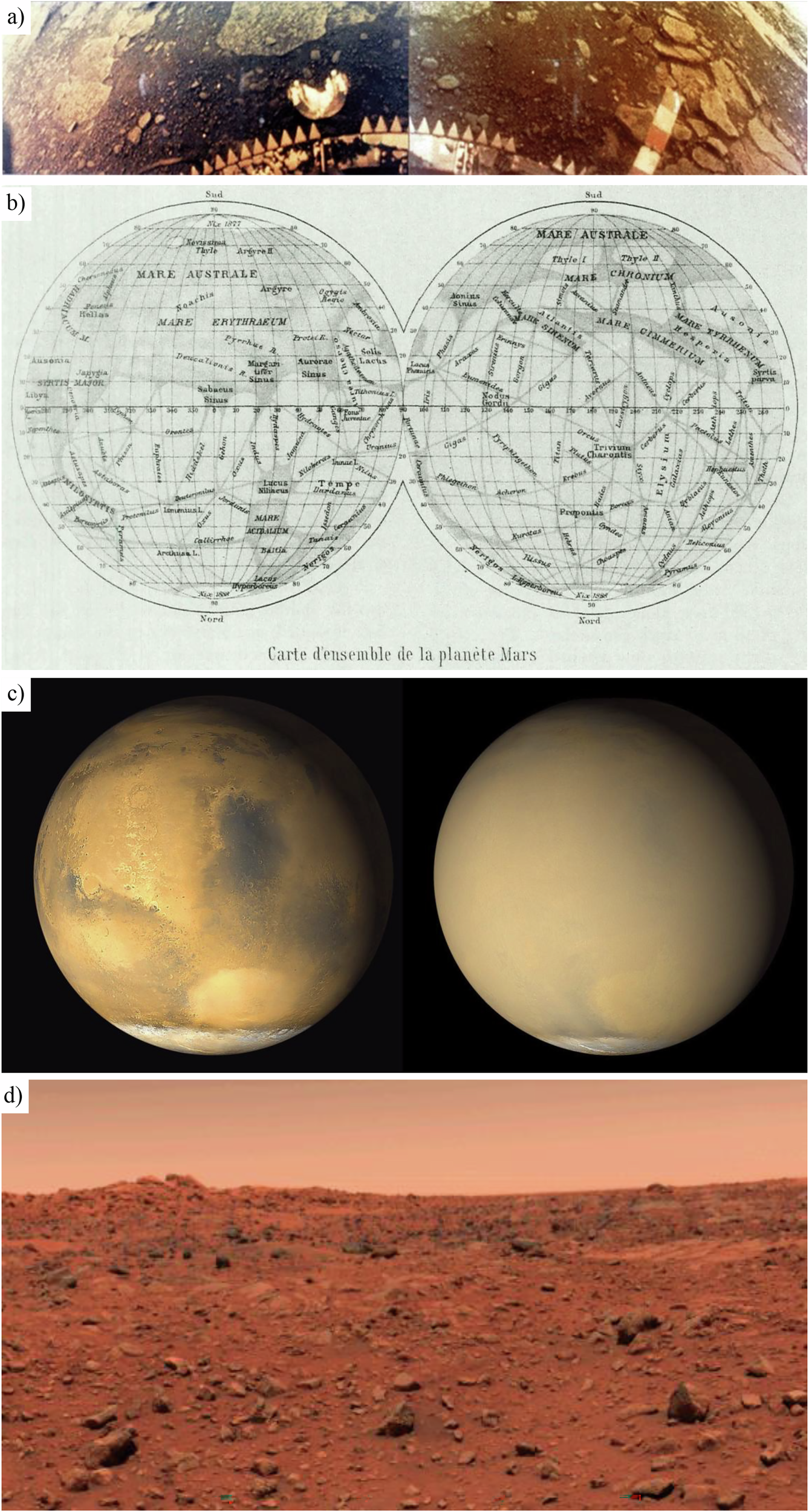
Mars is not simply a distant runway waiting for a clever flying machine. It is a design environment shaped by thin air, low gravity, extreme temperature changes, dust storms, radiation, solar-energy limitations, complex terrain and strict landing constraints. Each of these factors changes what an aerobot can do, where it can operate, how long it can survive, and what kind of science it can realistically support.
The harder design question
One of the central ideas in the paper is that aerobot design should start with the planet and the mission, not only with the vehicle concept.
A rotorcraft, fixed-wing aircraft, balloon, hopper or hybrid vehicle may all be interesting. But each only becomes meaningful when matched to a specific scientific purpose, terrain type, atmospheric condition, energy strategy and deployment pathway.
This is where the paper brings together planetary science and aerospace engineering. Rovers and landers have transformed our understanding of Mars, but they are naturally limited by terrain, speed and landing safety. Aerobots could extend exploration beyond these limits by enabling rapid regional surveys, accessing high-priority sites beyond rover reach, and supporting future human exploration through environmental reconnaissance.
To support this thinking, the article introduces the Mars Aerobot Design Thinking Matrix. In simple terms, the matrix is a way to connect scientific goals with engineering decisions. It asks questions such as:
What is the mission trying to achieve?
What terrain must be reached?
What atmospheric conditions will the vehicle face?
What power source is realistic?
How will the aerobot be delivered and deployed?
What risks must be controlled before the system can become scientifically useful?
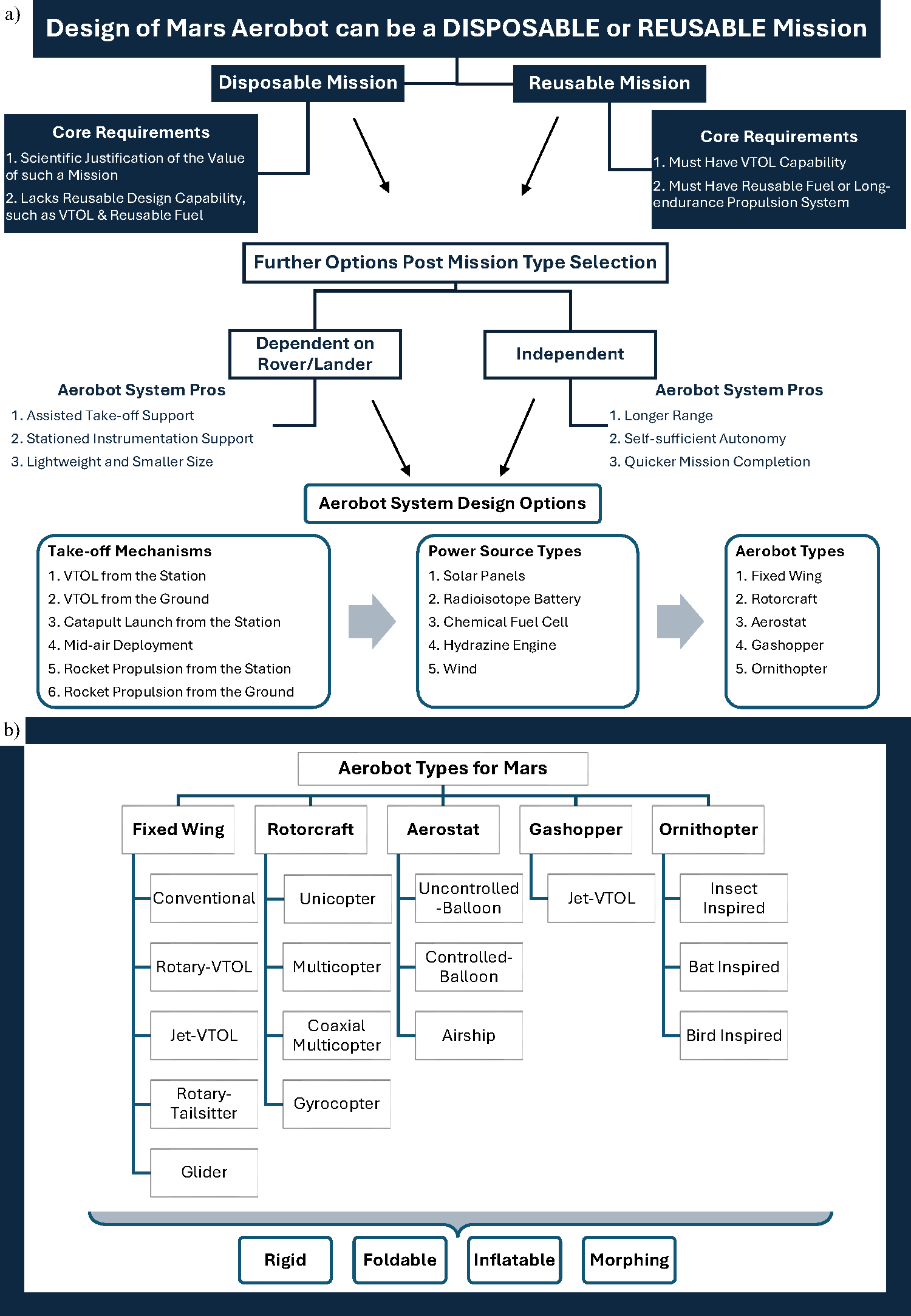
For me, this was the most important part of the work. The paper is not only a catalogue of aircraft concepts. It is an attempt to place those concepts into a more systematic design logic, where mission purpose, planetary context and engineering feasibility are considered together.
One reviewer captured this aim very well:
“The paper is novel in that it brings all the issues together in one place and offers a structured ‘systems design’ approach to thinking about the design problem. The paper will be of value to any researcher embarking on Mars aerobot design... Overall, this is a very good paper which introduces the reader to many of the key issues involved in Mars aerobot design - no easy task. ”
What I learned behind the paper
Writing this article changed how I understood my own PhD journey.
At first, I thought the core challenge was technical: how to design a flying robot for Mars. But the deeper question was both philosophical and practical: why should such a system exist, what scientific gap would it fill, and how can it be designed honestly around the planet it must operate on?
That is why this paper became more than a review for me. It became a reflection on how engineering ideas gain meaning when they are connected to place, purpose and context.
Ingenuity opened the door to powered flight on another world. The next generation of Martian aerobots will need to go further: not only flying, but flying with scientific purpose, operational resilience and design logic grounded in Mars itself.
I am grateful to my co-authors Leonard Felicetti and Dmitry Ignatyev for their collaboration, and to the reviewers for their guidance, constructive feedback and encouragement throughout the publication process.
Read the article here:
https://doi.org/10.1038/s44172-026-00647-y

Dr Vishal Youhanna completed his PhD in Aerospace at Cranfield University, where his research focused on the conceptual design of rotary-wing vertical take-off and landing (VTOL) vehicles for planetary exploration—specifically within the Martian environment. His work explored aerodynamic modelling, structural efficiency, propulsion analysis, and mission-based vehicle design under extreme atmospheric constraints.
Vishal’s research interests lie at the intersection of conceptual aircraft design, planetary aerial robotics, and sustainable aerospace systems. He is particularly focused on early-stage design methods for rotorcraft and VTOL platforms operating in extreme environments — including low-density planetary atmospheres such as Mars, as well as challenging terrestrial settings like high-altitude, polar, or disaster-prone regions. His work explores structural efficiency, transportability, and mission-specific optimisation in uncrewed aerial systems, with a growing emphasis on interdisciplinary design strategies that integrate engineering principles, systems thinking, and planetary science.
He is part of the design team representing Cranfield in the GoAERO Prize competition, contributing to the development of an autonomy-enabled emergency response flyer. He also continues to publish work on Martian aerial vehicles and is exploring future directions in planetary flight systems and sustainable aerospace design.
Follow the Topic
-
Communications Engineering
A selective open access journal from Nature Portfolio publishing high-quality research, reviews and commentary in all areas of engineering.

Related Collections
With Collections, you can get published faster and increase your visibility.
Generative AI for mechanical engineering design and optimization
Publishing Model: Open Access
Deadline: Dec 31, 2026
Engineering Solutions in Wind Energy Systems: Design, Efficiency, and Sustainability
Publishing Model: Open Access
Deadline: Sep 30, 2026

