Tamil Nadu has long been a pioneer in renewable energy, particularly wind and solar power. However, the state's electricity demand continues to rise due to rapid urbanisation, industrial growth, expanding educational institutions, and increasing use of air conditioners and electric vehicles. While Tamil Nadu has made remarkable progress in large-scale renewable energy generation, the next step should be to empower every household and institution to become an active partner in the state's clean energy mission.
The first step is to introduce the concept of an "Energy Man" in every home, school, college, government office, organisation, company, and industry. This is not a new post but a shared responsibility. One family member, student, teacher, or employee should voluntarily ensure that lights, fans, air conditioners, computers, and other electrical appliances are not left running unnecessarily. Such a simple practice can significantly reduce electricity wastage, lower electricity bills, and reduce the overall demand on Tamil Nadu's power grid.
The second step is to make renewable energy affordable for every citizen. Although rooftop solar systems are highly suitable for Tamil Nadu because of abundant sunshine, many families, schools, and small businesses cannot afford the initial investment of ₹1–2 lakh for a 1 kW system. Battery costs, maintenance concerns, and financing difficulties further discourage adoption.
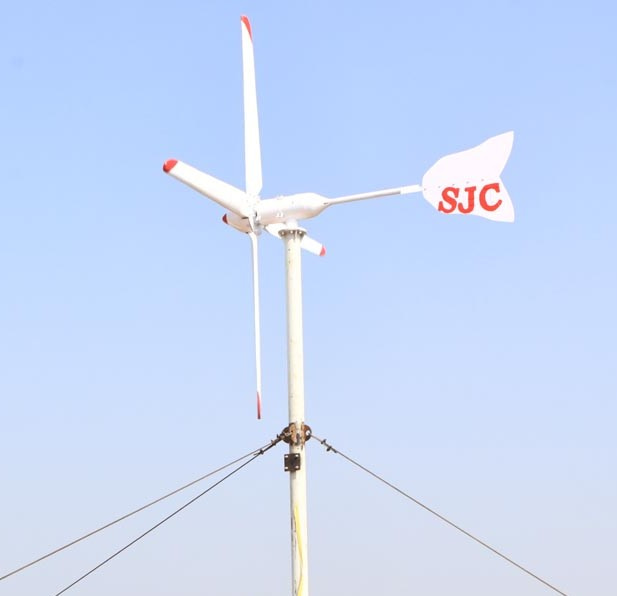
To overcome these barriers, Tamil Nadu solar/wind industries can introduce a zero-down-payment EMI model for renewable energy. Under this model, the government, electricity utilities, financial institutions, or industries can facilitate the installation of rooftop solar or solar-wind hybrid systems without requiring any upfront payment. Consumers would pay a monthly EMI comparable to their existing electricity bill for five to seven years. The EMI would include installation, financing, and maintenance. After the repayment period, the system would become the property of the consumer, providing many more years of low-cost clean electricity.
In addition, every home, school, college, office, organisation, company, and industry should voluntarily identify a renewable energy champion to promote rooftop solar, solar water heaters, biogas plants, battery storage, electric vehicle charging using renewable energy, and other locally suitable clean-energy solutions. The goal is to transform every building in Tamil Nadu from being only an electricity consumer into an electricity producer.
If Tamil Nadu combines responsible energy use through the Energy Man concept with affordable renewable energy through the Zero Down Payment EMI Model and community participation through Renewable Energy Champions, the State can reduce peak electricity demand, lower dependence on conventional power, create green employment, strengthen energy security, and set an example for the rest of India. Tamil Nadu has always led the nation in innovation. It can now lead the next revolution by making every home and institution a partner in the renewable energy movement.
Dr. A. ALEXANDAR
Assistant Professor of Physics,
St Joseph's College (Autonomous),
Tiruchirappalli-620 002
Tamil Nadu, INDIA.
Mobile: 8610319747



Please sign in or register for FREE
If you are a registered user on Research Communities by Springer Nature, please sign in