Explore the Research

 PubMed
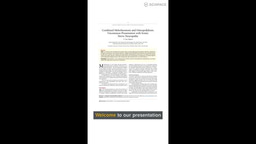
Sacrococcygeal Morphologic and Morphometric Risk Factors for Idiopathic Coccydynia: A Magnetic Resonance Imaging Study - PubMed
Level 3. Case-control study.
Tailbone pain (idiopathic coccydynia) is a common yet often poorly understood condition. While trauma and repetitive stress are recognized contributors, the role of underlying sacrococcygeal anatomy has remained less clear.
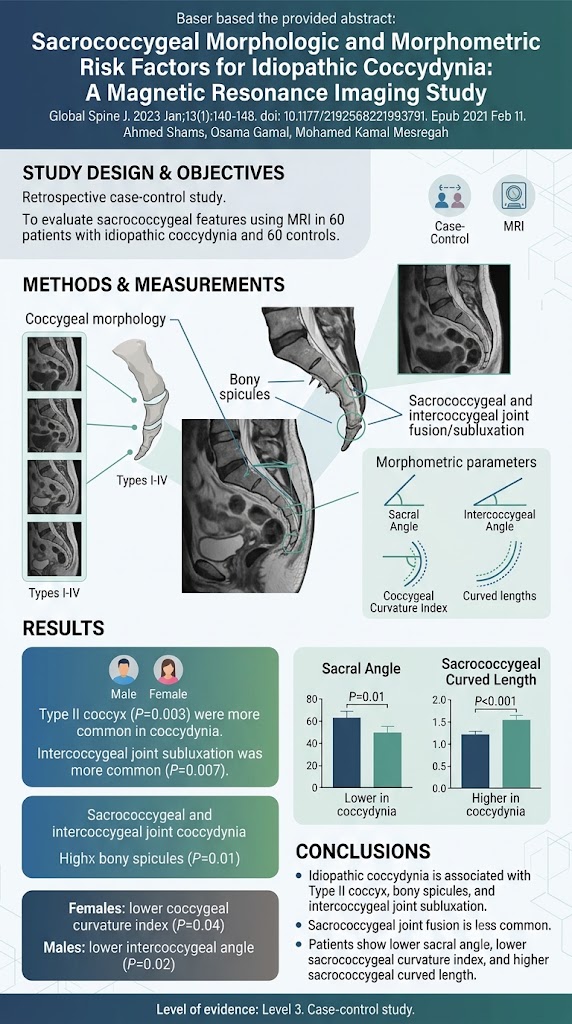
In our MRI-based case-control study, we compared 60 patients with idiopathic coccydynia to 60 asymptomatic controls to identify morphologic and morphometric characteristics associated with this condition.
Our findings revealed several notable differences:
🔹 Type II coccyx and bony spicules were significantly more common in patients with coccydynia.
🔹 Intercoccygeal joint subluxation occurred more frequently, whereas sacrococcygeal joint fusion was less common.
🔹 Patients demonstrated a longer sacrococcygeal curved length, a lower sacrococcygeal curvature index, and a smaller sacral angle, suggesting distinct anatomical features that may predispose to pain.
🔹 Sex-specific analyses identified additional differences, including a lower coccygeal curvature index in females and a smaller intercoccygeal angle in males.
These findings support the concept that MRI provides more than soft-tissue assessment—it can also identify structural anatomical characteristics associated with idiopathic coccydynia. Recognizing these imaging features may improve diagnostic confidence, enhance patient counseling, and contribute to more individualized treatment planning.
As our understanding of coccygeal anatomy continues to evolve, advanced imaging may play an increasingly important role in distinguishing patients with clinically significant structural risk factors from those with nonspecific pain.
📖 Reference
Shams A, Gamal O, Mesregah MK. Sacrococcygeal Morphologic and Morphometric Risk Factors for Idiopathic Coccydynia: A Magnetic Resonance Imaging Study. Global Spine Journal. 2023;13(1):140–148.
Ahmed Shams, Osama Gamal, Mohamed Kamal Mesregah
Article Links
https://pubmed.ncbi.nlm.nih.gov/33567908/
https://journals.sagepub.com/doi/10.1177/2192568221993791orth

Dr. Mohamed Mesregah MD is an experienced orthopedic surgeon with a strong background in both clinical practice and orthopedic research. He specializes in the diagnosis and management of musculoskeletal conditions, with a commitment to delivering high-quality, patient-centered care.
With years of hands-on experience, Dr. Mohamed Kamal Mesregah has developed a deep understanding of modern orthopedic techniques and evidence-based treatment approaches. His research involvement reflects his dedication to advancing medical knowledge and improving patient outcomes.