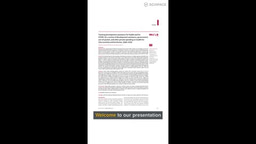
Is there an optimal treatment for proximal femoral simple bone cysts in children? Lessons from an international multicenter study.
Published in Cancer
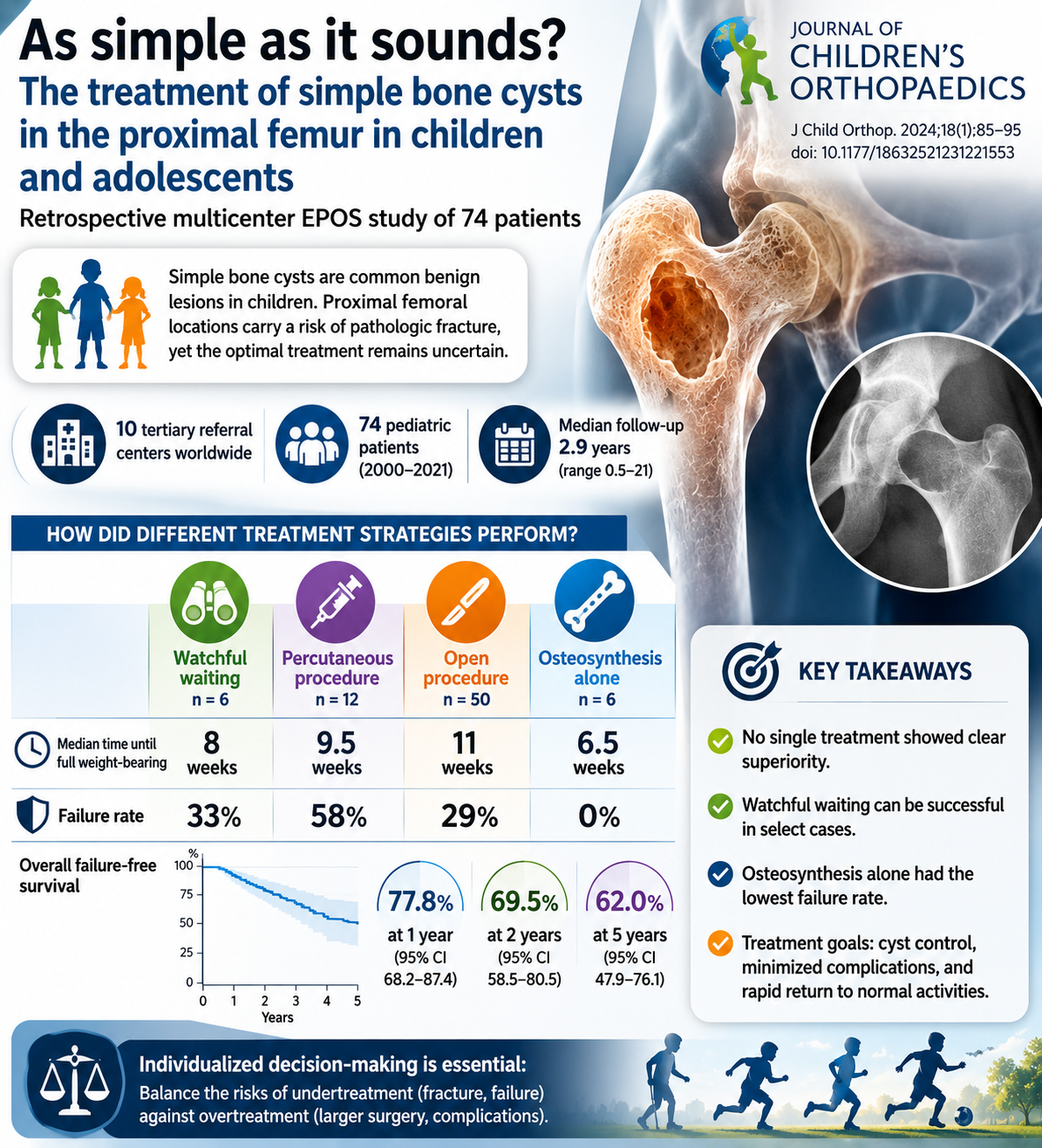
Simple bone cysts are among the most common benign bone lesions in children. However, when they occur in the proximal femur, management becomes particularly challenging because of the increased risk of pathological fracture and the lack of clear treatment guidelines.
In this international EPOS multicenter study, we analyzed the outcomes of 74 pediatric patients treated at 10 tertiary musculoskeletal oncology centers over two decades, making this one of the largest cohorts focused exclusively on proximal femoral simple bone cysts.
Our goal was to evaluate the effectiveness of different treatment strategies—including watchful waiting, percutaneous procedures, open surgery, and osteosynthesis alone—by comparing failure rates and time to full weight-bearing.
Several important observations emerged:
🦴 No single treatment demonstrated clear superiority. Time to full weight-bearing was comparable across treatment groups, suggesting that multiple approaches may be appropriate depending on the clinical scenario.
👦 Watchful waiting may be appropriate for carefully selected patients, highlighting that not every proximal femoral cyst requires immediate intervention.
🔩 Osteosynthesis alone showed encouraging results, with no treatment failures observed in this cohort, although patient numbers were small and larger studies are needed to confirm these findings.
⚖️ Perhaps the most important message is that treatment should be individualized. The challenge lies in balancing the risks of undertreatment—which may lead to pathological fractures or additional procedures—against overtreatment, which can expose children to unnecessary surgical morbidity.
This collaborative study underscores the value of international research networks in addressing uncommon pediatric orthopedic conditions. As evidence continues to evolve, individualized decision-making, careful patient selection, and shared clinical expertise remain essential to achieving the best outcomes for children with proximal femoral simple bone cysts.
I am proud to have contributed to this international collaboration advancing the evidence base for pediatric orthopedic oncology and helping guide treatment decisions for this challenging condition.
#PediatricOrthopaedics #BoneCysts #SimpleBoneCyst #MusculoskeletalOncology #EPOS #ChildHealth #OrthopaedicSurgery #EvidenceBasedMedicine #InternationalCollaboration #MedicalResearch
Thomas Pg van Geloven, Lizz van der Heijden, Minna K Laitinen, Domenico A Campanacci, Kevin Döring, Dietmar Dammerer, Ismail T Badr, Mikko Haara, Giovanni Beltrami, Gerhard M Hobusch, Tanja Kraus, Philipp Scheider, Camilo Soto-Montoya , Masood Umer, Javeria Saeed, Phillipp T Funovics, Marta Fiocco, Michiel Aj van de Sand, Pieter Bas de Witte
Article Links

Dr. Mohamed Mesregah MD is an experienced orthopedic surgeon with a strong background in both clinical practice and orthopedic research. He specializes in the diagnosis and management of musculoskeletal conditions, with a commitment to delivering high-quality, patient-centered care.
With years of hands-on experience, Dr. Mohamed Kamal Mesregah has developed a deep understanding of modern orthopedic techniques and evidence-based treatment approaches. His research involvement reflects his dedication to advancing medical knowledge and improving patient outcomes.