The value of scientific dialogue: When evidence deserves a second look
Published in Healthcare & Nursing and Surgery
Publishing original research is only one part of advancing science. Equally important is the critical evaluation of published evidence to ensure that clinical recommendations are supported by robust methodology and adequate data.
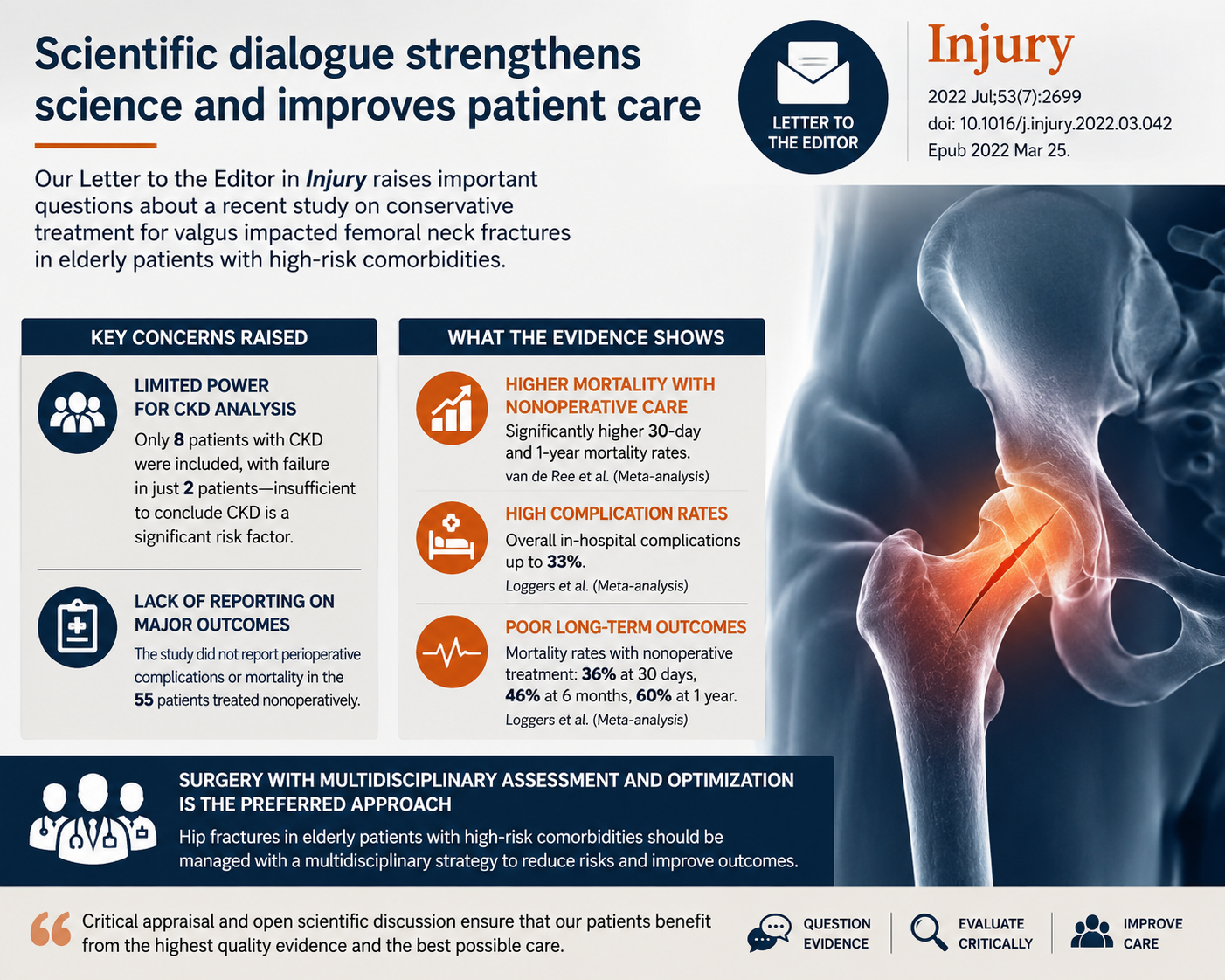
In our Letter to the Editor published in Injury, we discussed the article evaluating conservative treatment for valgus impacted femoral neck fractures in elderly patients with high-risk comorbidities.
The original study identified chronic kidney disease (CKD) as a significant predictor of treatment failure. However, only eight patients with CKD were included in the analysis, with treatment failure occurring in just two patients. Such a small subgroup raises important concerns regarding statistical power and the strength of this conclusion.
Beyond the statistical considerations, we highlighted another crucial issue: the broader consequences of nonoperative management in frail elderly patients.
Multiple systematic reviews and meta-analyses have demonstrated that conservative treatment of hip fractures in older adults is associated with:
🔹 Higher short- and long-term mortality
🔹 Increased medical complications, including pneumonia, urinary tract infections, delirium, and pressure injuries
🔹 Worse overall outcomes compared with appropriately selected surgical management
Rather than avoiding surgery solely because of medical comorbidities, we emphasized that these complex patients may benefit most from multidisciplinary perioperative optimization, allowing surgical treatment whenever feasible while minimizing perioperative risk.
Letters to the Editor play a unique role in scientific publishing. They encourage thoughtful discussion, identify methodological limitations, and help ensure that clinical decisions remain grounded in the highest quality evidence. Constructive scientific debate ultimately strengthens both research and patient care.
I am proud to have contributed to this important academic discussion and to the ongoing effort to promote evidence-based management of hip fractures in elderly patients.
#HipFracture #Orthopaedics #EvidenceBasedMedicine #GeriatricOrthopaedics #ScientificPublishing #PeerReview #ClinicalResearch #MedicalResearch #InjuryJournal #SpringerNatureCommunities
Article Links
https://pubmed.ncbi.nlm.nih.gov/35365346/
https://www.injuryjournal.com/article/S0020-1383(22)00233-9/abstract

Dr. Mohamed Mesregah MD is an experienced orthopedic surgeon with a strong background in both clinical practice and orthopedic research. He specializes in the diagnosis and management of musculoskeletal conditions, with a commitment to delivering high-quality, patient-centered care.
With years of hands-on experience, Dr. Mohamed Kamal Mesregah has developed a deep understanding of modern orthopedic techniques and evidence-based treatment approaches. His research involvement reflects his dedication to advancing medical knowledge and improving patient outcomes.