A Smarter Way to Build Better Water Filters – Breaking the Rules of Membrane Design
Published in Earth & Environment
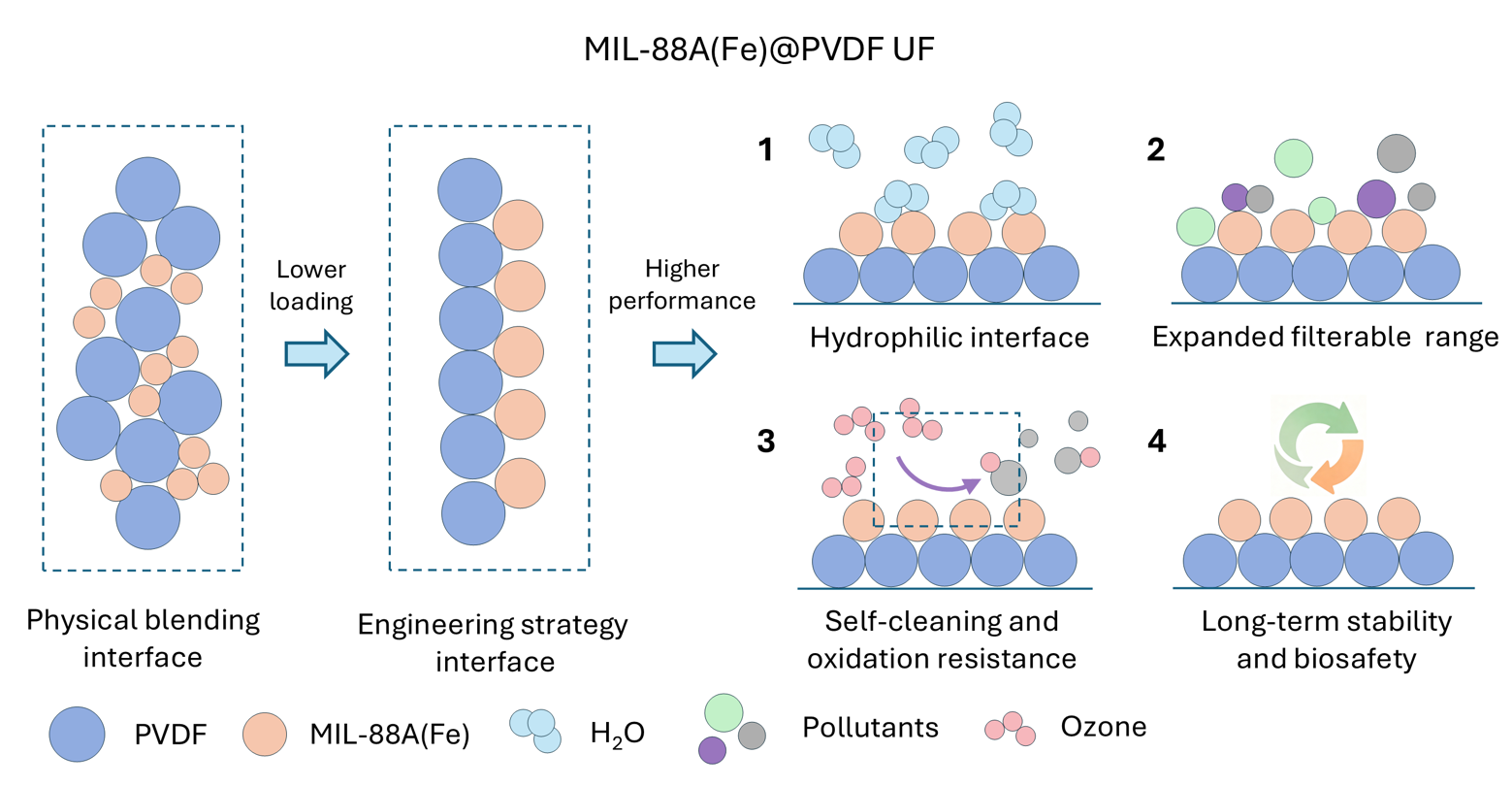
Clean water is a growing challenge worldwide, and ultrafiltration membranes—especially those made from a tough plastic called PVDF—are already on the front lines. But they have two stubborn problems: they’re naturally hydrophobic (water-repellent), which makes them prone to clogging, and they suffer from a classic trade-off where high water flow usually means poor pollutant removal, and vice versa. Most attempts to fix this involve adding complex materials in large amounts, but a new study published in Water Research takes a radically different approach. Instead of piling on more stuff, the team focused on where and how the functional material grows—right at the membrane’s inner pore surfaces.
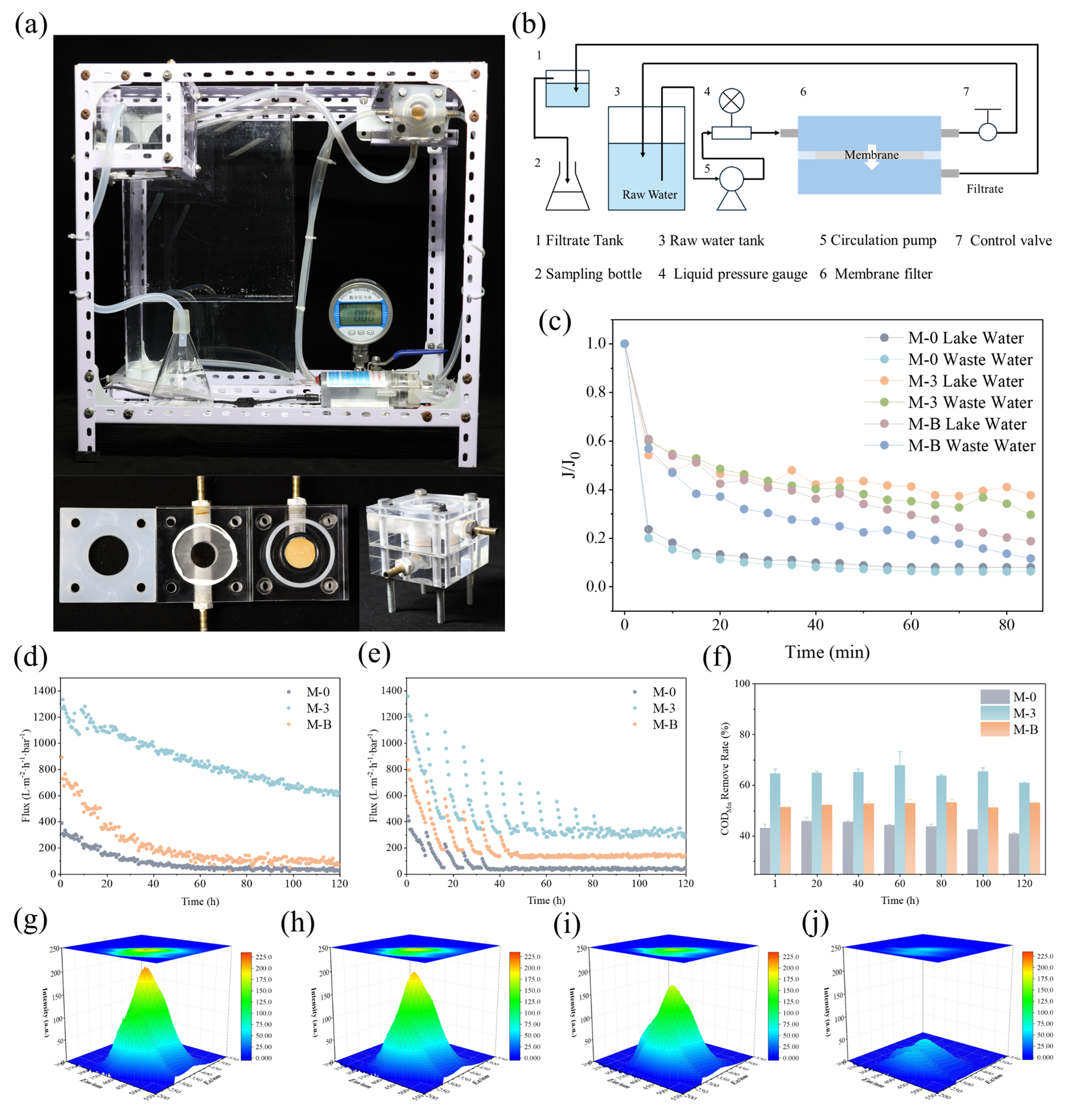
The researchers designed a one-step process that lets a metal-organic framework (MOF) called MIL-88A(Fe) grow directly and uniformly on the inside walls of the PVDF pores during membrane formation. By carefully controlling the interfacial chemistry, they achieved this with only 2.5% MOF loading—far less than the 10% used in traditional physically blended membranes. The result was a stunning jump in performance: pure water flux hit 1,281 L·m⁻²·h⁻¹·bar⁻¹ (over four times higher than the unmodified membrane), while simultaneously rejecting 94.3% of bovine serum albumin, a common protein foulant. This effectively broke the long-standing permeability-selectivity trade-off that has plagued ultrafiltration for decades.
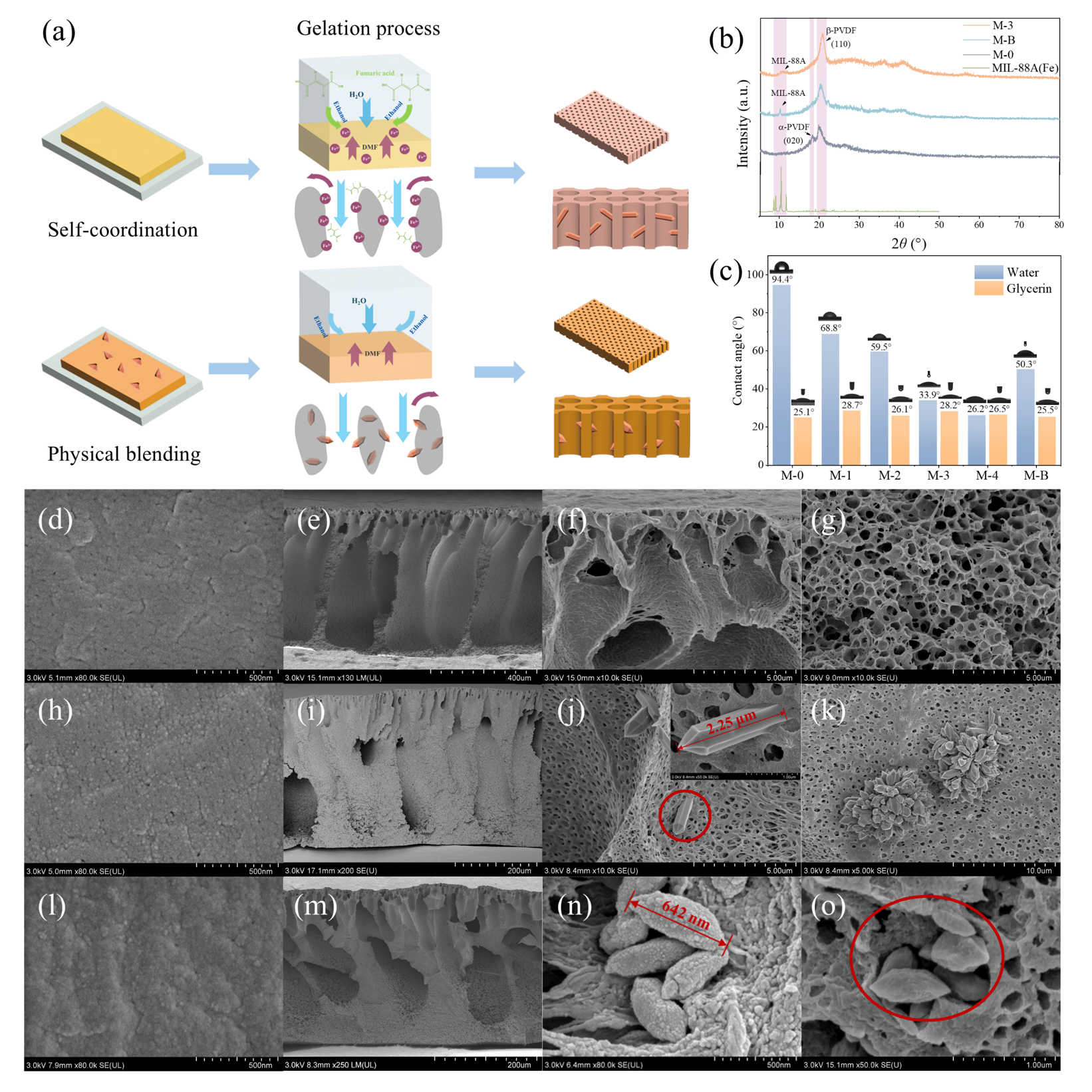
But the benefits didn't stop at flow and rejection. The in-situ grown MOF layer made the membrane much more hydrophilic, reduced irreversible fouling, and even enabled a self-cleaning effect through Fenton-like reactions when backwashed with hydrogen peroxide. In long-term tests with real lake water and cattle-farm wastewater, the new membrane maintained stable flux for over 120 hours, while conventional versions either collapsed or lost most of their performance. It also removed over 98.5% of various organic dyes and showed strong resistance to ozone aging—a common cleaning agent that normally degrades PVDF over time—thanks to the MOF's catalytic consumption of ozone at the interface.
What makes this work particularly exciting is its simplicity and practicality. The interfacial engineering strategy doesn't rely on exotic materials or cumbersome multi-step synthesis; it just optimizes how the functional component is placed within the existing membrane structure. The authors argue that "interfacial regulation, not just material composition, is key to achieving high-performance PVDF membranes." This insight could pave the way for more durable, efficient, and cost-effective water treatment membranes that are easier to scale up for real-world use—from drinking water purification to industrial wastewater recycling. It’s a compelling example of how smart design can outperform brute-force material loading.
Paper Information Summary
-
Title: Interfacial engineering enables in-situ growth of MIL-88A(Fe) on PVDF membranes for high-performance ultrafiltration: Breaking the permeability-selectivity trade-off and enhancing fouling/oxidation resistance
-
Authors: Ziyu Jia, Miao Chang, Xiaoyue Zhang, Zhi-Bo Wang, Hong-Yu Chu, Zhihao Shi, Ruo-Xuan Mei, Chong-Chen Wang, Peng Wang, Anping Wang, Jiguang Deng
-
Journal: Water Research (Volume 305, 2026, Article 126509)
Please sign in or register for FREE
If you are a registered user on Research Communities by Springer Nature, please sign in