Accreditation is not a certificate: it is an institutional capability
Published in Healthcare & Nursing, Sustainability, and Education

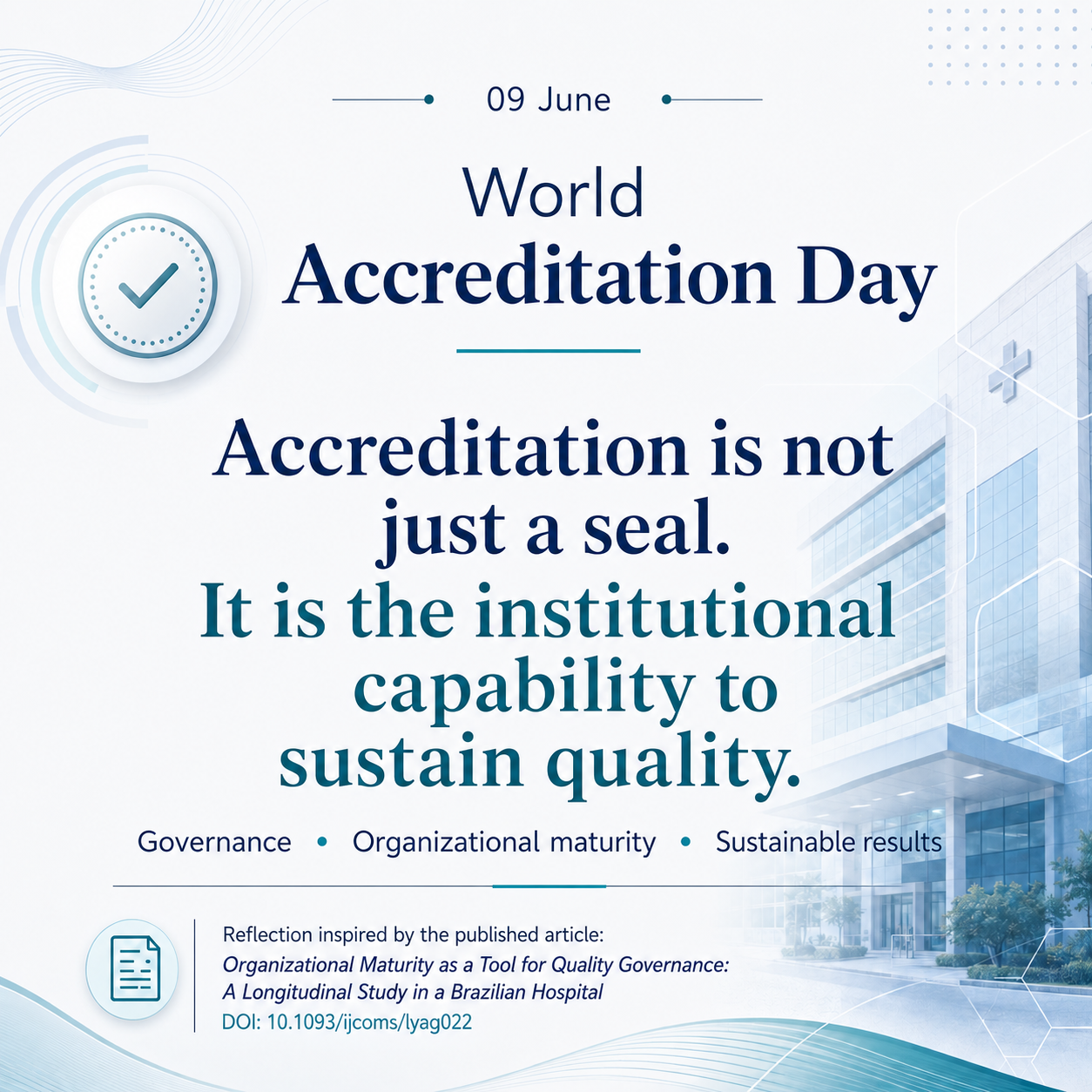


Every year, World Accreditation Day offers an opportunity to reflect on the value of accreditation. In 2026, the international theme — “Innovation, Trust and Sustainability: The Power of Accreditation” — is particularly relevant to healthcare organizations.
Hospitals operate in complex environments. Clinical decisions, care transitions, diagnostic processes, support services and governance mechanisms must function as an integrated system. In this context, quality cannot depend exclusively on individual commitment or isolated improvement initiatives.
Accreditation is an important instrument for strengthening healthcare organizations. However, its value should not be reduced to the achievement of a certificate or the completion of an external assessment cycle.
A certificate is visible. Institutional capability is deeper.
The most relevant question is not only whether an organization has achieved accreditation, but whether it has developed the capacity to sustain quality over time — including during periods of operational pressure, leadership transitions and changing healthcare demands.
This perspective is closely related to the concept of organizational maturity.
In our recently published article, Organizational Maturity as a Tool for Quality Governance: A Longitudinal Study in a Brazilian Hospital, we analyzed the evolution of organizational maturity in a hospital between 2020 and 2023. The study examined different domains of the institution, including governance, patient care, diagnostic and therapeutic services, and support areas.
The study was not designed to evaluate accreditation itself. However, it addresses one of the essential foundations of a sustainable accreditation journey: the institutional capacity to structure processes, integrate teams, monitor performance and promote continuous improvement.
Organizational maturity is not a static condition. It is a progressive and multidimensional process.
Protocols are necessary. Indicators are essential. Audits provide valuable insights. Nevertheless, none of these elements produces sustainable results in isolation. Quality governance requires alignment between leadership, frontline practice, accountability mechanisms and organizational learning.
For healthcare leaders, this perspective leads to practical questions:
Are quality practices embedded in daily operations or activated mainly before an external assessment?
Do indicators generate meaningful decisions?
Are improvement cycles sustained across different departments?
Can the organization preserve its quality standards during periods of increased demand?
Does accreditation stimulate learning, or is it perceived primarily as a compliance requirement?
World Accreditation Day is an opportunity to move the discussion from certification to capability.
The most meaningful legacy of accreditation is not merely a seal displayed on a wall. It is the development of organizations capable of sustaining trust, safety and consistent results over time.
Related publication
Organizational Maturity as a Tool for Quality Governance: A Longitudinal Study in a Brazilian Hospital
DOI: 10.1093/ijcoms/lyag022