Achievement of a Vacuum-Levitated Metal Mechanical Oscillator with Ultra-Low Damping Rate at Room Temperature
Published in Physics

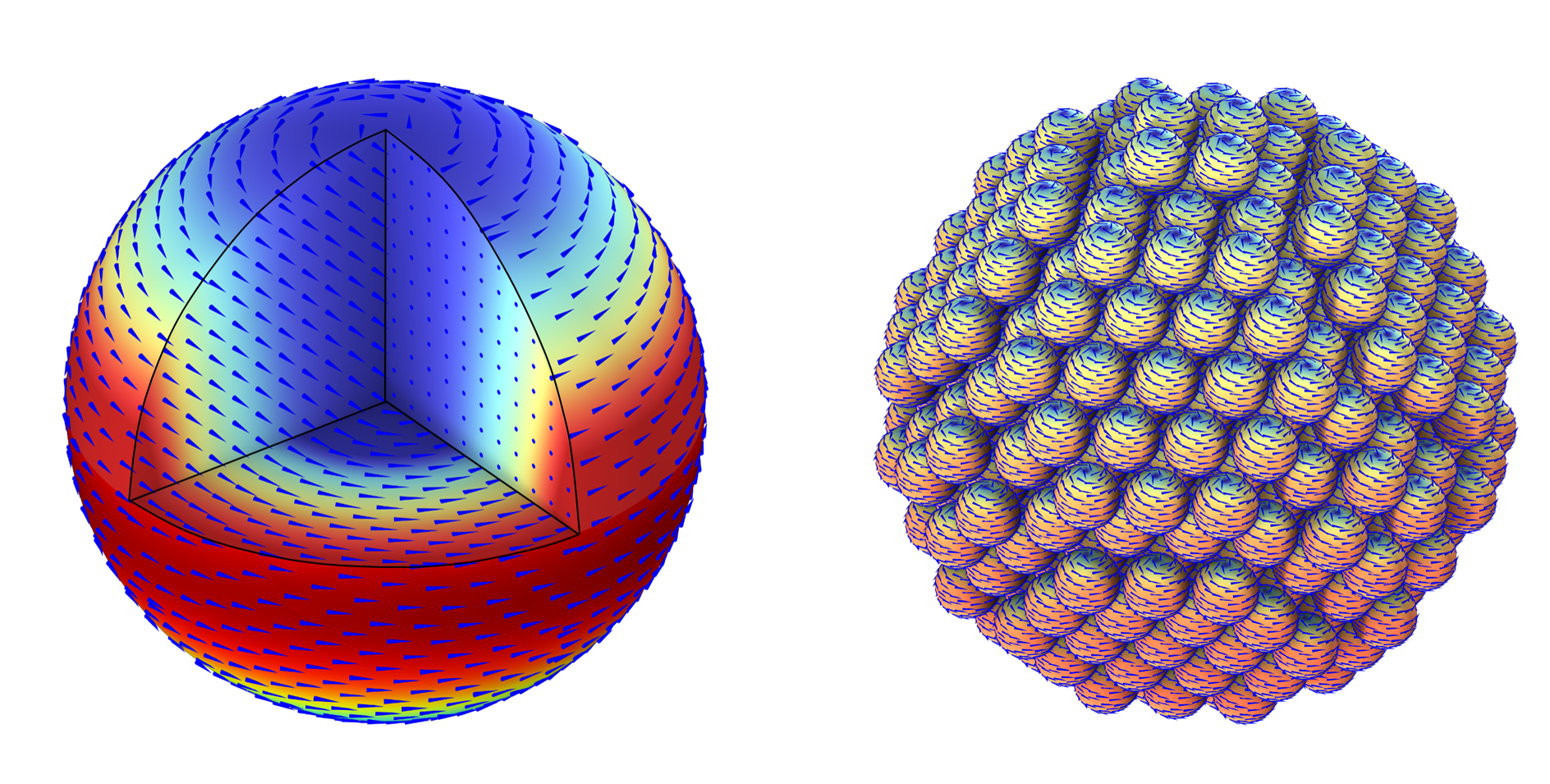


When I began my research, I started with a flawed assumption that, looking back, turned out to be misguided. I initially thought eddy current dissipation mainly served as a cooling mechanism and wouldn’t significantly add to system noise. This led me to propose that diamagnetic levitating metals could be a promising tool for detecting acceleration linked to gravity. But as I delved deeper, I realized this idea didn’t hold up—it ran counter to the principles of the fluctuation-dissipation theorem.
The fluctuation-dissipation theorem, a fundamental concept in statistical mechanics, reveals a deep connection between a system’s natural fluctuations and how it responds to external forces. It states that any process that dissipates energy—like the eddy currents in my experiments—inevitably produces fluctuations. Early on, I underestimated the theorem’s relevance to my hypothesis, overrating the potential of diamagnetic levitating metals for detecting acceleration.
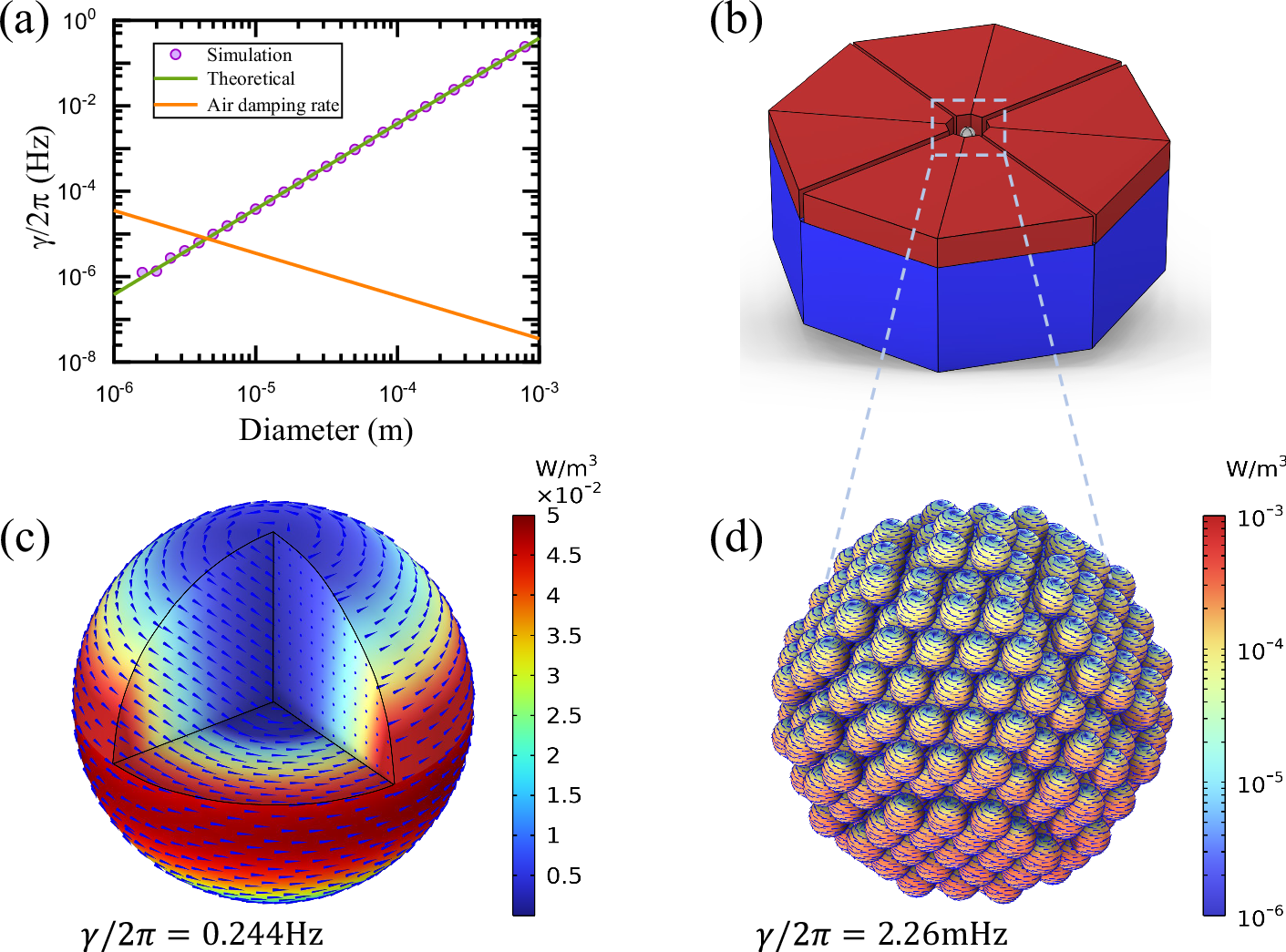
To test my initial thinking, I ran experiments with metals of different sizes, measuring eddy current damping rates to see if they consistently tied to system noise. My reasoning was that if my hypothesis was correct, noise levels would depend only on air damping and remain unaffected by metal size or eddy current effects. The results, however, told a different story. Noise levels varied widely, and eddy current dissipation stood out as a major limiter of the system’s sensitivity to acceleration. This pushed me to revisit the fluctuation-dissipation theorem. I worked out an equation for the noise caused by eddy current dissipation and was surprised to find it closely resembled thermal noise—a discovery that completely shifted my view of the system. Rather than being a harmless side effect, eddy current damping was actively raising the system’s noise floor.
Though, it presented an unexpected hurdle, my experiments uncovered a key link between metal particle size and eddy current dissipation. I found that dissipation increased with the square of the particle size: larger particles led to stronger damping, which boosted noise and reduced acceleration sensitivity. This sparked an idea. By switching to smaller metal particles, I could lower damping rates while still keeping the system capable of detecting acceleration.
With this in mind, I came up with a new approach. I plan to create metal spheres using tiny particles to minimize eddy current dissipation. This design should improve acceleration sensitivity without sacrificing the system’s ability to pick up acceleration or gravitational signals. It could even pave the way for breakthroughs in areas like gravitational wave detection, where precision is everything.
In the end, this change in perspective has opened up exciting possibilities for future work. By managing particle size, I hope to tackle the challenges of eddy current dissipation and enhance system performance. This updated strategy promises more precise acceleration detection, potentially deepening our grasp of gravity and the fundamental forces at play.
Follow the Topic
-
Communications Physics
An open access journal from Nature Portfolio publishing high-quality research, reviews and commentary in all areas of the physical sciences.

Related Collections
With Collections, you can get published faster and increase your visibility.
Nonlinear dynamics of living systems
Publishing Model: Open Access
Deadline: Nov 09, 2026
High-Energy Light Sources - From Tabletop to Large Facilities
Publishing Model: Open Access
Deadline: Sep 30, 2026