Analysis of environmental perception according to political ideology
Published in Sustainability, Business & Management, and Economics



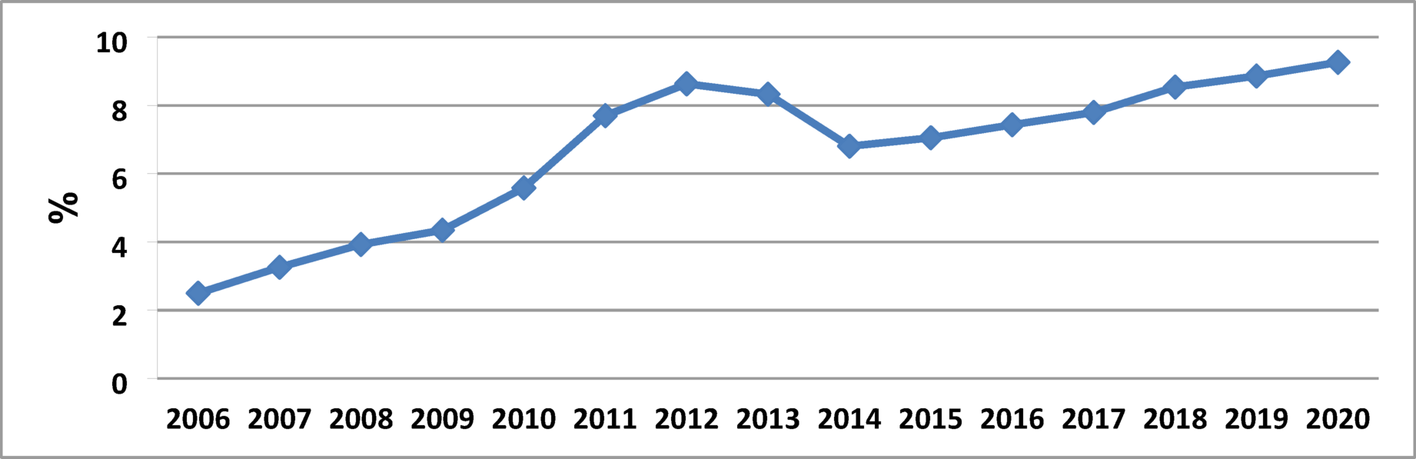

What do you think? “Almost everything we do in modern life harms the environment”. Perhaps, “people worry too much about human progress harming the environment”. Or probably “we worry too much about the future of the environment and not enough about prices and jobs today”.
What do you think, do these issues flow upwards like magma from a volcano, or perhaps they can be seen as a constant stream that flows through a funnel, gradually permeating society? Or perhaps both views are compatible.
This article analyses corporate environmental (ir)responsibility (CEiR) and environmental perceptions among the population of several developed economies in a context of neoliberal globalisation and accelerated climate change following the last global financial crisis, mainly in relation to corporate irresponsibility and bad business practices.
This study examines national-level environmental perceptions in relation to corporate environmental responsibility, particularly in the context of the post-2008 financial crisis, a period marked by rising global protests and growing demands for environmental justice. Its main contribution lies in the development of two new indices based on ISSP data, offering a more specific and flexible alternative to broader measures such as the NEP scale. The findings reveal several implications for environmental governance in a turbulent world.
The Sustainable Development Goals, the challenges of climate change, the circular economy, and the global campaign against fossil fuels are just a few examples of issues related to the concept of sustainability. This is especially true in the context of the neoliberal economic system and global warming.
Regardless of its theoretical orientation, neoliberalism is characterised by a set of key principles (the ‘3 Ps’ of neoliberalism): a general philosophy or worldview, a broad political programme, and a set of specific policies, all with social and environmental implications.
The novelty of the article lies in linking societies’ environmental perceptions with respondents’ ideological self-identification and in attempting to incorporate this dimension into the analysis of corporate environmental (ir)responsibility (CEiR). The study is part of the CEiR's analyses, although it focuses more on social perception than on the actual actions of companies. For this reason, this research is grounded in the framework of corporate social (ir)responsibility and social mobilisation against global warming and other environmental risks (e.g., 2030 Agenda).
Lessons from recent economic history can provide clues for the future of capitalist and environmental collapse. In particular, various studies show what we can learn from the 2008 global financial crisis, helping to bring together efforts to achieve an environmentally compatible economic recovery, that is, a low-carbon economy.
The latent attribute of “environmental perception” was analysed across 15 respondent profiles defined by their degree of agreement (five categories) and ideological orientation (three levels). Each profile was considered to meet a given environmental criterion if it exceeds the threshold of equitable distribution among left-wing, centrist, and right-wing respondents for each agreement level (strongly agree, agree, neutral, disagree, and strongly disagree).
The results show that the main factors are closely related to the gender and political ideologies of respondents. It is concluded that the political ideology of respondents, especially in contexts of global crisis, can influence social attitudes, perceptions, and behaviours on environmental issues, and even possible alliances to increase the number of international agreements on these issues.
The authors would like to thank Dr Georgina Cortés for her enthusiasm and constant support for scientific progress, as well as for being one of the leading disseminators and experts on Rasch methodology.
This post draws on the co-authored article by J. Agustín Franco, Jesús Rodrigo-Comino, Artemi Cerdà and Manuel Pulido, “Analysis of environmental perception according to political ideology” (Discover Sustainability, 2026), https://doi.org/10.1007/s43621-026-02720-0
Follow the Topic
-
Discover Sustainability

A multi-disciplinary, open access, community-focussed journal publishing results from across all fields relevant to sustainability research whilst supporting policy developments that address all 17 of the United Nations Sustainable Development Goals (SDGs).
What are SDG Topics?
An introduction to Sustainable Development Goals (SDGs) Topics and their role in highlighting sustainable development research.
Continue reading announcementRelated Collections
With Collections, you can get published faster and increase your visibility.
Economic Responses to Environmental Challenges: Evidence, Models, and Innovations
Environmental degradation, climate change, and resource scarcity have emerged as critical global challenges, posing significant threats to economic stability, public welfare, and sustainable development. These complex issues require not only technological innovation and policy reform but also a deep understanding of the economic mechanisms that drive environmental outcomes.
In response, this Collection focuses on how economies can effectively address these threats through data-driven research, advanced modeling, and strategic policy design. The issue brings together studies that apply econometric and statistical methods—such as time series analysis, panel regression, spatial econometrics, and simulation-based models like Integrated Assessment Models (IAMs) and Computable General Equilibrium (CGE) models—to assess environmental policies and measure their economic impacts. These analytical tools are used to quantify trade-offs, predict long-term outcomes, and guide decision-making under uncertainty. By bridging economics, environmental science, and public policy, this collection deepens the empirical and theoretical understanding needed to design effective responses. It strengthens the foundation for achieving environmental sustainability alongside economic resilience.
Publishing Model: Open Access
Deadline: Jun 30, 2026
Artificial Intelligence and Digital Innovation in Advancing Sustainable Development Goals
This Collection is expected to explore the role of Artificial Intelligence (AI) and digital innovation in improving progress toward the United Nations Sustainable Development Goals (SDGs). We aim to highlight interdisciplinary research, technological breakthroughs, and practical applications that leverage AI-driven tools, data science, and digital systems to tackle global challenges such as poverty, climate change, healthcare, education, and sustainable infrastructure. This Collection provides a platform for advancing responsible and inclusive innovation by closely bridging technology and sustainability.
This Collection supports and amplifies research related to SDG 9, SDG 11, SDG 12, SDG 13 & SDG 16
Keywords: Artificial Intelligence, Digital Innovation, Sustainable Development Goals, Smart Technologies, Data Science, Climate Action, Ethical AI, Smart Cities, Digital Transformation.
Publishing Model: Open Access
Deadline: Jun 01, 2026
Please sign in or register for FREE
If you are a registered user on Research Communities by Springer Nature, please sign in