Beyond Obesity: Rethinking Experimental Models of HFpEF
Published in Biomedical Research

Beyond Obesity: Rethinking Experimental Models of HFpEF
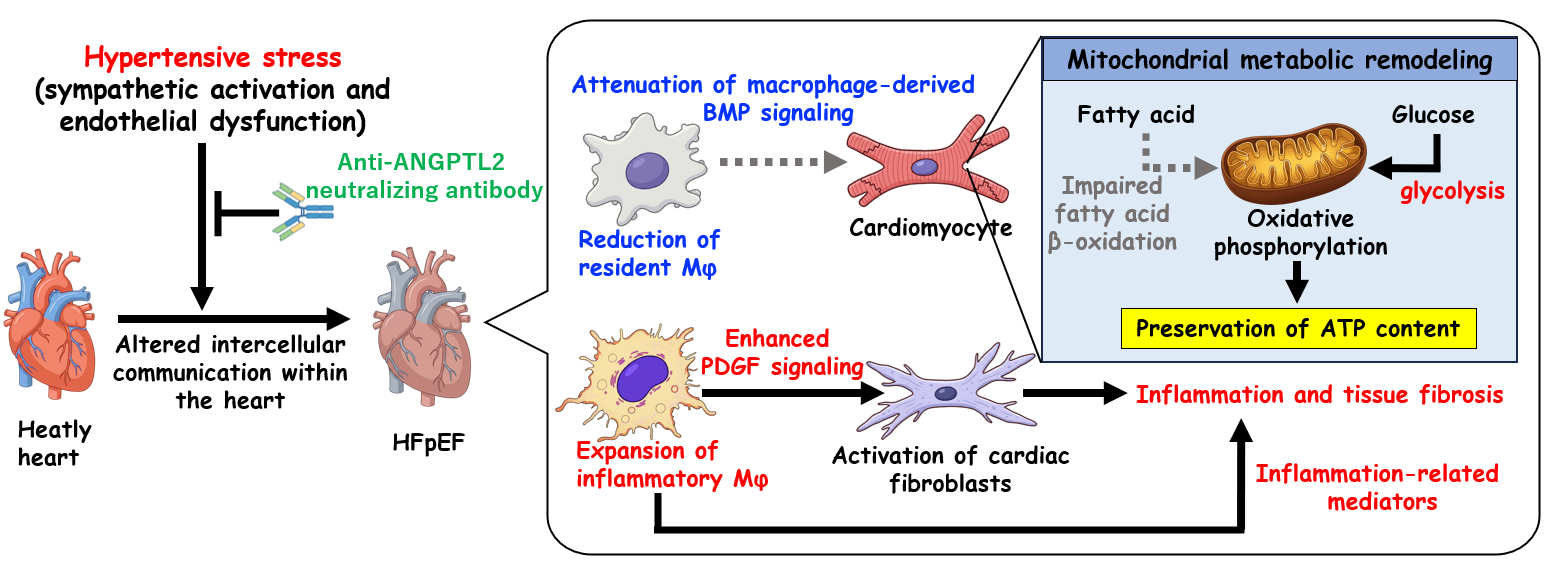
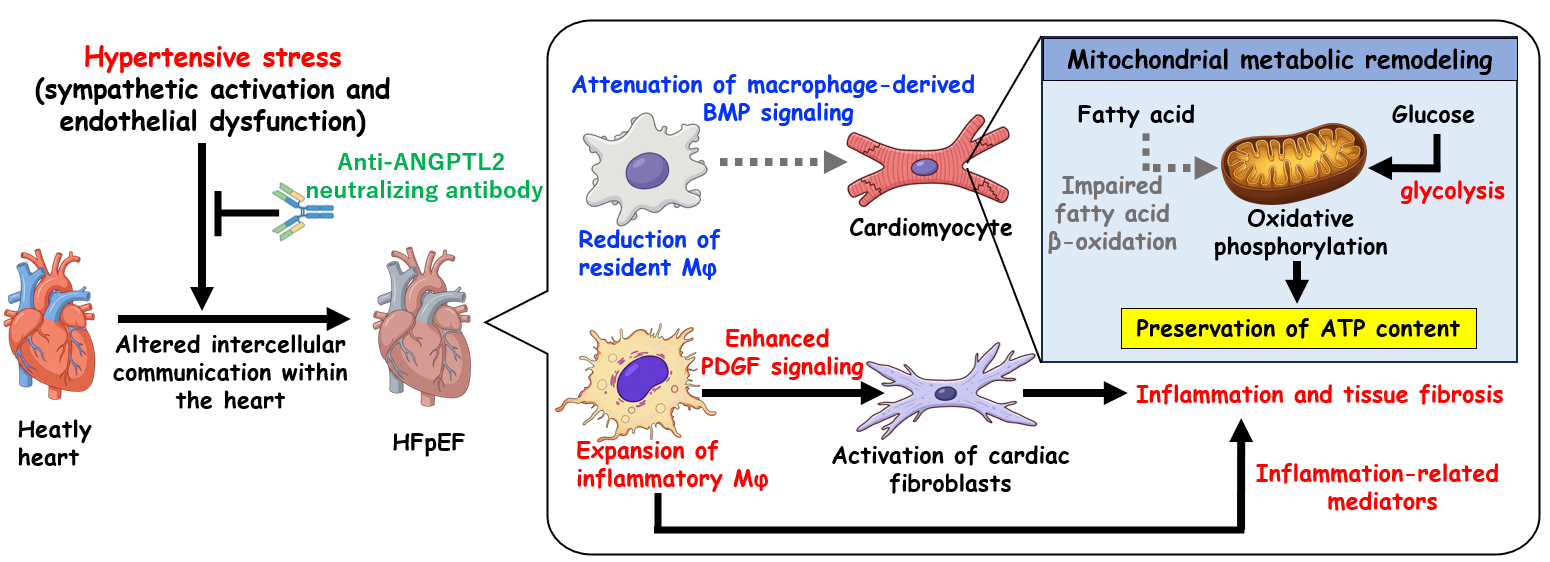
By combining clinical observations from three Japanese cohorts with a new mouse model, we investigated how hypertensive stress reshapes cardiac macrophage signaling, alters myocardial metabolism, and promotes fibrosis. Our findings also identify ANGPTL2 as a potential therapeutic target.
A clinical observation that changed our research question
The starting point of our study was an observation from my everyday clinical practice in Japan. Although obesity is widely recognized as an important contributor to heart failure with preserved ejection fraction (HFpEF), I encountered many patients with HFpEF who did not have obesity. The proportion of patients with obesity seemed lower than I had expected from the emphasis placed on obesity in much of the HFpEF literature, particularly studies from North America and Europe.
This observation led us to question whether experimental models centered on obesity and metabolic dysfunction adequately represent the heterogeneity of HFpEF. In patients without obesity, other factors, including hypertension and sympathetic overactivation, may play particularly important roles. If we want to understand the molecular basis of HFpEF in these patients and develop treatments for them, do we not first need experimental models that reflect their clinical characteristics?
This question became the starting point of our study.
A two-hit model of hypertensive HFpEF
We first examined three Japanese HFpEF cohorts. Compared with previously reported cohorts from North America and Europe, these cohorts had lower body mass indices, while hypertension and sympathetic overactivation were prominent clinical features. Importantly, a low body mass index did not necessarily exclude visceral adiposity, highlighting the complexity of defining HFpEF phenotypes based on body weight alone.
To investigate how hypertensive stress contributes to HFpEF in the absence of obesity, we established a mouse model using isoproterenol (ISO) to induce sympathetic activation. ISO alone produced features of hypertensive heart disease, including impaired diastolic function despite preserved systolic function, but did not fully reproduce symptomatic HFpEF. When we combined ISO with Nω-nitro-L-arginine methyl ester (L-NAME), which induces endothelial dysfunction by inhibiting nitric oxide synthesis, the mice developed a broader HFpEF phenotype.
This two-hit model allowed us to investigate how sustained sympathetic and hypertensive stress, together with endothelial dysfunction, can drive progression toward HFpEF without obesity being the central disease context. Rather than simply creating another model with a preserved ejection fraction, we aimed to capture a clinically relevant pathway toward heart failure.
Macrophages connect cardiac metabolism and fibrosis
We next investigated how chronic hypertensive stress reshapes the cardiac cellular environment. Single-nucleus RNA sequencing revealed a shift in cardiac macrophage populations, with an increase in Pla2g7-expressing pro-inflammatory macrophages and a reduction in Timd4-expressing resident macrophages.
Our analyses further suggested that this shift was accompanied by changes in macrophage-derived intercellular signaling. BMP signaling from macrophages to cardiomyocytes was reduced, in association with impaired fatty acid oxidation and altered myocardial metabolic programs. In parallel, PDGF signaling from macrophages to fibroblasts was enhanced, consistent with fibroblast activation and a more pro-fibrotic environment.
These findings highlight macrophages not simply as inflammatory cells that accumulate in the heart, but as potential regulators of communication between cardiac cell populations. Through changes in these signaling networks, hypertensive stress may link inflammation to metabolic remodeling and fibrosis. This perspective also suggests that understanding HFpEF requires examining not only individual cell types, but also how they communicate with one another.
From identifying a mechanism to testing a therapeutic target
We then explored whether ANGPTL2, an inflammatory mediator, might contribute to this process. Analysis of human atrial biopsy specimens showed increased ANGPTL2 expression in patients with HFpEF compared with non-HFpEF controls. This human tissue finding supported further investigation of ANGPTL2 in experimental models, although it did not establish a causal role in human disease.
In our mouse model, treatment with a neutralizing anti-ANGPTL2 antibody attenuated HFpEF development and cardiac remodeling, improved diastolic function, and reduced hypertrophy and fibrosis. Single-nucleus RNA sequencing further suggested that ANGPTL2 neutralization altered cardiomyocyte metabolic programs and attenuated inflammatory macrophage and pro-fibrotic fibroblast changes.
Together, these findings identify ANGPTL2 as a potential therapeutic target in this experimental context. However, the beneficial effects of ANGPTL2 inhibition observed in mice should not be interpreted as evidence of therapeutic efficacy in patients. Further studies will be needed to establish its relevance to human HFpEF and determine whether this approach can ultimately be translated into clinical practice.
Why this matters beyond a single HFpEF phenotype
HFpEF is a heterogeneous syndrome, and obesity-associated metabolic dysfunction is only one part of its complex pathophysiology. Our findings suggest that hypertension-dominant HFpEF in patients without obesity may involve a distinct pattern of immune-metabolic remodeling, in which macrophage-derived signals link myocardial metabolism, inflammation, and fibrosis.
The study also underscores how the choice of experimental model shapes the questions researchers can ask. Obesity-based models remain important for understanding obesity-associated HFpEF, but complementary models reflecting other clinical phenotypes are needed to investigate the broader spectrum of disease. Our model provides a framework for studying one such phenotype; it does not capture every form of HFpEF.
For me, this work began with a question arising from everyday clinical practice: are the models we use in the laboratory adequately representing the patients we see? By connecting clinical observations with experimental investigation, we sought to address that question at the molecular level. We hope our findings encourage further research into HFpEF beyond obesity-centered frameworks and stimulate investigation of the intercellular networks that govern cardiac resilience under chronic stress.
Read the full article
Kinoshita Y, Sato M, Oike Y, et al. “Hypertensive stress rewires macrophage signaling in heart failure with preserved ejection fraction independent of obesity.” Nature Communications.
https://doi.org/10.1038/s41467-026-78375-2

Thank you for visiting my page!
I am a cardiologist with a keen interest in uncovering the mechanisms behind heart failure and cardiac aging, as well as developing new treatment strategies. My research focuses on DNA damage response and mitochondrial regulation. Recently, I identified a lncRNA that may help combat age-related cardiac dysfunction, and I am actively exploring its potential.
In addition to fundamental research, I am also interested in applying these findings to real-world solutions, particularly through dietary approaches. One of my recent studies has shown promising results regarding the regulation of Nrf2 by Tamogi mushrooms.
If you're interested in my research, feel free to reach out!
Follow the Topic
-
Nature Communications
An open access, multidisciplinary journal dedicated to publishing high-quality research in all areas of the biological, health, physical, chemical and Earth sciences.

Related Collections
With Collections, you can get published faster and increase your visibility.
Women's Health
Publishing Model: Hybrid
Deadline: Ongoing
Tumor Microenvironment Crosstalk and Therapeutic Implications
Publishing Model: Hybrid
Deadline: Nov 02, 2026