Beyond the Data: A Call to Action for a Resilient Somaliland
Published in Healthcare & Nursing, Social Sciences, and Earth & Environment

In Somaliland, climate change is not an academic theory; it is the daily reality of our communities. My study, "Climate variability, food security, and adaptation strategies in Somaliland a review," connects the personal struggles of our pastoralists and farmers to hard data, turning scattered reports into a clear call to action.
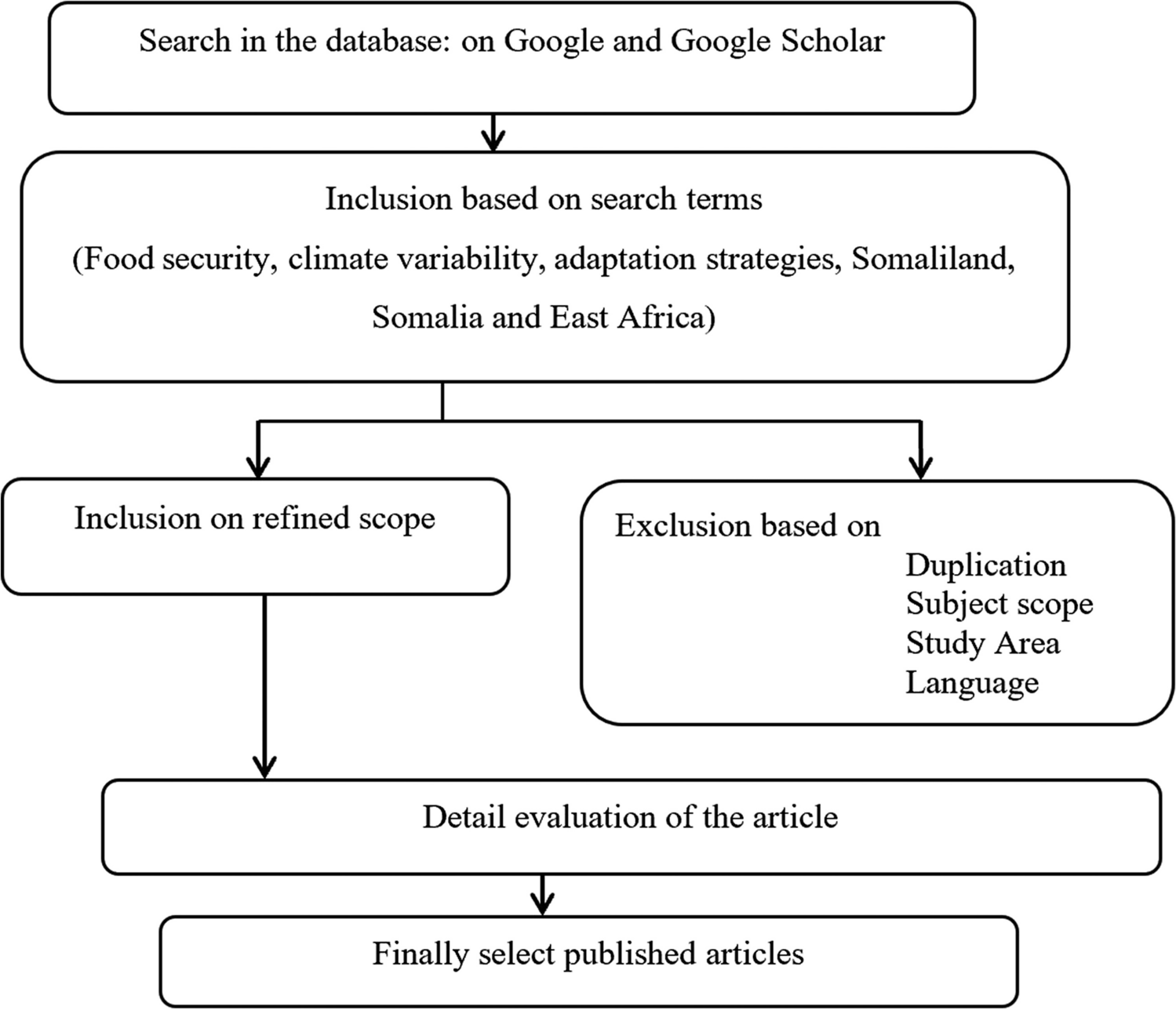
- My primary challenge was piecing together fragmented narratives. Data on food security were spread across various NGO reports, academic journals, and institutional assessments. My goal was to synthesize these disparate sources into a single coherent picture of the crisis.
- The findings are stark. My review shows that the percentage of our population in a food crisis has more than doubled since 2010, from 16% to over 36%. This is not just a statistic; it represents the daily struggle of more than a third of our people.
- While our communities are incredibly resilient, using strategies such as livelihood diversification and mobility to survive, my research highlights a critical disconnect. These traditional coping mechanisms are being overwhelmed by the scale of modern climate shocks and constrained by a lack of resources and weak institutional support.
- This study is intended to be used as a tool. It offers policymakers, NGOs, and international partners a clear evidence base to guide urgent and coordinated action. The path forward requires investment in sustainable agriculture, strengthening governance, and integrating local knowledge into adaptation plans. My hope is that this review catalyzes the support our communities need not only to survive but also to build a resilient and food-secure future. https://link.springer.com/article/10.1007/s10113-024-02270-z

Mohamed Abdullahi Omer
(He/Him)
Assistant Professor, University of Hargeisa
Assistant Professor, University of Hargeisa Specializing in environmental science, chemical management, climate change, food security, livelihoods, and disaster risk management.
Follow the Topic
Climate-Change Adaptation
Humanities and Social Sciences > Society > Sociology > Environmental Social Sciences > Climate-Change Adaptation
Food Security
Life Sciences > Health Sciences > Health Care > Nutrition > Food Security
Environmental Social Sciences
Physical Sciences > Earth and Environmental Sciences > Environmental Sciences > Environmental Social Sciences
Climate-Change Impacts
Humanities and Social Sciences > Society > Sociology > Environmental Social Sciences > Climate-Change Impacts
-
Regional Environmental Change
This is a multidisciplinary journal focusing on interactions between human and natural systems at local to global scales.