Brain Stroke Chemistry May Force Adhesion Molecules to Change Shape
Published in Chemistry, Neuroscience, and Cell & Molecular Biology


When we think about a stroke, we usually focus on the immediate problem of a blocked blood vessel and a sudden lack of oxygen to the brain. But there is a hidden second act to this medical emergency, and it all comes down to a rapid change in chemistry.
When brain cells are starved of oxygen, they switch to an anaerobic energy system. This emergency response generates an accumulation of metabolic byproducts, causing the brain's local pH levels to drop quickly. For a long time, this state of acidosis was just seen as a severe side effect. However, in our recent paper published, we discovered that this acid may actually act as a chemical trigger that physically alters the brain's most important gatekeepers.
Brain's Molecular Anchors
To understand this mechanism, we have to look at the blood-brain barrier. This is a highly selective wall that protects the brain from circulating immune cells and toxins. The structural anchors holding this wall together are a group of proteins called Junctional Adhesion Molecules, or JAMs. Under normal physiological conditions, these JAM proteins lock tightly together to seal the barrier. We wanted to know what happens to these anchors when the surrounding brain tissue suddenly turns acidic during a stroke.
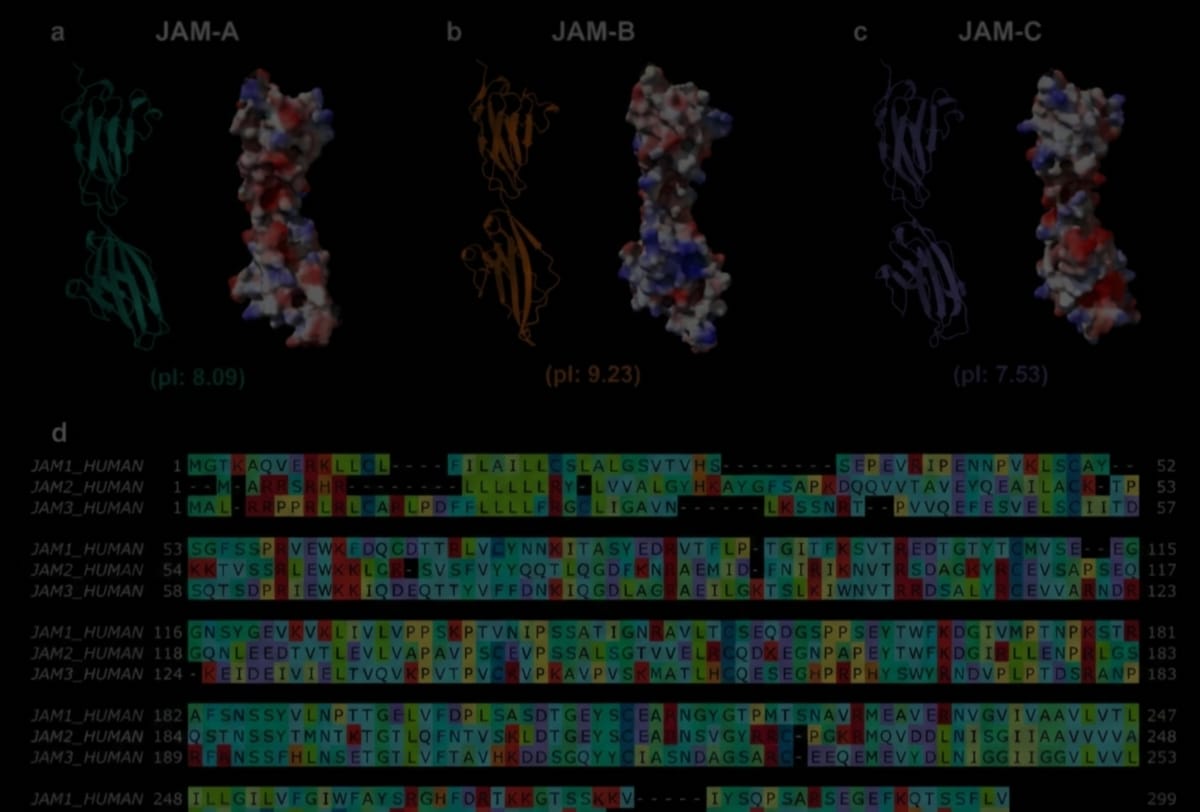
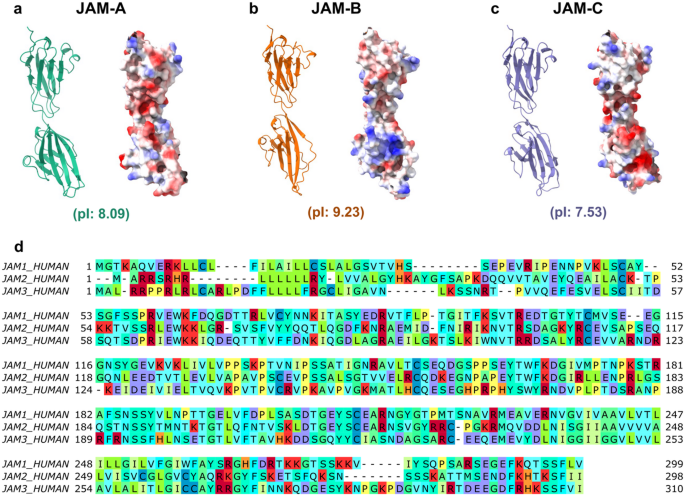
Using advanced computer simulations, we tested three specific members of this family (JAM-A, JAM-B, and JAM-C) across different pH levels. The results were fascinating. We found that the proteins reacted very differently based on their natural electrical charge. While JAM-B stayed perfectly stable and rigid across all conditions, JAM-A and JAM-C were highly sensitive to the acidic shift. When the pH dropped to the levels seen during a stroke, JAM-A and JAM-C started to flex and change shape. Instead of acting like solid anchors, their structural flexibility increased significantly. This structural shift is exactly what allows the blood-brain barrier to break down, permitting inflammatory cells to rush in and worsen the stroke damage.
An Ancient Evolutionary Trade-Off
This shapeshifting behavior also revealed a striking evolutionary backstory. This region on the JAM-A protein that becomes flexible in an acidic environment is the similar interface that certain viruses use to hijack and enter our cells. This points to an ancient and ongoing evolutionary arms race. Over millions of years, mammals have continuously modified the genetic code of these gatekeeper proteins to prevent viral entry. Unfortunately, that same evolutionary flexibility may leave the barrier proteins vulnerable to destabilization during the acidic conditions of a stroke.
Designing Future Stroke Therapies
Mapping this dynamic gives us a massive new advantage. Because we now know the exact structural hinges on these proteins that bend when the pH drops, we can start designing entirely new therapies. In the future, we could potentially create targeted treatments that lock these gatekeepers in their safe and closed position even when the brain becomes acidic, protecting patients from the devastating secondary damage of a stroke.
Follow the Topic
-
Molecular Genetics and Genomics
Molecular Genetics and Genomics is a peer-reviewed journal covering all areas of genetics and genomics, spanning experimental, theoretical, and synthetic approaches.

Related Collections
With Collections, you can get published faster and increase your visibility.
Genomics and Microbiome Signature of Physiological Adaptations in Terrestrial and Aquatic Animals
Publishing Model: Hybrid
Deadline: Ongoing
Molecular Mechanisms Linking Genetic Variation to Human Disease
Publishing Model: Hybrid
Deadline: Ongoing