Directional Variant Tension (Tv) - Decoding Hidden Constraints in Protein Adaptation
Published in Cancer, Cell & Molecular Biology, and Genetics & Genomics

The Illusion of Symmetric Evolution
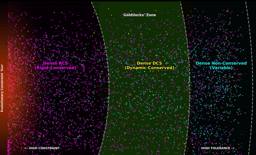
For decades, standard Markovian models of protein evolution have relied on a critical, yet flawed, assumption: that mutating from one amino acid to another is just as easy as mutating back. This symmetric view fails to capture the biological reality of structural constraints. In nature, mutations often flow effortlessly downhill but encounter massive thermodynamic and structural barriers when attempting to reverse course.
A New Mathematical Framework: Directional Variant Tension (Tv)
To capture this reality, we introduce Directional Variant Tension (Tv). By moving away from restrictive parametric assumptions and utilizing non-parametric Gaussian kernel regression, Tv calculates the exact directional propensity of amino acid substitutions directly from sequence alignments. When coupled with Inverse Positional Entropy, this framework pinpoints the highly conserved, rigid domains where evolution has trapped a protein in a functional bottleneck.
Clinical Validation: The EAA1 Transporter
We validate this framework on the human EAA1 glutamate transporter, a neuronal engine operating under intense selective pressure. The Tv metric immediately isolates structurally critical transmembrane helices (TM3, TM7, and TM8).
Crucially, Tv resolves the pathogenicity paradox in clinical genomics. By contextualizing global thermodynamic tension with localized evolutionary entropy, we can accurately distinguish between benign substitutions (which occur in flexible, high-entropy domains) and fatal pathogenic variants (which destroy critical, low-entropy structural features like disulfide bridges).
Impact on Genomic Medicine and Synthetic Biology
By decoding the non-redundant functional bottlenecks within protein topologies, Directional Variant Tension offers a powerful new lens for biological discovery. It provides clinicians with a causal mechanism to prioritize ultra-rare pathogenic variants, while equipping computational biologists with the predictive algorithms necessary to engineer highly stable, synthetic proteins.
In the spirit of open science, we are sharing our framework to provide the community with early access to these tools and insights. You can access and cite the full preprint (currently under revision) here: https://doi.org/10.64898/2026.03.10.710752.
Karagöl, A., & Karagöl, T. (2026). Directional Variant Tension (Tv): A Causal Framework for Quantifying Substitution Asymmetry. bioRxiv, 2026-03.
We highly encourage fellow scientists, structural biologists, and engineers to explore the methodology, we eagerly welcome your feedback, questions, and ideas via email!