Bridging the Research Impact Gap: A Multidimensional Analysis of Global Ginger Science
Published in Earth & Environment, Research Data, and Agricultural & Food Science



The Challenge of the Single-Author Journey:
Managing a multidimensional study as a single author presented unique challenges in data integrity and synthesis. My goal was to integrate disparate datasets—from global production and trade volumes to bibliometric publication metrics—into a coherent narrative. The aim was not just to highlight a problem, but to provide a strategic roadmap for more effective future research allocation in a vital global commodity.
Peer Review: A Catalyst for Clarity:
As a Journal Editor and Reviewer, I deeply respect the peer-review process, and this paper was no exception. Receiving "Major Revisions" on a solo project always pushes for deeper critical reflection. The reviewers for Discover Plants were instrumental in helping me sharpen the definition of the research impact gap and strengthen the analytical links between production data and scientific output. This rigorous engagement ultimately led to a truly rewarding outcome:
"I'm really pleased to see how thoroughly they've tackled all the points—their clarifications and corrections are spot-on and have genuinely improved the manuscript. It’s in great shape now."
This feedback from a specialist confirmed the invaluable role of comprehensive peer review in transforming complex findings into robust scholarship.
Key Findings & Call to Action:
The multidimensional analysis uncovered compelling insights into the "Research Impact Gap":
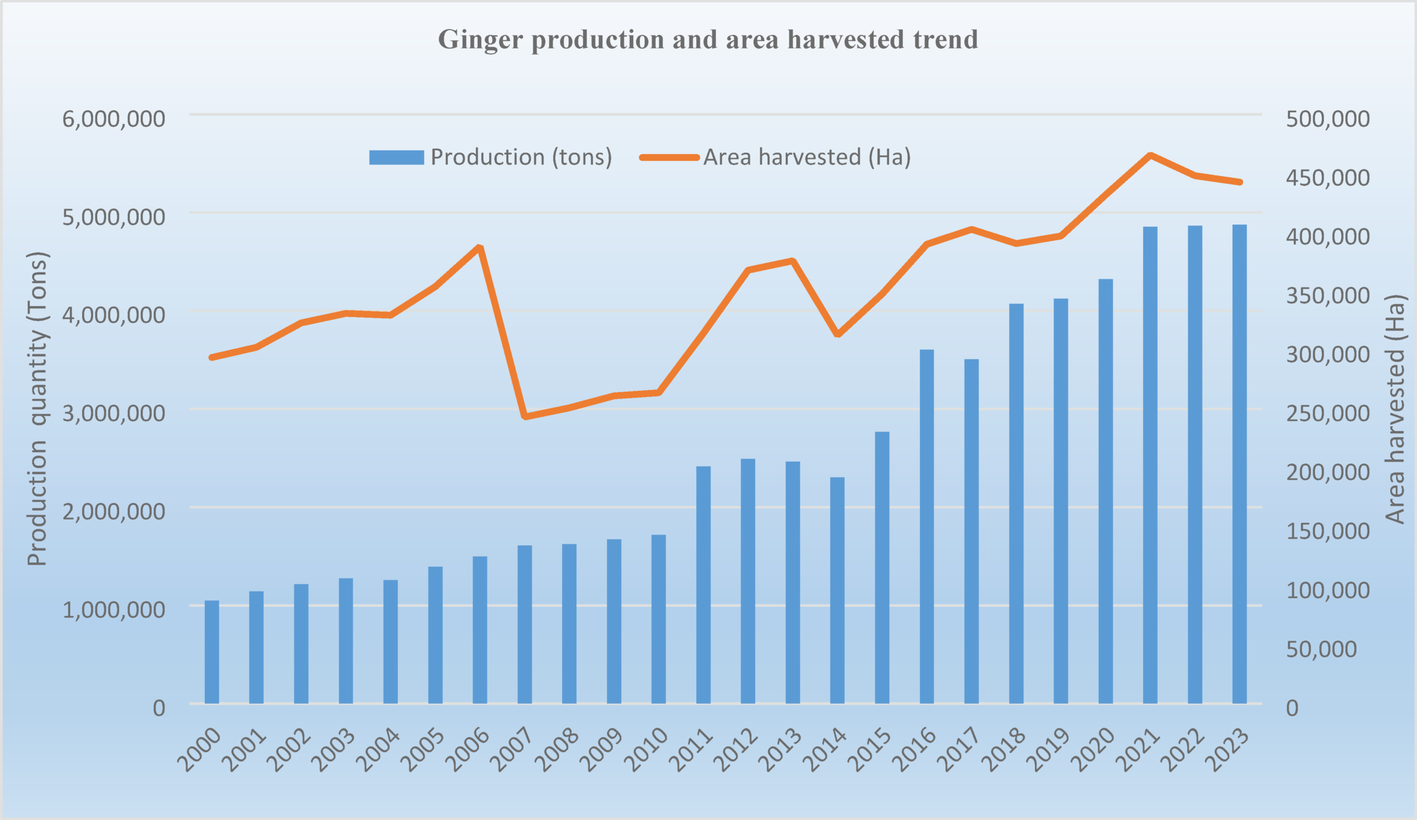
✅ A significant mismatch exists between the top ginger-producing nations and the volume of high-impact research originating from those regions.
✅ Current research priorities do not adequately reflect the dynamic shifts in global ginger trade, particularly concerning sustainability and post-harvest innovation.
✅ There is a clear need for a more integrated, "multidimensional" research approach—one that thoughtfully combines botanical science, economic analysis, and trade policy—to effectively close these gaps.
I hope this paper serves as a catalyst for a discussion within our community.
Read the full study here: https://doi.org/10.1007/s44372-026-00555-7

Dr. Olutosin Ademola OTEKUNRIN is an Agricultural Economist (academic researcher) from Nigeria. He holds a B. Agric. in Agricultural Economics from the Federal University of Agriculture, Abeokuta (FUNAAB), Nigeria. He obtained his M.Sc and Postgraduate Diploma in Education (PGDE) in Agricultural Economics and Agricultural Education from the University of Ibadan, Ibadan, and National Open University of Nigeria (NOUN) respectively. He holds a PhD in Agricultural Economics from Federal University of Agriculture Abeokuta (FUNAAB), Nigeria. His field of interest includes Agricultural Economics; Agribusiness; Food Security and Nutrition; Agricultural Marketing; Agricultural Education; Farm Management.
Dr. Olutosin Otekunrin is currently a lecturer and the departmental coordinator of the Department of Agribusiness, Federal University of Agriculture and Development Studies, Iragbiji (FUADSI), Nigeria and holds a position of Senior Research Associate at Innovation Lab for Policy Leadership in Agriculture and Food Security (PiLAF), University of Ibadan, Nigeria.
He also holds a position of a Research Fellow in the University of the Free State (UFS), Bloemfontein, South Africa. He's a young and aspiring academic that has published in some internationally recognized journals like Global Food Security, Data in Brief, Sustainability, Agriculture (MDPI), Scientific African, Environmental Science and Pollution Research, Methods, Nutrition & Food Science (Emerald), Child Indicators Research (Springer Nature), Scientific African among others. He also serves as reviewer to journals such as Social Indicators Research, British Food Journal, Geo Journal, African Journal of Science, Technology, Innovation and Development, PLOS ONE, Forest and Society journal, Cogent Economics and Finance, Cogent Food and Agriculture, Environment, Development and Sustainability (Springer), Frontiers in Public Health, Frontiers in Environmental Science, Frontiers in Animal, Frontiers in Nutrition, Frontiers in Sustainable Food Systems, Frontiers in Nutrition, among others.
Dr. Otekunrin serves as
✅ Lead Guest Editor, Frontiers in Sustainable Food Systems (July 2026 -present)
✅ Editorial Board member, Scientific Reports (Nature Portfolio) (July 2026-present)
✅ Senior Editorial Board member, Discover Agriculture (June 2026 -present)
✅ Editorial board member, BMC Research Notes (12 March, 2026 to present)
✅ Editorial board member, Discover Global Society (25 July, 2025)
✅ Guest Associate Editor, Frontiers in Nutrition & Frontiers in Sustainable Food Systems (1 April & June 12, 2025)
✅ Associate Editor, Frontiers in Sustainable Food Systems (12 March 2025)
✅ Associate Editor, Frontiers in Nutrition (12 March 2025)
✅ Guest Editor, BMC Nutrition (November, 2024)
✅ Editorial Board Member, BMC Agriculture (August, 2024)
✅ Editorial Board Member, Discover Agriculture (June, 2024)
✅ Editorial Board member, BMC Public Health (July, 2023)
✅ Review Editor, Frontiers in Public Health (January, 2023)
✅ Academic Editor, PLOS ONE (January, 2023)
✅ Section Editor, Caraka Tani: Journal of Sustainable Agriculture (March, 2020)
Dr. Otekunrin is a Web of Science (Publons) Academic graduate and Academy mentor (successfully mentored 16 WoS Academy graduates from different parts of the world) and has reviewed 1, 148 manuscripts for over 150 local and international (Scopus/WoS indexed) peer review journals. He has 735 verified editor records as of 2 September 2025
🔗https://www.webofscience.com/wos/author/rid/J-8964-2017
Dr. Otekunrin has been recognized with fifteen Springer Nature Editor of Distinction (EoD) Awards between 2025 and 2026, including Editorial Contribution Awards and Author Service Awards across six Springer Nature journals: BMC Agriculture, BMC Nutrition, BMC Public Health, Journal of Health, Population and Nutrition, Discover Agriculture, and Discover Global Society. These awards recognize his sustained excellence in peer review, editorial leadership, and commitment to supporting authors and advancing high-quality scholarly publishing.
Follow the Topic
-
Discover Plants
A fully open access, peer-reviewed journal supporting multidisciplinary research across all fields relevant to molecular, cellular, tissue, organ and whole organism research as well as plant breeding, plant pathology, and the interaction of plants with the environment.

Related Collections
With Collections, you can get published faster and increase your visibility.
Nanotechnology for Plant Development & Health Management
Agricultural sustainability is a concern that is rising profoundly around the globe. Where it directly impacts the germination, growth, yield, and overall agricultural productivity, and indirectly, human consumers are also affected. Global climate change is significantly influencing agriculture presently, so the focus is on more sustainable solutions to this issue, which mostly include phytochemicals and nanomaterials. Nanomaterials are supposed to be unpredictable and novel, which enhances their potential for targeting plant growth, development, and stress mitigation. Further, nanomaterials have found applications in various industries as well, which is how the nanomaterials are released directly or indirectly into the atmosphere, including soil and water. Hence, making it is important to evaluate the impact of nanomaterials on plants. Therefore, in the present scenario, it is essential to focus on the impact of NPs synthesized chemically, physically, biologically on various crops in the lab in vitro/ in vivo as well as in field conditions. Further, plant disease detection using nano-based sensors and stress management using nano-fertilizers is another aspect that can be benefited by the application of nanomaterials. This issue will provide an insight on how various nanomaterials possess the potential to target the global issue of agricultural productivity with the drastically increasing human population.
Keywords: Abiotic stress; Biotic stress; Plant health; Agricultural productivity; Crop management; Nanosensor; Plant pathology management
Publishing Model: Open Access
Deadline: Oct 09, 2026
Plant Productivity, Adaptation and Resilience under Climate Change
Climate change poses unprecedented challenges to plant productivity, threatening global food security and agricultural sustainability. Crop plants may experience increasing temperatures, altered precipitation patterns, elevated atmospheric CO2, and the growing frequency of extreme weather either independently or interactively. Understanding how plants respond and adapt to these changing environmental conditions is essential for developing resilient cropping systems and ensuring sustainable agricultural production.
This Special Collection aims to highlight recent advances in plant productivity, adaptation, and resilience under climate change. It welcomes original research, reviews, and perspectives that provide mechanistic insights and innovative solutions to enhance plant performance under abiotic and biotic stresses associated with climate change. Topics of interest include, but are not limited to, plant physiology and photosynthesis, stress signaling and phytohormones, molecular genetics and genomics, multi-omics approaches, crop breeding and biotechnology, gene editing, phenomics, plant–microbe interactions, carbon assimilation, resource-use efficiency, and climate-smart agricultural practices. Studies integrating fundamental and applied research to improve plant productivity, sustainability, and resilience across diverse cropping systems are particularly encouraged. This collection seeks to foster interdisciplinary research that advances our understanding of plant responses to climate change and supports the development of sustainable strategies for future agriculture.
Keywords: elevated CO2, ozone stress, drought, salinity, photosynthesis, carbon assimilation, seed nutritional quality, seed yield, carbon-nitrogen balance, biomass production
This Collection supports and amplifies research related to SDG 7, SDG 13 and SDG 15.
Publishing Model: Open Access
Deadline: Apr 20, 2027