Bubbleverse, a metaphor into birthing experiences

This metaphor grew from participants' narratives about pregnancy, the birthing bubble, and the baby bubble they experienced after birth.
Like

Share this post

Choose a social network to share with, or copy the URL to share elsewhere

This is a representation of how your post may appear on social media. The actual post will vary between social networks

Explore the Research

Springer International Publishing
Springer International Publishing Springer International Publishing

The Bubbleverse: Women’s Experiences of Pelvic Floor Care and Their Journey Through Bubbles - International Urogynecology Journal

Introduction This study explores women’s experiences of pelvic floor (PF) care after childbirth, revealing significant insights into their physical and emotional journeys during the transformative period following birth in a Swedish tertiary hospital context. The focus is on women who sustained third- or fourth-degree PF injuries after vaginal birth, viewed through the perspective of universal design (UD). Methods The study uses qualitative methods, observations, and interviews to illuminate challenges in PF care. Qualitative content analysis is used to identify themes emerging from participants’ narratives. Comics serve as a visual and multimodal method to depict the variety and sequencing of women’s narratives in multimodal ways. Results The analysis identified two main themes. The first, the Bubbleverse, is a metaphor for women’s experiences across interconnected phases of birth and recovery, where PF injuries were often overshadowed by vaginal birth, newborn care, and future uncertainty. The second theme reflected women’s recommendations for healthcare, calling for timely, individualised communication, and structured support. Conclusions The study concludes with a call to reconfigure the fragmented and underprioritised aftercare. Alternative care pathways tailored to individual needs are essential for more equitable PF care.

Bubbleverse visualisation through skething, showing a women over time passing through different bubbles, forming a bubbleverse.

My latest article explores Bubbleverse, a metaphor to help us talk about an important phase in life. This metaphor grew from participants' narratives about pregnancy, the birthing bubble, and the baby bubble they experienced after birth. These bubbles can be very different, with distinct qualities, changing form over time and carrying different emotions. Providing insights into women's experiences of Pelvic Floor Care in Sundsvall. 
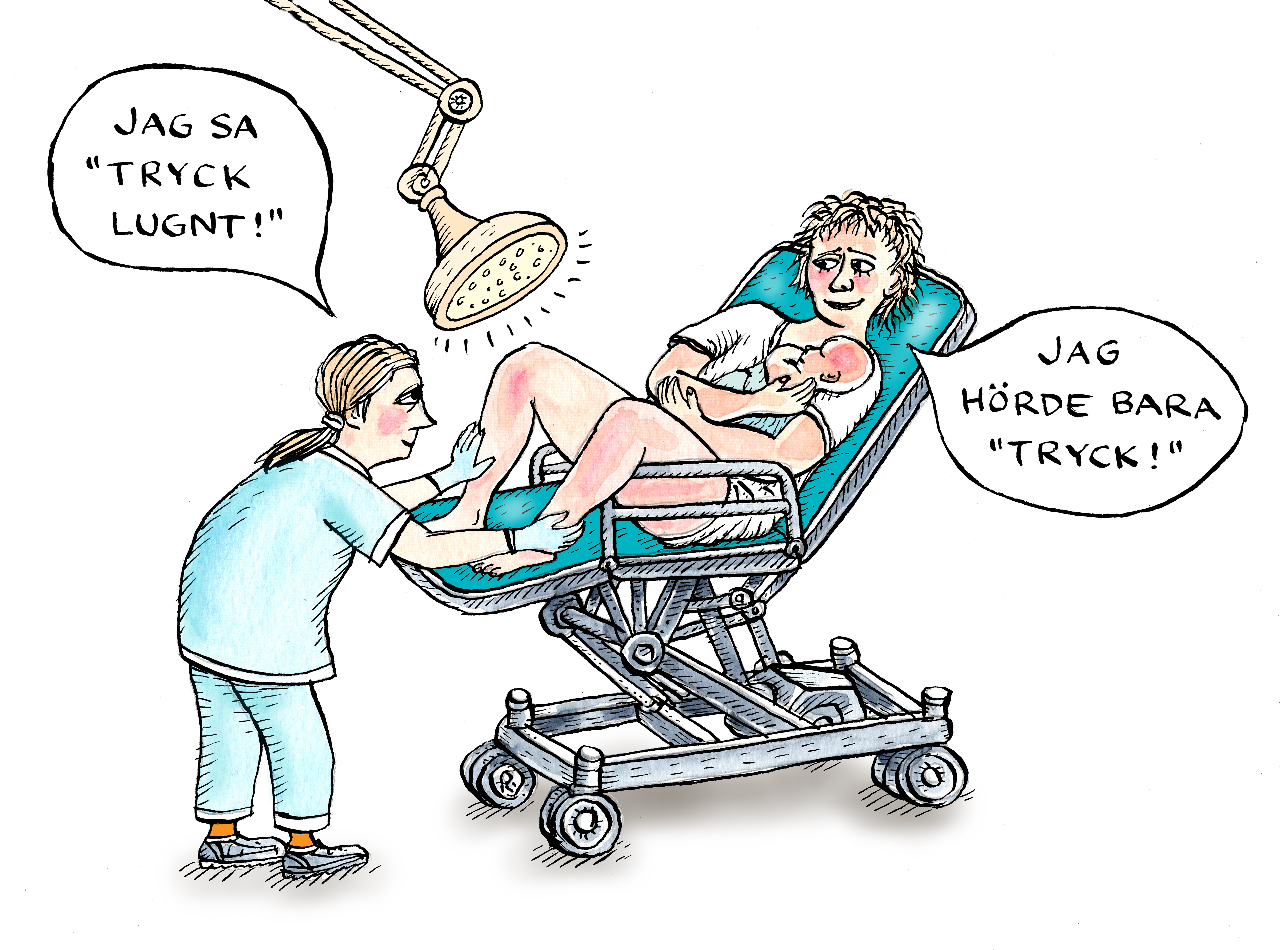
A comic illustration in which a midwife examines a woman’s PF and says, “I told you to push gently!” The woman holding her newborn baby in her arms replies, “I only heard push!”. ©illustration by Robert Nyberg, composition and idea development by the first author

Women's insights were captured through interviews, analysed using qualitative content analysis (QCA), and comics supported the analysis process. Creating comics during QCA helped capture key narratives and break down the complexities of the PF injury journey. Comics offered a multimodal approach through sequence, visuals, humour, and text, which can help ease the weight of difficult topics related to PF care and open up new perspectives. In this study, comics were not used during data collection. Instead, they developed alongside the QCA as a way to synthesise and interpret the findings from a critical perspective, using satire and the UD framework, and to support the visual communication of the results. The comics method in this study was co-created with guidance from Robert Nyberg, a professional comic artist in Sweden.
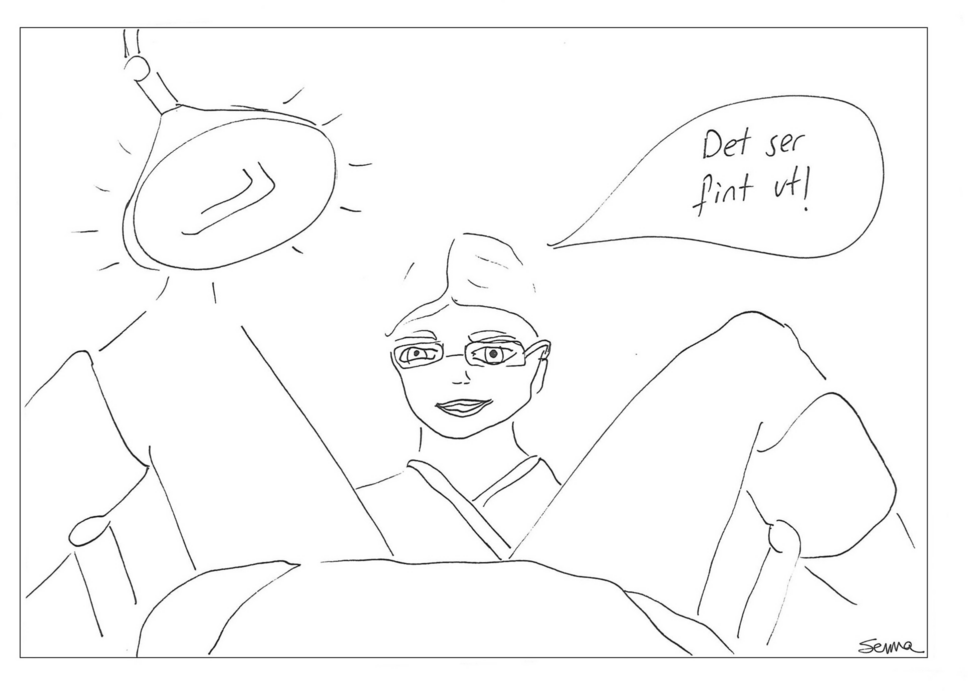
A comic illustration from a gynaecological examination room from the participant’s perspective. The participant’s legs are wide open, and the doctor is between the legs, saying, “It looks fine”. ©illustration, composition and idea development by the first author

The first weeks after childbirth are critical and require strong support from partners and healthcare. Care can reduce the burden by structuring follow-up, initiating contact, and allowing women to focus on their baby. PF injury aftercare is currently poorly structured, and there is a need for more flexible, individualised, and inclusive care pathways that reflect diverse recovery journeys.
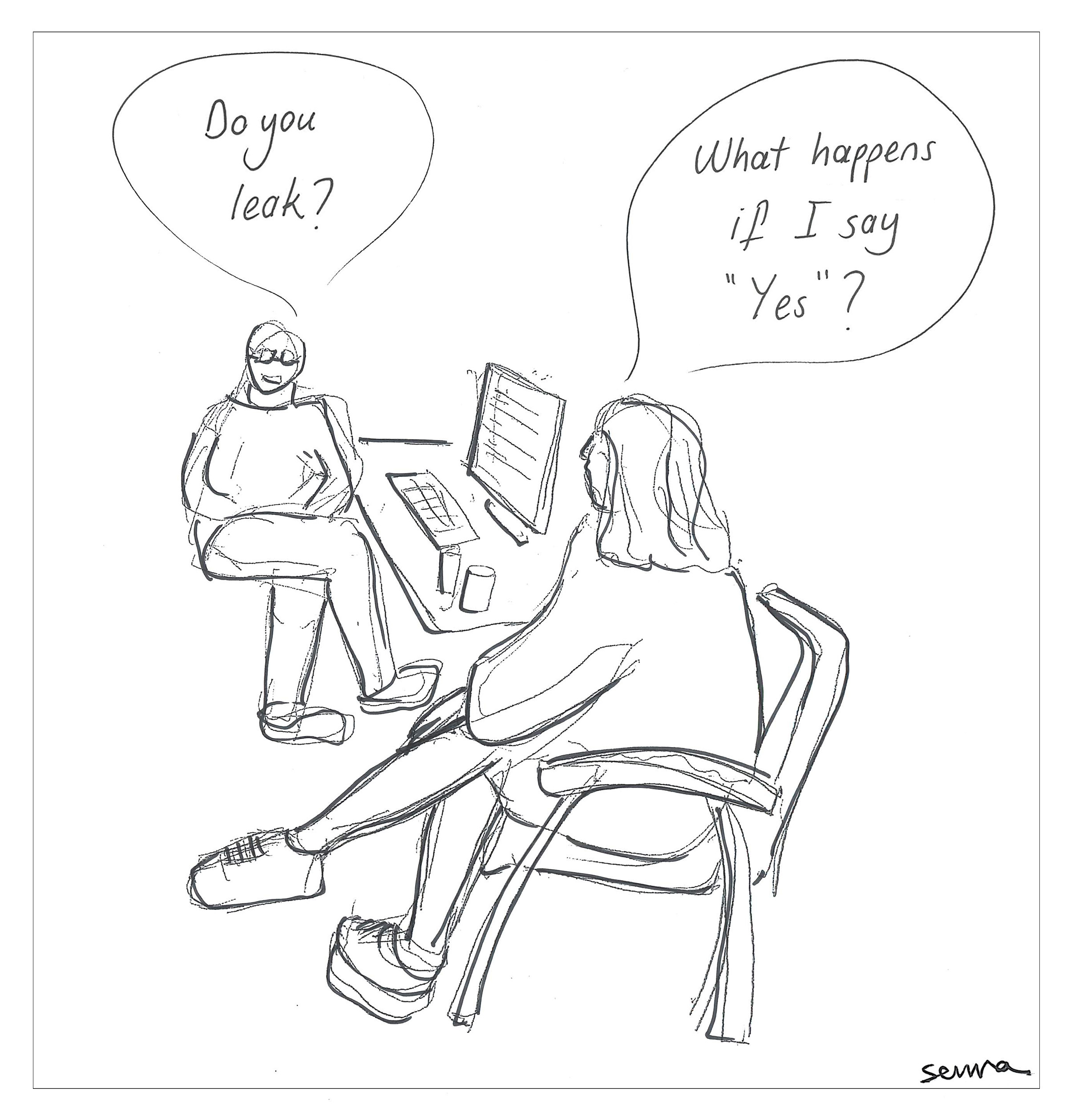
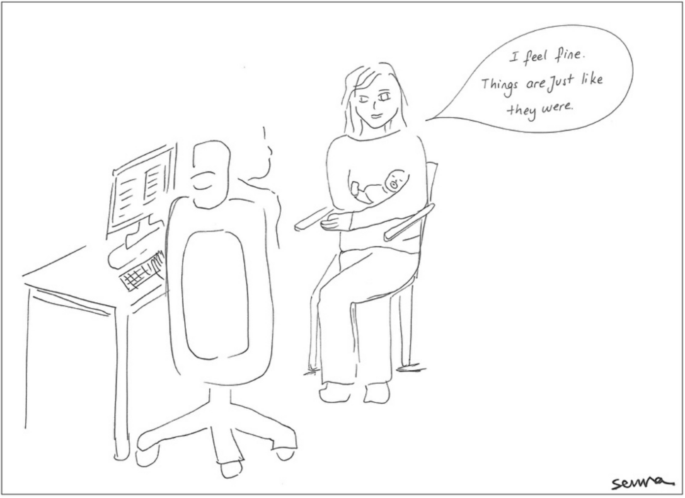
A comic illustration of a woman talking to a doctor in a consultation room. The doctor asks, “Do you leak?” and the woman answers, “What happens if I say yes?”. ©illustration, composition, and idea development by the first author

Women may struggle to process and express their experiences, shaped by timing, language, and sociocultural norms that can normalise discomfort and silence symptoms. Opportunities exist to support reflection, communication, and key moments such as early recovery and the first bowel movement.

We conclude by highlighting the importance of recognising women’s “baby bubble” alongside healthcare professionals’ “care bubble”, and of designing care that bridges these experiences. Using concepts such as the Bubbleverse and visual methods like comics, the findings offer ways to better understand and communicate women’s postpartum journeys. Future work should involve women, partners, and healthcare professionals in developing more inclusive and responsive care systems.

Please sign in or register for FREE

If you are a registered user on Research Communities by Springer Nature, please sign in