Call for papers: Egg production
Published in Agricultural & Food Science





Collection Overview
Scientific Reports has launched a Guest-Edited Collection on Egg production.
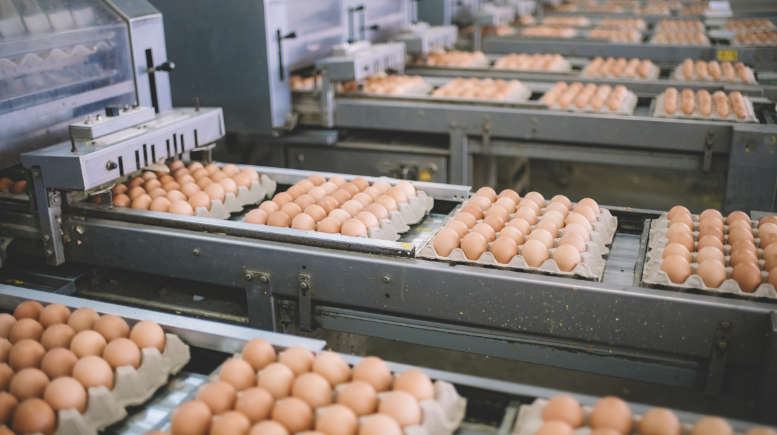
Egg production has been the most important economic trait in poultry because of the desirable nutritional content of eggs in humans' diets. The primary source of revenue in egg production is from egg pulp sales and packed eggs, while the most significant ongoing cost incurred by producers is the provision of optimal feed. Therefore, enhancing and optimising shelf life and feed efficiency are critical for improving overall profitability in egg production systems. Advancements in the field of egg production are driven by improvements in animal welfare, enhanced biosecurity measures, the adoption of innovative housing systems (such as enriched, free-run, and free-range systems), and the integration of robotic technologies.
This will be a Collection of original research papers and will be open for submissions from all authors – on the condition that the manuscripts fall within the scope of the Collection and of Scientific Reports more generally. We are welcoming submissions until 1st May 2026.
Why is this Collection important?
"Egg production remains a cornerstone of global food systems due to the egg’s nutritional value, economic efficiency, and adaptability to diverse farming models. As a scientist in animal science and nutrition, I see this Collection as a timely platform to highlight advances in feed optimization, genetic improvement, and welfare-focused housing systems. The integration of robotics and sustainability in egg production represents a forward-looking shift. This Collection encourages interdisciplinary contributions that can drive practical, scalable solutions. I am excited to support research that bridges innovation with field-level applicability, and I invite colleagues to share their work for real-world impact." - Prof. Arda Yıldırım
"Egg production is a key component of poultry farming, which provides several billion dollars of economic outputs annually. The Egg production Collection will attract emerging research such as cage-free housing and animal welfare. The Collection will provide egg industry latest research and applied study reports about challenges and opportunities.
Scientific Reports is a nature publication journal, which has impactful effect in sharing research findings." - Prof. Lilong Chai
Why submit to a Collection?
Collections like this one help promote high-quality science. They are led by Guest Editors, who are experts in their fields, and In-House Editors and are supported by a dedicated team of Commissioning Editors and Managing Editors at Springer Nature. Collection manuscripts typically see higher citations, downloads, and Altmetric scores, and provide a one-stop-shop on a cutting-edge topic of interest.
Who is involved?
Guest Editors:
- Lilong Chai, University of Georgia, USA
- Livio Galosi, University of Camerino, Italy
- Arda Yıldırım, Tokat Gaziosmanpaşa University, Türkiye
Internal Team:
- In-House Editor: Dr. Githa George, Scientific Reports, India
- Commissioning Editor: Louisa Beckett, Fully OA Brands, Springer Nature, UK
- Managing Editor: Aliya Anwar, Fully OA Brands, Springer Nature, UK
How can I submit my paper?
Visit the Collection page to find out more about this Collection and how to submit your article.
Follow the Topic
-
Scientific Reports
An open access journal publishing original research from across all areas of the natural sciences, psychology, medicine and engineering.
-
A Collection of original research articles from the fields of veterinary, nutrition, sustainability, and interdisciplinary research, with a focus on poultry and egg production systems.

Related Collections
With Collections, you can get published faster and increase your visibility.
Cancer Prevention and Control
Publishing Model: Hybrid
Deadline: Feb 19, 2027
Healthy Aging
Publishing Model: Open Access
Deadline: Dec 31, 2026