Call for papers: Machine learning methods for crystalline defects
Published in Physics and Computational Sciences


Collection Overview
Scientific Reports has launched a Guest-Edited Collection on Machine learning methods for crystalline defects.
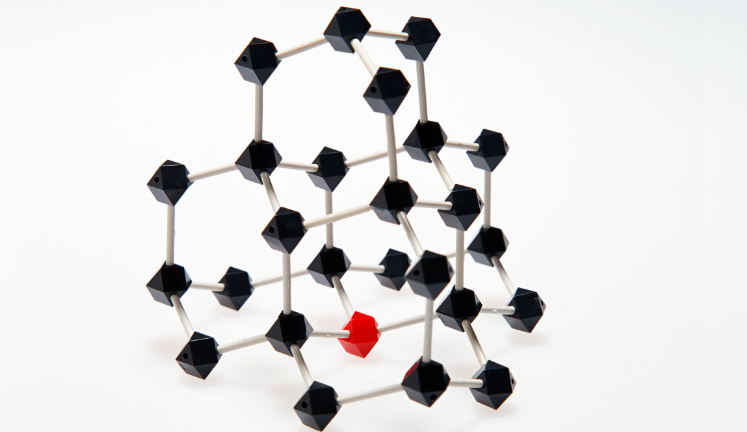
Crystalline defects—ranging from vacancies and interstitials to dislocations and grain boundaries—play a critical role in determining the physical properties of materials.
This Collection focuses on the development and application of machine learning methods for modelling and predicting the structure, energetics, and dynamics of defects in crystalline systems. We invite original articles leveraging ML techniques such as graph neural networks, U-Net, and active learning in conjunction with first-principles or atomistic simulations to analyse complex microscopy images of defects, predict defect structure migration pathways and properties from density functional theory (DFT) data, and develop machine-learned interatomic potentials that reduce computational cost for atomistic simulations and have real-world application.
This will be a Collection of original research papers and will be open for submissions from all authors – on the condition that the manuscripts fall within the scope of the Collection and of Scientific Reports more generally. Narrative review articles are also welcomed to our sister journal, Scientific Reviews. We are welcoming submissions until 16th October 2026.
Why is this Collection Important?
"The integration of machine learning with crystalline defect studies is highly relevant, as it enables rapid prediction and deeper understanding of defect-driven properties that govern material performance in electronics, energy storage, and catalysis. I am particularly excited about this collection because it brings together interdisciplinary advances, bridging computational materials science and data-driven methodologies. This Collection has the potential to accelerate materials discovery, improve defect engineering strategies, and reduce experimental costs. Researchers should consider submitting to this issue to showcase innovative approaches, gain visibility in an emerging field, and contribute to shaping the future direction of intelligent materials design and predictive modeling." - Dr. Karthik Kumara
Why submit to a Collection?
Collections like this one help promote high-quality science. They are led by Guest Editors, who are experts in their fields, and In-House Editors and are supported by a dedicated team of Commissioning Editors and Managing Editors at Springer Nature. Collection manuscripts typically see higher citations, downloads, and Altmetric scores, and provide a one-stop-shop on a cutting-edge topic of interest.
Who is involved?
Guest Editors:
- Rumu Halder Banerjee, Bhabha Atomic Research Centre, India
- Karthik Kumara, B.M.S College of Engineering, India
- Yongge Wei, Tsinghua University, China
Internal Team:
- In-House Editor: Dr. Supriya Lokhande, Scientific Reports, India
- Commissioning Editor: Faija Miah, Fully OA Brands Nature, Springer Nature, UK
- Managing Editor: Chantale Davies, Fully OA Brands Nature, Springer Nature, UK
How can I submit my paper?
Visit the Collection page to find out more about this Collection and how to submit your article.
Follow the Topic
-
Scientific Reports
An open access journal publishing original research from across all areas of the natural sciences, psychology, medicine and engineering.
-
A Collection of original research articles on the development and application of machine learning methods for modeling and predicting the structure, energetics, and dynamics of defects in crystalline systems.

Related Collections
With Collections, you can get published faster and increase your visibility.
Cancer Prevention and Control
Publishing Model: Hybrid
Deadline: Feb 19, 2027
AI in clinical decision-making
Publishing Model: Open Access
Deadline: Nov 28, 2026