Call for papers: Microbial metabolic interactions
Published in Ecology & Evolution and Microbiology
What is this collection about?
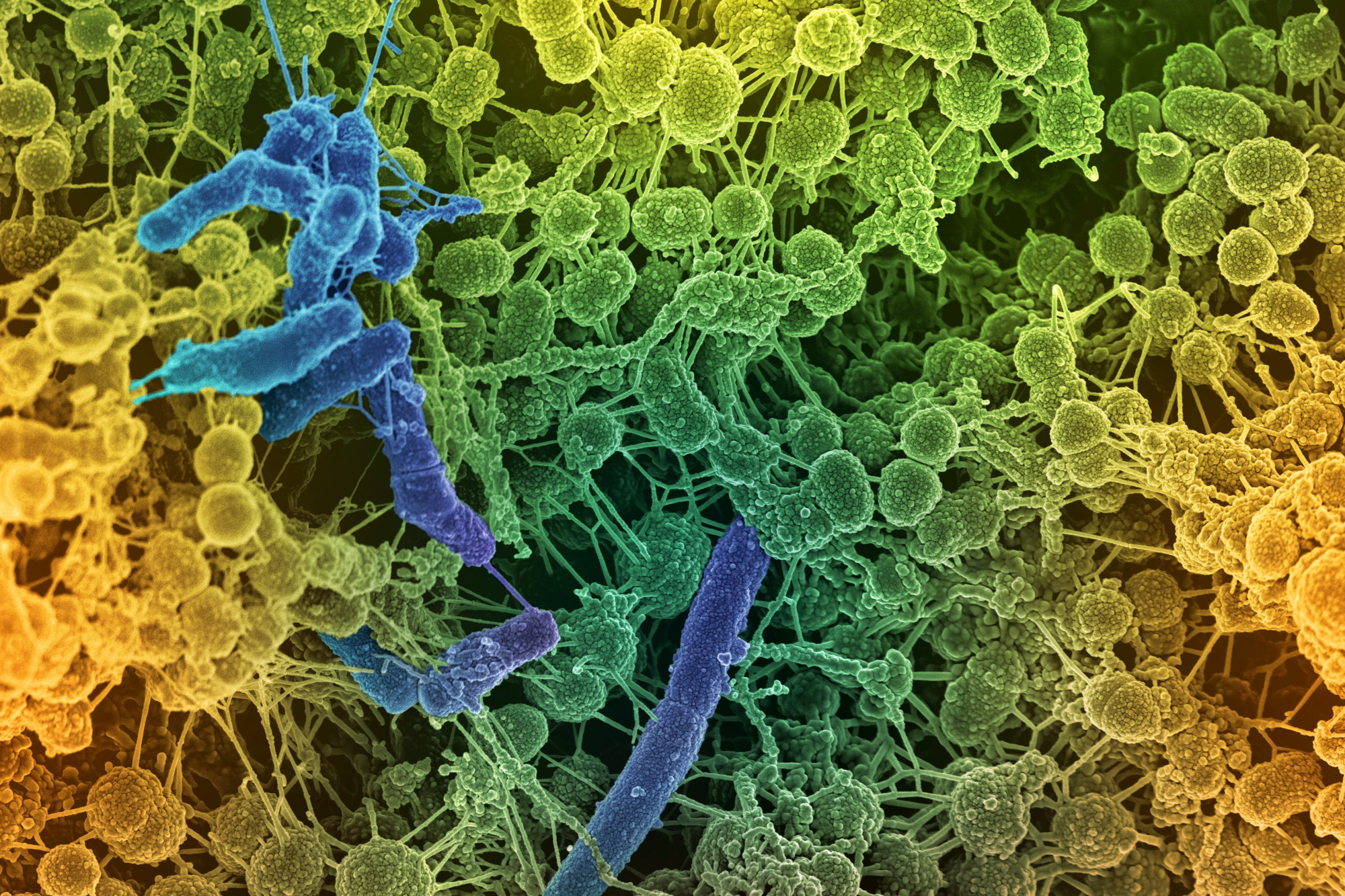
Microorganisms engage in a wide range of interactions, from cooperation to competition and predation, that help shape the ecosystems they inhabit. This cross-journal Collection seeks research on microbial metabolic interactions, including nutrient exchange, complex microbial metabolism and physiology, microbial ecology and evolution, spatial organization driven by metabolic interactions, and adaptation to environmental change. Nature Microbiology, Nature Communications, and Communications Biology will consider original research Articles, Reviews and Perspectives, while Scientific Reports will consider original research Articles.
Why is this collection important?
Microbial metabolic interactions influence ecosystem stability, biodiversity, nutrient cycling, and environmental adaptation across natural and engineered systems. Understanding how microorganisms exchange resources, compete, cooperate, and respond to stress is increasingly important for addressing challenges in health, agriculture, biotechnology, and environmental sustainability. This cross-journal Collection provides a platform to bring together advances from multiple disciplines and participating journals, helping to increase the visibility and impact of research in this rapidly growing field.
Why submit to a collection?
Collections like this one help attract and promote high-quality science. They are led by internal In-House Editors and supported by a dedicated team of Commissioning Editors and Managing Editors at Springer Nature. Collection manuscripts typically see higher citations, downloads, and Altmetric scores, and provide a one-stop-shop on a cutting-edge topic of interest.
Who is involved?
Communications Biology is edited by both in-house professional editors and Editorial Board Members.
Guest Editors for Communications Biology
Haichun Gao, PhD, Zheijang University, China
Dr. Haichun Gao is a professor of microbiology at College of Life Sciences and Director of Institute of Microbiology, Zhejiang University. His current research centers on molecular mechanisms underpinning adaptation of bacteria to environments, including but not limited to physiological and ecological impacts of major nutrient elements, nitrogen and sulfur species in particular, oxidative stress response, iron homeostasis, biomechanics of cytochromes c, extracellular electron transfer, and bioenergy.
Silvio Waschina, PhD, Kiel University, Germany
Prof. Silvio Waschina leads the Nutriinformatics Research Group at the Institute for Human Nutrition and Food Science at the University of Kiel, Germany. With a background in Bioinformatics from the University of Jena, he obtained his PhD specializing in the evolution of metabolic networks at the Max Planck Institute for Chemical Ecology and the University of Jena, Germany. The Nutriiformatics Research Group focuses on computational approaches to simulate the metabolic processes that govern the structure and function of microbial communities, including the microbial contribution to the metabolism of host organisms. The group develops software and bioinformatic workflows to reconstruct and analyze metabolic models by integrating metagenomic and metabolomic data. Areas of application for the developed computational tools include the diet-gut microbiome-host-axis in inflammatory diseases, the role of metabolite cross-feeding in maintaining diversity in multi-species microbial communities, and the metabolic processes that underlie the assembly of host-associated microbiomes.
Nature Communications is edited by in-house professional editors.
Nature Microbiology is edited by in-house professional editors.
Scientific Reports is managed by in-house professional editors and edited by Editorial Board Members.
Our editors work closely together to ensure the quality of our published papers and consistency in author experience.
How can I submit my paper?
Visit the Collection page to find out more about this collection and submit your article.

Follow the Topic
-
Communications Biology
An open access journal from Nature Portfolio publishing high-quality research, reviews and commentary in all areas of the biological sciences, representing significant advances and bringing new biological insight to a specialized area of research.
-
Nature Microbiology
An online-only monthly journal interested in all aspects of microorganisms, be it their evolution, physiology and cell biology; their interactions with each other, with a host or with an environment; or their societal significance.
-
Nature Communications
An open access, multidisciplinary journal dedicated to publishing high-quality research in all areas of the biological, health, physical, chemical and Earth sciences.
Related Collections
With Collections, you can get published faster and increase your visibility.
Women's Health
Publishing Model: Hybrid
Deadline: Ongoing
DNA repair and human disease
Publishing Model: Hybrid
Deadline: Oct 31, 2026