Call for papers: Peptide drug design
Published in Bioengineering & Biotechnology, Cell & Molecular Biology, and Pharmacy & Pharmacology
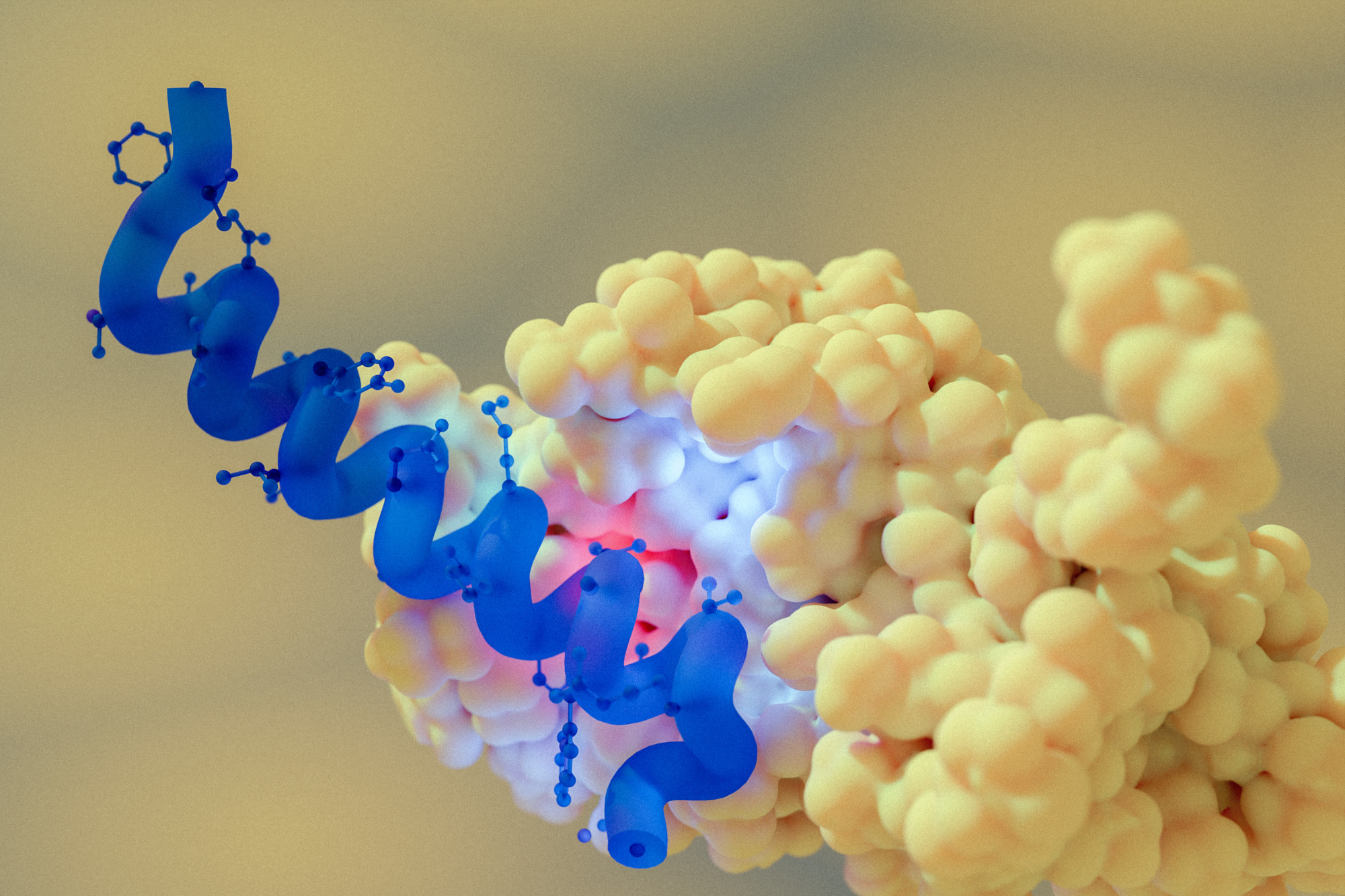


What is this collection about?
Peptide therapeutics occupy a unique space in the drug space between small molecules and larger biologics such as proteins or antibodies, offering higher specificity and efficacy than small molecules and lower immunogenicity than protein therapeutics. Despite these advantages, they still present challenges, including limited in vivo stability and, in many cases, insufficient permeability. Nevertheless, the field of peptide drug discovery and design has rapidly advanced in the last decades, due to improvements in synthesis and analysis technologies, and in the structural biology area. More recently, computational modelling and structural prediction tools have been rapidly accelerating this field, enabling faster design pipelines and enhanced stability and selectivity.
In this joint collection between Communications Biology, Communications Chemistry, Nature Communications, Nature Structural & Molecular Biology, Nature Chemical Biology and npj Drug Discovery, we welcome manuscripts on peptide drug discovery and design. We are interested in methodological studies, including both computational and experimental approaches for designing new peptide therapeutics. We also welcome research presenting experimentally validated design of novel peptides. Manuscripts focused primarily on clinical validation fall outside the scope of this collection. Nature Communications, Communications Biology, Communications Chemistry, Nature Structural & Molecular Biology, Nature Chemical Biology and npj Drug Discovery will consider original Articles, Reviews and Perspectives. Submissions are encouraged by 28 January 2027.
Why is this collection important?
The field of peptide therapeutics is undergoing rapid expansion, with a growing number of peptide drug leads progressing through clinical development. Longstanding limitations are being addressed by new delivery strategies that include oral administration and improved transport across the blood–brain barrier, substantially broadening the therapeutic scope of some peptides. At the same time, advances in computational modelling, structural prediction, and AI‑driven design are transforming peptide discovery. This collection will highlight these developments and their impact on the future of peptide drug design.
This Collection supports and amplifies research related to United Nations Sustainable Development Goal 3 (SDG 3): Good Health and Well-being by promoting advances in peptide drug discovery and design.
Why submit to a collection?
Collections like this one help attract and promote high-quality science. They are led by internal In-House Editors and supported by a dedicated team of Commissioning Editors and Managing Editors at Springer Nature. Collection manuscripts typically see higher citations, downloads, and Altmetric scores, and provide a one-stop-shop on a cutting-edge topic of interest.
Who is involved?
Communications Biology is edited by both in-house professional editors and Editorial Board Members.
Guest Editor for Communications Biology
Ross Bathgate, BSc (hons), PhD, Florey Institute of Neuroscience and Mental Health, Australia
Professor Ross Bathgate is a group leader at the Florey Institute of Neuroscience and Mental Health and an Honorary Professorial Fellow in the Department of Biochemistry and Pharmacology at the University of Melbourne, Australia. He is a molecular pharmacologist with broad expertise in bioactive peptides and their G protein-coupled receptors (GPCRs). His lab works on both academic and industry-sponsored projects developing peptide-based therapeutics targeting GPCRs.
Communications Chemistry is edited by both in-house professional editors and Editorial Board Members.
Nature Communications is edited by in-house professional editors.
Nature Structural & Molecular Biology is edited by in-house professional editors.
Nature Chemical Biology is edited by in-house professional editors.
npj Drug Discovery is edited by a team of external academic editors.
Our editors work closely together to ensure the quality of our published papers and consistency in author experience.
How can I submit my paper?
Visit the Collection page to find out more about this collection and submit your article.

Follow the Topic
-
Communications Biology
An open access journal from Nature Portfolio publishing high-quality research, reviews and commentary in all areas of the biological sciences, representing significant advances and bringing new biological insight to a specialized area of research.
-
Nature Communications
An open access, multidisciplinary journal dedicated to publishing high-quality research in all areas of the biological, health, physical, chemical and Earth sciences.
-
Communications Chemistry
An open access journal from Nature Portfolio publishing high-quality research, reviews and commentary in all areas of the chemical sciences.
-
Nature Chemical Biology
An international monthly journal that provides a high-visibility forum for the chemical biology community, combining the scientific ideas and approaches of chemistry, biology and allied disciplines to understand and manipulate biological systems with molecular precision.
-
Nature Structural & Molecular Biology
An integrated forum for structural and molecular studies, the journal places a strong emphasis on functional and mechanistic understanding of how molecular components in a biological process work together.





Related Collections
With Collections, you can get published faster and increase your visibility.
Methods development in Cryo-ET and in situ structural determination
Publishing Model: Hybrid
Deadline: Oct 30, 2026
Women's Health
Publishing Model: Hybrid
Deadline: Ongoing





Please sign in or register for FREE
If you are a registered user on Research Communities by Springer Nature, please sign in