Cannot live happily ever after. Two controversial clinical cases of Disney princesses
Published in General & Internal Medicine and Arts & Humanities
Explore the Research
Just a moment...
Verifying you are human. This may take a few seconds.
About a year ago, by the last Christmas, a feature titled “Living happily ever after? The hidden health risks of Disney princesses” was published by The BMJ. This article was a kind of Christmas joke, where authors discussed the potential illnesses and medical conditions which Disney princesses might have. To assume the potential diagnoses, they used the life histories and medical histories of the princesses outlined in the books and films.
Despite being a kind of entertainment, it is a good cause for reflection. I appreciate the work performed by the authors and agree with the most evaluations in the article. However, two cases, in my opinion, are likely to have different medical explanations.
Earlier, my colleagues and I tried to diagnose the case of Voland from The Master and Margarita during some discussions in the Russian segment of X/Twitter. There is a kind of spoiler: it suffered from syphilis or chlamydiosis. I had summarized these discussions in a Russian educational media outlet Mel.fm. Here, I decided to apply my experience to Disney princesses. Could we clarify some of their diagnoses — and offer them some treatments?
Belle (Beauty and the Beast)
The first controversial case is represented by the fairytale Beauty and the Beast, where the authors represent the Beast as a chimera and conclude that Belle could acquire dangerous infections such as brucellosis and rabies. However, chimeras are highly unlikely to be created from the once human creature (the Prince), which leads urges to look for other explanations.
There is actually a small chance that Belle could actually acquire rabies given the fact that rabies can produce a beast-like behaviour in affected humans. But in this case, Beast would not have survived to the finale and would have died earlier. There would be no recovery at the finale, as the paralytic stage is irreversible — and even the strongest love would be unable to help.
Rather, the prince (the Beast) should be assumed to have leprosy, which could easily be contracted by Belle. The Beast is usually rendered with a lion-like face — such way of imaging is used by Disney and even AI image generator I used for this post (Fig. 1). I associate this guise with facies leonica — “lion face”, the characteristic facial changes of leprosy. The abandoned/forgotten palace is also suggestive of leprosy: the leprous prince was just put into isolation. Even the episode with the curse could be a result of a misinterpretation — the witch could just mention the first signs of this indolent disease at the Prince’s face (given her experience in medical sorcery). But the Prince, with his scanty educational level, understood this as good as he was able to…
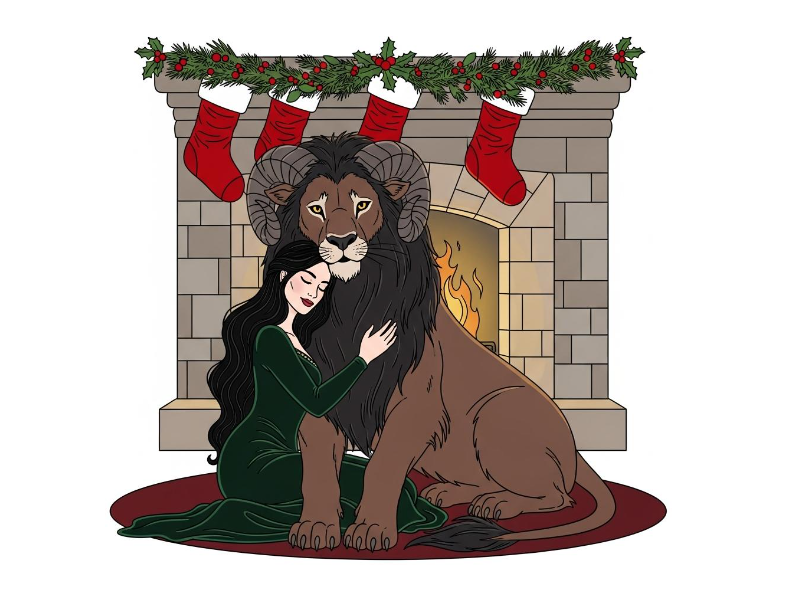
The question remains open whether the recovery (or remission) of leprosy in the Beast could have been caused by a simple care given by a loving woman, which the prince had been deprived of for a long time and which appeared in his life with the arrival of Belle. Disney could have confused and exaggerated the form, though. The prince could have had leprosy in the tuberculoid form, which does not cause the lion-like face disfiguration and can have benign course (but also disfigures the appearance in the active phase). In this case, it may indeed have been cured with the appearance of a caring woman by the prince's immune response only.
Unfortunately, Belle's immune status at the time of the finale remains unclear. She could be prone to the lepromatous type. In such a case, Belle is in danger of acquiring a beast-like appearance herself. In modern circumstances, the couple should have been followed up by a skin clinic and receive prophylactic treatment with anti-mycobacterial drugs. However, the events of Beauty and the Beast are dated and located in France soon after the Black Death (by the episode with a plague doctor’s mask in the Disney film). Unfortunately, the maximum help that the medicine of that time could offer was health resort treatment — a prolonged honeymoon at the Côte d'Azur, for example.
Aurora (Sleeping Beauty/Maleficent)
Regarding Sleeping Beauty, the authors’ diagnosis is clearly incomplete. The long-term consequences of prolonged sleep (obesity, diabetes, and cardiovascular events) are described comprehensively. However, the causes of this condition are covered insufficiently — despite the fact that this is the most pressing question.
Obviously, a lethargic state in a patient and the other inhabitants of the palace is suggestive of an epidemic disease. There were one of such kind — it was encephalitis lethargica which swept across Europe during the Interwar Period.
Maybe the same or a similar virus was circulating in Aurora's homeland at that time. This is highly plausible as similar conditions have been described since 1580. The history of such cases has been compiled by Oliver Sacks in his famous book Awakenings. In late 1600s, a famous neurologist Thomas Sydenham described an epidemic of febris comatosa in London — and its name says it all. In 1712-1713, Germany faced “sleep sickness”; between 1750 and 1800. coma somnolentum struck Germany and France. In the middle of 19th century, another famous neurologist Jean-Martin Charcot described a series of juvenile parkinsonism cases, presumably post-encephalitic in origin. At the end of 19th century, a somnolent illness called Nona occurred in Italy, soon after the “Russian flu” pandemic. Surprisingly, “Russian flu” has been recently connected to coronavirus OC43 — is this just a coincidence?
Thus, probable encephalitis lethargica has been attested across Europe since 16th century — and its existence might really overlap with the time of Aurora and Maleficent. Aurora’s condition could be just a viral illness — and Maleficent might be completely guiltless (Fig. 2).
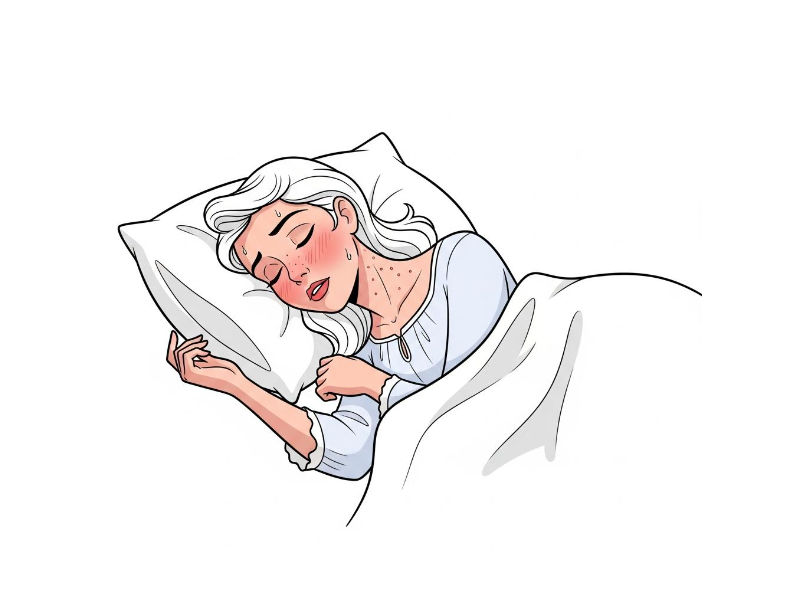
Somnolent state in encephalitis lethargica sometimes used to resolve spontaneously; this could explain the awakening by a heated kiss. However, it is not yet s happy end. After this, Aurora might face long-lasting consequences of severe Parkinson-like disorder. In today's world, Aurora would have been helped in part by levodopa (see the same Oliver Sacks' book Awakenings). In those days, no cure existed, and Aurora would require excessive care till the end of her life. But there still were the chance that the acute phase will not leave such severe consequences: such cases were described in encephalitis lethargica.
Conclusion (not so happy as I would like)
Disney-style fairytales have a bit coddled and spoiled us. We always wait a happy end as the conclusion of every story. However, medical science is not always about happy end.
This medical analysis of two fairytale-derived cases is a kind of a Christmas joke. But there is a grain of truth in every joke. The truth is that the medical conditions of one partner could be a real challenge for the other, and the therapeutic success may depend on their patience and ability to care for a sick — but still loved — partner. The scenarios I have considered here are far from a classical fairytale. But thousands of couples face them every year — in discordant couples, or in couples where one partner requires palliative care.
The typical ending of fairytales “lived happily ever after” sometimes has an extension: “and they died on the same day”. It is not the case for a lot of couples. Instead, the healthy partners face severe burden, which can be alleviated by psychological help and appropriate education. In real life, we sometimes need to find a way to share a bit of happiness, even if dying on the same day is impossible.
Merry Christmas everyone!
Footnote
I submitted a rapid response with these considerations to The BMJ immediately after the publishing of the discussed article. However, this response has not been published by the journal. This post is its extended version written especially for my Research Communities blog.

Biologist focused on bioinformatics, multicellularity evolution, and cross-kingdom pathogenicity.
Laboratory medicine doctor by training.
Member of the Royal Society of Biology (RSB) and International Society of Computational Biology (ISCB).
Science communicator, regular contributor of The Skeptic magazine (skeptic.org.uk).
Digital artist by hobby (see my website).
Living in Tver', Russia.