Catal Talks: Prof. Shinya Furukawa, Associate Editor




Explore the Research
 SpringerLink
Catal
Catal is a fully open access journal for the dissemination of advances in catalysis across a wide range of fields. • Prioritizes works on critical…
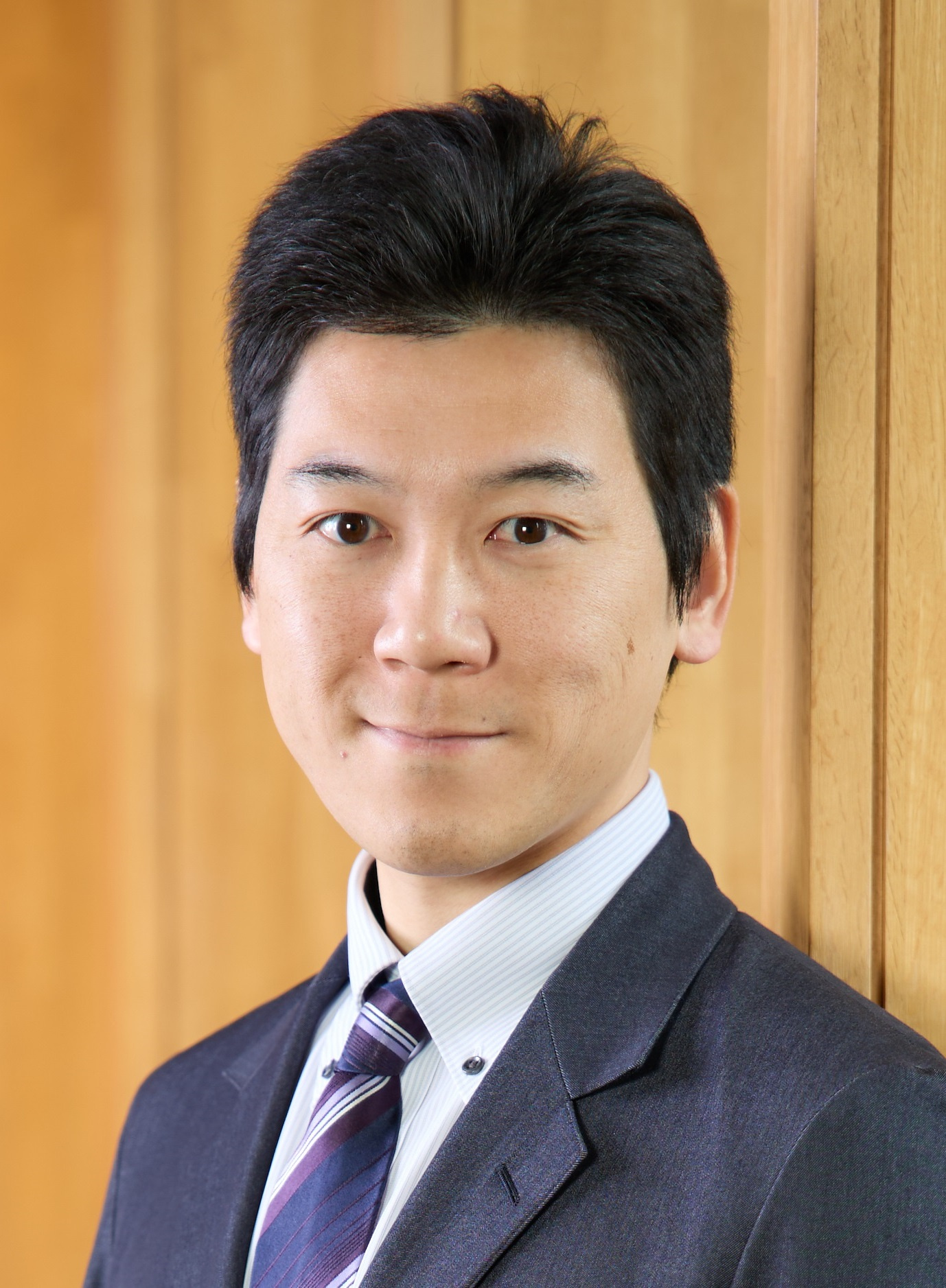 Prof. Shinya Furukawa, Associate editor of Catal
Osaka University, Japan
Area of Interest:
Heterogeneous Catalysis, Materials chemistry, Multinary alloys, Reaction mechanism, Sustainable Chemistry
Could you briefly introduce your academic and research background? What initially drew you to advanced materials such as multinary alloys and their applications in heterogeneous catalysis?
Our research focuses on developing advanced inorganic materials for heterogeneous catalysis, including multinary alloys and ceramics. We study not only thermal catalysis, but also external energy-driven catalysis, such as electrocatalysis, electric field catalysis, and plasma catalysis. The consistent philosophy underlying our research is the desire to achieve precise active site design and reaction control at the atomic level, as seen in homogeneous complex catalysts, even in heterogeneous solid materials. We believe that advancing materials and catalytic chemistry in academic settings requires a comprehensive understanding of reaction mechanisms and catalytic principles at the atomic and orbital levels. Although intermetallic compounds offer well-defined active sites thanks to their high regularity, they have limitations as catalyst materials in terms of variability, flexibility, and expandability in design. To overcome these limitations, one of our current research directions involves multimetallization based on intermetallics. By expanding into pseudo-binary alloys and high-entropy intermetallics, we aim to introduce new possibilities for catalyst materials.
Multinary alloys, especially high-entropy alloys and intermetallics, have developed rapidly in recent years. In your view, what have been the most significant advances in this field, and where do you see the most exciting opportunities ahead?
The development of high-entropy alloys and intermetallics as electrocatalysts has progressed rapidly, supported by advances in synthesis, characterization, and fundamental understanding. While these achievements are noteworthy, progress in multinary alloy chemistry has been more limited in other catalytic fields, especially thermal catalysis. As the target reactions and fields differ, the catalytic chemistry of multinary alloys should also vary. Therefore, I believe that the development of materials science of multinary alloys in the field of thermal catalysis will reveal new aspects and potential for advancement in the catalytic chemistry of high-entropy systems.
Your research often bridges fundamental chemistry and practical applications. What do you see as the key challenges in translating multinary alloy materials from laboratory studies to real-world catalytic or industrial applications?
In our research, intermetallic catalysts generally contain main-group elements or, on occasion, early transition metals. This often leads to challenges in durability and reusability under practical conditions involving air and moisture. Although high-entropy approaches can mitigate some of these issues due to stability enhancement, they introduce trade-offs, such as increased synthetic complexity and higher costs. Ensuring the widespread adoption of multinary alloy materials in real-world applications will require breakthroughs in intrinsic stability, synthesis scalability, ease of handling, and overall practicality.
Looking ahead, what scientific questions or technologies are you most excited about? If resources were unlimited, what project would you pursue?
A fundamental question that continues to drive my research is how we can develop a universal method to overcome the Sabatier principle, the root cause of many tradeoffs that frustrate researchers in the field of catalysis. By inputting external energy in a highly localized, microscopic, and transient manner into specific elementary steps, we could transcend thermodynamic and kinetic limitations, as well as the constraints imposed by the Sabatier principle. I am deeply motivated to explore such innovative approaches with controllable energy input and new materials that can accelerate these processes.
As an Associate Editor for Catal, what qualities do you look for in a strong manuscript? And what are some of the key challenges you face in your editorial role?
In a strong manuscript, I look for work that contributes to the academic and practical advancement of catalysis or provides clear guidance and inspiration for future studies. This may include interdisciplinary research that opens new directions or conceptual breakthroughs in materials design, reaction mechanisms, reaction systems, or energy utilization. A challenge in my editorial role is that Catal is still establishing its reputation and has limited submissions. At this early stage, I should proactively and constructively work with promising submissions, helping authors refine and strengthen their manuscripts so that accepted papers are impactful and well-positioned to gain citations and visibility.
Could you tell us which article from Catal’s recent publications interests you most, and what are your thoughts on this work?
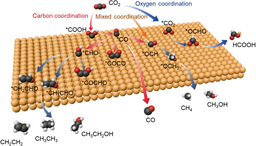
Mechanistic insights into the impact of locally ordered versus disordered aqueous environments on CO2 reduction to methane across copper surfaces: Xing, Z., Sun, M., Yu, H. et al., Catal 1, 5 (2025).
This study demonstrates that tuning and controlling the microenvironment of H₂O molecules around the catalyst surface is as crucial as the design of the catalyst material itself for optimizing the CO₂ reduction reaction. The significance of this paper lies in quantifying the mechanism by which water microstructuring influences the reaction pathway and proposing a strategy for designing electrodes and interfacial properties to enhance CO₂ conversion to fuels. This challenges conventional catalyst design, which has primarily focused on surface composition and morphology, and highlights the importance of considering interactions between solute, solvent, and surface.
Follow the Topic
-
Catal
Catal is an open access journal covering full spectrum of catalysis critical advances. From biocatalysts to heterogeneous catalysts, it integrates fundamental and applied sciences. Catal offers a primary platform for researchers and practitioners in the field.

Related Collections
With Collections, you can get published faster and increase your visibility.
National Catalysis Conference 2025
The 22nd National Catalysis Conference, held in December 2025 in Xiamen, China, stands as the largest national academic event in the field of catalysis, bringing together leading scientists from academia and industry to discuss frontier research and emerging technologies across catalytic science.
In collaboration with several internationally recognized researchers from Xiamen University - the main organizer of the conference - Catal will publish a Special Issue featuring selected contributions from the meeting. This joint effort ensures high academic standards and showcases the scientific breadth and excellence presented at the conference.
Potential topics include, but are not limited to:
• Catalytic materials
• Thermocatalysis
• Electrocatalysis
• Biomass and CO₂ conversion
• Industrial catalysis
• Theoretical and computational catalysis
Publishing Model: Open Access
Deadline: Dec 31, 2026
Porous Materials for Sustainable Green Catalysis
The advancement of our collective understanding in the field of porous materials for sustainable green catalysis is crucial as we face urgent environmental challenges and the need for sustainable energy solutions. The integration of porous materials into catalytic processes has opened new avenues for improving efficiency, selectivity and stability while minimizing waste. Significant advances have been made, including the development of zeolites, mesoporous materials, metal-organic frameworks (MOFs) and covalent organic frameworks (COFs), which have demonstrated remarkable catalytic performance in various reactions.
Future research holds immense potential, with speculations ranging from the design of novel porous materials with tailored properties to their application in industrial catalysis, biocatalysis, H2 production and carbon capture technologies. By continuing this research, we can drive progress toward achieving Sustainable Development Goals (SDGs), particularly in clean energy (SDG 7) and climate action (SDG 13), ultimately fostering a sustainable future for our planet.
We invite researchers to contribute to this special Collection by submitting research articles, brief communications, perspectives, reviews, and analyses.
Topics of interest include but are not limited to:
- Synthesis of porous materials
- Catalytic performance evaluation
- Green synthesis methods
- Application in environmental remediation
- CO2 conversion technologies
- Biocatalysis in porous matrices
- Design of multifunctional porous catalysts
- Mechanistic studies of catalysis
Publishing Model: Open Access
Deadline: Dec 31, 2026