Celebrating 20 Years of Carbon Balance and Management
Published in Social Sciences and Earth & Environment




Following its very first introductory editorial article published on 27 June 2006, Carbon Balance and Management has grown into a leading hub at the front of global carbon cycle research.
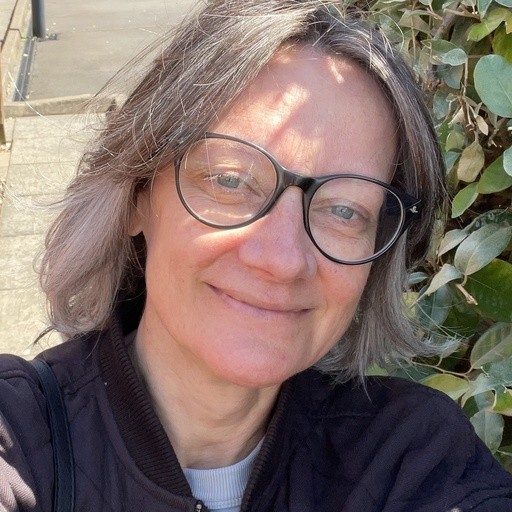
Professor Yiping Wu is a professor of ecohydrology at Institute of Global Environmental Change, Xi’an Jiaotong University, China who has been the journal's Editor-in-Chief since the beginning of 2025.
- What is the most surprising thing you’ve learned in leading the journal?
What has surprised me most is not just the shift in science itself, but the shift has landed on my desk as Editor-in-Chief. Twenty years ago, the field was largely about observing/measuring stocks and fluxes—foundational work, but distant from decision-making. Today, I am genuinely surprised by so many papers now explicitly ties its findings to a management lever, a climate policy, or a sustainable development goal. More surprising to me personally is the challenge of managing this incredible breadth. We now handle papers that simultaneously use in-situ observations, remote sensing, process modeling, machine learning, economic analysis, and management strategy development. This interdisciplinary scope is exactly why Carbon Balance and Management exists and why the journal distinguishes from others in this field, but it also forces us to rethink how we peer-review and how we bridge the communication gap between modelers/scientists and practitioners. That operational reality—bringing these worlds together in one journal—has been the most unexpected and exciting part of leading it.
2. In your opinion, what is the biggest challenge that the research field has overcome in the past 20 years?
In my view, the biggest challenge our field has overcome in the past two decades is the expansion over spatial and temporal scales, especially connecting site-level processes with regional and global carbon budgets. This has been made possible by the growth of long-term observations, flux networks, satellite remote sensing, atmospheric inversions, global databases, and Earth system models. Together, these approaches have changed the field from one that mainly described carbon dynamics in individual systems to one that can examine how climate change and human activities reshape the global carbon balance. Further, the broad masses of scientific and technical personnel initiated the transformation of carbon cycle science from a largely academic exercise into a credible, policy‑grade decision‑support tool. We have bridged the longstanding gap between top‑down atmospheric inversions and bottom‑up national inventories, making it possible to verify emissions reductions with unprecedented confidence. This progress was driven by advances in satellite remote sensing, expanded flux‑tower networks, and the integration of artificial intelligence with Earth system models, which together downscaled global budgets to actionable regional scales. Besides, we overcome the barrier of disciplinary fragmentation. Although ecologists, atmospheric chemists, economists, and land managers rarely published together about 20 years ago, now they routinely co‑design studies within a common analytical framework. Overcoming the isolated thinking—establishing a shared language for measuring, attributing, and managing carbon—has been transformative. I think these shifts represent the deepest conceptual advance of the past 20 years.
3. What is currently the most exciting area of the field to you?
Currently, the most exciting area is rooted firmly in the terrestrial biosphere: understanding the dynamic behavior of forest, grassland, cropland, wetland, and soil systems as carbon sinks instead of static stores. Their capacity to absorb and retain carbon depends intrinsically on location, climate, water, nutrients, above-and below-ground biodiversity, disturbance, and management. Determining precisely when and where these systems can continue to function as reliable sinks is, I believe, one of the most critical questions for both science and society. What makes this particularly thrilling right now is the convergence of powerful new tools—high‑resolution remote sensing, global data synthesis, machine learning, and process‑based models—that allow us to study these dynamics across scales previously unimaginable. However, the real challenge and opportunity lie not in producing more maps or estimates, but in using these tools to deepen our fundamental ecological understanding of why sinks persist or fail. For Carbon Balance and Management, this intersection—robust ecological insight combined with actionable land‑use and policy decisions—is the most vibrant and impactful frontier we can engage with.
4. What are your hopes for the journal and the research field in another 20 years from now?
Over the next 20 years, my foremost hope is that carbon cycle research moves decisively from documenting change to guiding action. We will certainly continue to refine estimates of carbon stocks and fluxes, but the truly transformative advances will come from deciphering the underlying processes that create, maintain, or weaken carbon sinks—especially in natural systems such as forest, grass, agriculture, and wetland. Understanding the 'why' behind sink dynamics is what will make our science actionable.
For Carbon Balance and Management, I hope the journal remains a home for research that rigorously links carbon balance to the ecological processes and management choices that shape it. Our published work should be scientifically robust, internationally relevant, and directly useful for climate mitigation, ecosystem restoration, and sustainable land use. Beyond that, I envision a field where dynamic carbon accounting is as routine and trusted as financial auditing—fully embedded in every land‑use and infrastructure decision. I hope our journal evolves into a genuine integration hub, where natural scientists, economists, engineers, and local practitioners co‑design operational solutions. We must also bridge capacity gaps, ensuring these tools are equitably accessible across the globe. Ultimately, I hope the 'balance' in our title is no longer a distant target but a managed reality, and that our journal can take honest pride in helping humanity navigate this critical transition.
5. What advice would you offer for anyone interested in beginning a career in carbon cycle research?
For anyone beginning a career in carbon cycle research, my first piece of advice is to build a rock‑solid foundation in the ecological and biogeochemical principles that govern carbon dynamics. The fundamental knowledge about understanding the processes that create, maintain, or weaken sinks will never lose its value. At the same time, stay curious about other fields, because today's most exciting or challenging questions sit at the intersections of ecology, hydrology, and even social science.
Second, invest seriously in quantitative and data‑science skills. High‑resolution remote sensing, machine learning, and process‑based modelling are now indispensable, but always use them as tools to deepen mechanistic understanding. Equally important, learn early how your research connects to policy, ecosystem restoration, and sustainable land‑use decisions—the 'management' side of our field will make our work actionable and relevant.
Finally, embrace collaboration and humility. Carbon cycle science is inherently team science, requiring honest dialogue across disciplines and with practitioners. Choose questions that genuinely matter for society, not just those that are methodologically convenient. If your work clarifies when and where natural systems can remain reliable carbon sinks and how we can wisely manage them, you will find your career both intellectually fulfilling and deeply consequential for our shared future.
In celebration of the pivotal role the journal continues to play, Carbon Balance and Management has launched a special collection, 20th Anniversary Collection: Global Change and Carbon Cycle, guest edited by Yiping (Rocky) Wu, Christian Körner, Umakant Mishra, and Safwan Mohammed. The collection is now open for submissions until 27th March 2027.

Associate Publisher in Environmental & Earth Sciences - Fully OA Journals
Follow the Topic
-
Carbon Balance and Management
This is an open access, peer-reviewed online journal that encompasses all aspects of research aimed at developing a comprehensive policy relevant to the understanding of the global carbon cycle.

Related Collections
With Collections, you can get published faster and increase your visibility.
20th Anniversary Collection: Global Change and Carbon Cycle
The year 2026 marks the 20th anniversary of Carbon Balance and Management. Over the past two decades, the journal has played a pivotal role in advancing scientific understanding of the global carbon cycle, including the dynamics, controlling processes and feedback mechanisms governing the carbon-climate system, as well as strategies for sustainable carbon management. To commemorate the 20th anniversary of Carbon Balance and Management, we present a special Collection that highlights major emerging and established research frontiers, including global carbon cycle patterns and processes, greenhouse gas emissions and mitigation, climate variability and change, land-use change and carbon dynamics, multi-source remote sensing for carbon monitoring, and policies supporting low-carbon economies.
This special Collection will feature a broad range of review papers, a limited number of commentaries, and selected research papers. Review papers are expected to provide comprehensive syntheses of the current state of knowledge, highlight major conceptual and methodological advances, evaluate key scientific challenges and limitations, and offer forward-looking perspectives for future research and policy development in the field of carbon balance and management. Commentaries are encouraged to present innovative, thought-provoking and potentially controversial perspectives that stimulate constructive scientific debate and interdisciplinary dialogue. Selected research papers will emphasize interdisciplinary approaches, frontier technologies, and applications of artificial intelligence and data driven science to carbon and climate research.
This Collection supports and amplifies research related to SDG 13: Climate actions and SDG 15: Life on Land.
All submissions in this collection undergo the journal’s standard peer review process. The Editors have no competing interests with the submissions which they handle through the peer review process. The peer review of any submissions for which the Editors have competing interests is handled by another Editorial Board Member or Guest Editor who has no competing interests. As an open access publication, this journal levies an article processing fee (details here). We recognize that many key stakeholders may not have access to such resources and are committed to supporting participation in this issue wherever resources are a barrier. For more information about what support may be available, please visit OA funding and support, or email OAfundingpolicy@springernature.com or the Editor-in-Chief.
Publishing Model: Open Access
Deadline: Mar 24, 2027