Coffee Berry Disease Pressure in Ethiopian Arabica Coffee Highlights the Need for High-Density Genetic Mapping and GWAS-Based Resistance Breeding

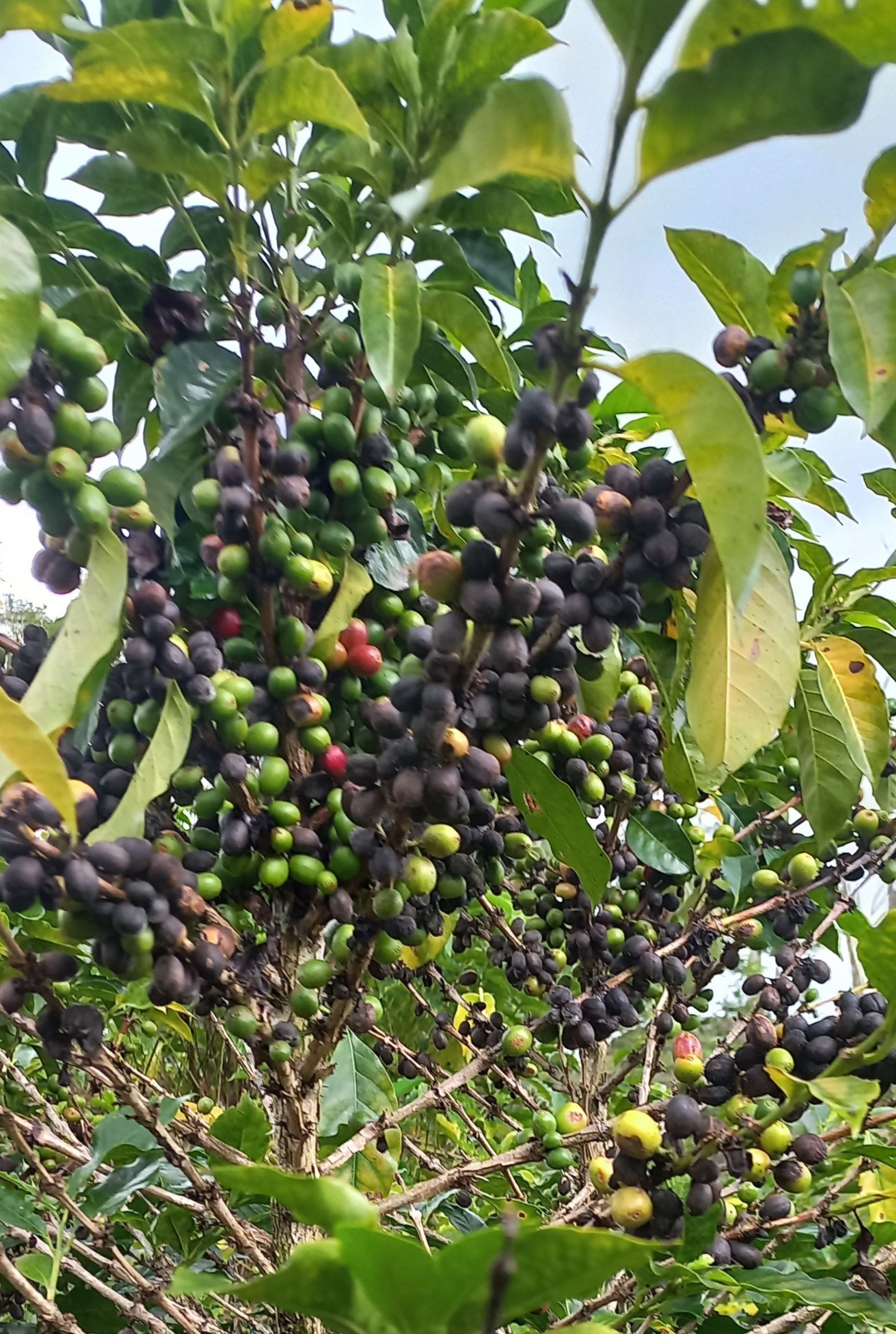
Coffee Berry Disease (CBD), caused by Colletotrichum kahawae, severely threatens Ethiopian Arabica coffee. Farmers use indigenous knowledge to select resistant trees, but without genetic validation progress is slow. Genomic tools like GWAS can accelerate breeding for durable resistance
Coffee Berry Disease Pressure in Ethiopian Arabica Coffee Highlights the Need for High-Density Genetic Mapping and GWAS-Based Resistance Breeding
Like

Share this post

Choose a social network to share with, or copy the URL to share elsewhere

This is a representation of how your post may appear on social media. The actual post will vary between social networks

The findings from this study highlight a clear disconnect between the severity of Coffee Berry Disease in Ethiopia and the availability of genetically validated resistant cultivars. Although farmers possess extensive indigenous knowledge and have successfully identified CBD-tolerant genotypes in forest coffee populations, these selections remain largely uncharacterized at the molecular level. This gap limits their broader use in breeding programs and increases the risk of genetic erosion.

Integrating field-identified resistant genotypes into high-density genetic mapping and GWAS frameworks would allow resistance traits to be anchored to specific genomic regions in Arabica coffee. Such approaches can transform farmer-led selection into durable breeding outputs by identifying resistance loci and developing diagnostic SNP markers for marker-assisted selection. In the context of increasing CBD pressure driven by climate variability and microclimatic instability, genomics-informed breeding represents a critical next step for safeguarding Ethiopia’s unique Arabica coffee genetic resources and strengthening long-term disease resilience.

Please sign in or register for FREE

If you are a registered user on Research Communities by Springer Nature, please sign in

Follow the Topic

Plant Biotechnology
Life Sciences > Biological Sciences > Plant Science > Plant Biotechnology
Fungal Genomics
Life Sciences > Biological Sciences > Microbiology > Fungi > Fungal Genomics
Genotyping and haplotyping
Life Sciences > Biological Sciences > Genetics and Genomics > Molecular Genetics > Genetic Techniques > Genotyping and haplotyping
Plant Pathology
Life Sciences > Biological Sciences > Plant Science > Plant Pathology

Related Collections

With Collections, you can get published faster and increase your visibility.

Advances and applications in plant cell wall research

Plant cell walls provide structural integrity and protective functions to plants, while largely contributing the bulk of their biomass. They are composed of bio-macromolecular assemblies made up of different classes of polysaccharides, proteoglycans, and aromatic polymers that play crucial roles in plant growth, development, morphogenesis, and responses to environmental cues.

Recent advances in genomics, transcriptomics, proteomics, and analytical and imaging techniques have significantly enhanced research on plant cell walls both at the molecular and cellular levels. Moreover, a wide range of products with increasing importance, e.g. biobased fuels, biomaterials, chemicals and paper, can be obtained from plant cell wall-derived biomass. Greater understanding of cell wall architecture, molecular composition and organization, and functions could therefore help enhancing crop resilience to biotic and abiotic stresses, as well as crop photosynthetic capacity by alleviating CO2 diffusion limitations imposed by the cell wall. Moreover, research on plant cell wall could also reveal novel applications to use plant cell wall-derived biomass as a renewable source of energy and biomaterials.

In support of the United Nations' Sustainable Development Goals SDG 2 (Zero Hunger) and SDG 12 (Responsible Consumption and Production), BMC Plant Biology is launching the collection ‘Advances and applications in plant cell wall research’. This collection aims to explore fundamental research on plant cell wall as well as potential applications in biotechnology and sustainable agriculture. We invite researchers and experts in the field to submit research articles that cover, but are not limited to, the following topics:

Architecture, structure, composition, organization, and functions of the plant cell wall

The life and development of the plant cell wall

Regulation of cell wall formation

Plant cell wall polymer and polysaccharide biosynthesis

Plant cell wall remodeling mechanisms under biotic and abiotic stress

Enhancement of plant/crop stress resilience and photosynthesis by cell wall remodeling

Genomic and bioinformatic approaches in plant cell wall research

Synthetic biology approaches in plant cell wall research

Plant cell wall signaling

Advances in imaging plant cell wall, as well as chemical and analytical methods to study plant cell wall

Biotechnological and agricultural applications of plant cell wall-derived biomass for the production of renewable source of energy and biomaterials

Bioengineering of plant cell wall polymers and polysaccharides

CRISPR-Cas9 technology applied to plant cell wall modifications and bioengineering

All manuscripts submitted to this journal, including those submitted to collections and special issues, are assessed in line with our editorial policies and the journal’s peer review process. Reviewers and editors are required to declare competing interests and can be excluded from the peer review process if a competing interest exists.

Publishing Model: Open Access

Deadline: Feb 28, 2026

Advances in plant virology

Plant virology is a critical field of research that studies the interactions among plants (hosts), viruses, and their vectors, as well as the molecular, physiological and biochemical responses that arise from these interactions. With the global increase in emerging and re-emerging viral diseases affecting crops, understanding plant-virus interactions has fundamental value and is essential for developing effective disease management strategies and diagnostic tools. Furthermore, plant viruses served as a molecular platform to study viral evolution, adaptation to new hosts and environments as well as biotechnological platforms for plant molecular farming or gene editing purposes.

Recent advances in molecular biology, multi-omics, and bioinformatics have enhanced our understanding of the complexity of plant-virus relationships, viral diversity and infection mechanisms, as well as their impact on plant health. Ongoing research on plant virology has potential not only to deepen our fundamental understanding of plant viruses and how they interact with their hosts, but also to develop strategies for disease control and management, including disease-resilient crop varieties. Additionally, in the last decade, some viruses have been also reported as beneficial symbionts improving their host adaptability and fitness. Overall, the relevance of plant virology research is underscored by its implications and potential applications for global food security and sustainable agriculture.

In support of United Nations’ SDG 2 (Zero Hunger), BMC Plant Biology presents the Collection Advances in plant virology. This Collection invites contributions that focus on recent advances in plant virology research, exploring the interactions between plant and viruses, the molecular mechanisms underlying viral infection, plant response to viral infection, viral adaptation to new hosts and ecological features, as well as novel strategies for viral disease management. Research only focusing on viruses without a clear focus on plants/crops or plant-virus interactions will not be considered. We encourage submissions of research articles that investigate, but are not limited to, the following topics:

  • Mechanisms underlying plant-virus interactions
  • Mechanisms of viral infections
  • Mechanisms of viral adaptation to new hosts
  • Virus-virus interactions in plants
  • Viral evolution models in plants
  • Impact of viral infections on plant metabolic pathways
  • Mechanisms of plant response to viral infection and virus-induced plant immunity
  • Insights into plant RNA-interference and virus interactions
  • Sustainable practices of control and management of plant viral diseases
  • Enhancing crop resilience against viral infections (emerging and re-emerging viruses)
  • The role of CRISPR-Cas technology in developing virus-resistant crops
  • Molecular diagnostic tools for plant virology
  • The impact of climate change on plant viral diseases
  • Sustainable management and control of plant viral infections
  • Novel virus-encoded proteins and their functions

All manuscripts submitted to this journal, including those submitted to collections and special issues, are assessed in line with our editorial policies and the journal’s peer review process. Reviewers and editors are required to declare competing interests and can be excluded from the peer review process if a competing interest exists.

Publishing Model: Open Access

Deadline: May 21, 2026