Documenting Disruption: Harm Reduction Research on Infectious Disease is Urgently Needed
Published in Healthcare & Nursing, Social Sciences, and Microbiology
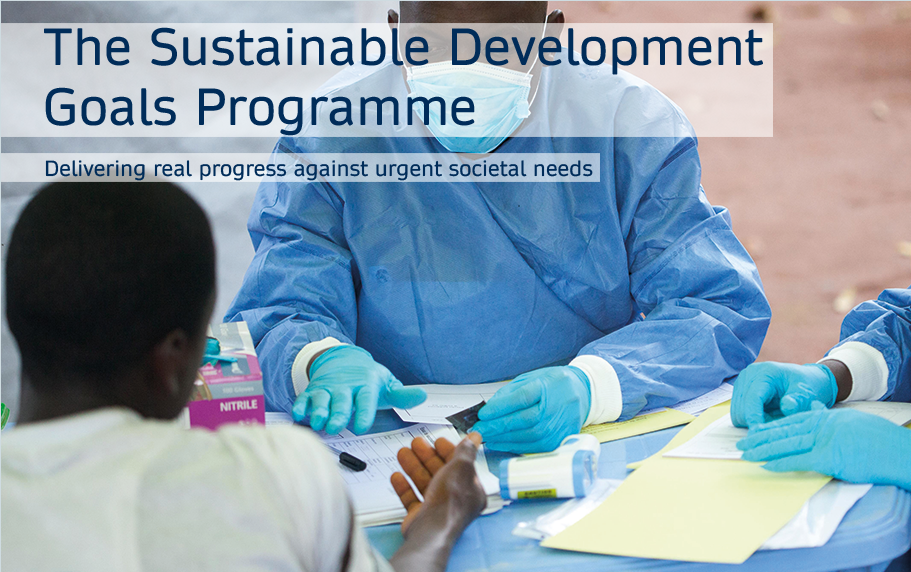





The global landscape of infectious disease and sexual health is becoming increasingly unstable. Long‑standing gains are being unravelled, not because science has failed, but because the political and economic systems that sustain prevention are being deliberately dismantled.
Across many regions, advances in vaccination, prophylaxis and harm reduction are being reversed amid major policy shifts, rising conflict, and sharp reductions in international development funding. This is leading to a systemic, pendulous and compounding shift that will take decades to recover from.
The dissolution of the United States Agency for International Development (USAID) and the freezing of billions in US foreign assistance marked a fundamental turning point. Simultaneously, governments across Europe and G20 countries have reduced aid budgets in favour of military spending and domestic austerity.
Global health programmes have been among the earliest and hardest‑hit casualties of this fundamental shift in financing and governance. Researchers and commentators describe this period as the “great aid recession,” with profound implications for disease prevention and care.
The consequences are especially acute in Africa and across the Global South. Health systems in these regions have long operated in a delicate balance, being heavily dependent on external funding to support service delivery, research capacity, and workforce development. When funding is withdrawn abruptly, the effects are both immediate and severe.
Clinics close. Surveillance systems weaken. Health workers leave. Preventable infections resurge.
These disruptions are intensified in settings already affected by armed conflict, political violence, and mass displacement. In such contexts, short interruptions can erase decades of progress, let alone such systemic shift.
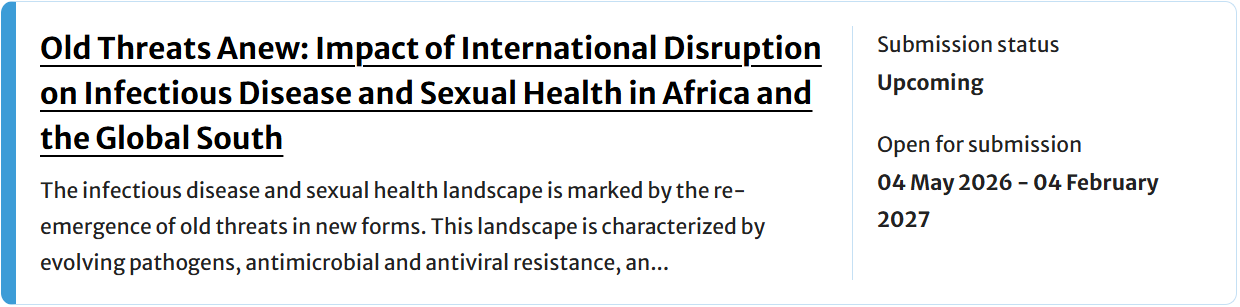
With this context, Harm Reduction Journal has launched a new Call for Papers led by Prof. Beth Meyerson MDiv, PhD (University of Arizona, Tucson, US). The collection focuses on how exogenous shocks – policy shifts, donor withdrawal, conflict – are reshaping infectious disease and sexual health across Africa and the Global South. Its aim is to document how these global decisions are translating into local consequences and what communities are doing in response.
The collection recognises that moments of disruption require methodological pluralism rather than conventional outcomes studies. Qualitative research from frontline providers is essential as it reveals how services are altered, rationed, or lost. Rapid reports from NGOs and community organisations capture impacts in real time. Policy analyses trace how decisions made by governments reshape risk on the ground.
Comparative epidemiological studies are also important. They help quantify what is being lost and where. Health‑workforce research shows how quickly capacity erodes when funding and security disappear. Together, these approaches build a clearer picture of system collapse and adaptation.
Equally important are the voices of affected communities. Narrative, artistic, and visual contributions capture the lived realities of disruption, resilience, and harm in ways that conventional methodologies cannot fully capture.
All of these forms of research serve a shared purpose to support accountability. Without timely, diverse, and context‑specific evidence, the impacts of policy decisions remain abstract. This is particularly true when formal datasets that could document these decisions no longer exist...
This collection aligns directly with SDG 3: Good Health and Well-Being, SDG 5: Gender Equality, SDG 10: Reduced Inequalities, and SDG 16: Peace, Justice and Strong Institutions. Beyond that, accountability has been a key driving force behind the development of the collection: these outcomes are neither natural nor inevitable and evidence is essential to reversing the pendulum back to progress.

Louis has been a Publisher at BMC since February 2022. He manages a fully open access portfolio of substance use and addiction journals, including Addiction Science & Clinical Practice, Harm Reduction Journal, Health & Justice and Journal of Cannabis Research.
Follow the Topic
-
Harm Reduction Journal
This journal publishes research and commentary on approaches diminishing the harm of stigmatization, marginalization and criminalization of public health, human rights and social justice issues, as well as rebuking the de facto criminalization of marginalized and stigmatized communities.

Related Collections
With Collections, you can get published faster and increase your visibility.
Repairable damage: harm reduction and US policy
Recent shifts in US policy and the approach to public health have placed renewed pressure on communities that already face significant health and social challenges. Policy decisions increasingly prioritize criminalization or abstinence-based strategies over interventions that have been consistently shown to reduce harm. These choices reflect a broader trend of sidelining empirical evidence, with real-world consequences for public health.
As a result, morbidity and mortality have increased among people who use drugs, experience homelessness, or who are involved in the US criminal justice system. Rates of preventable illness and infectious disease are also rising. Rhetoric and stigma further undermine public trust and discourage engagement with health services, disproportionately affecting marginalized populations.
Harm Reduction Journal has commissioned a collection of articles to highlight how evidence-based harm reduction strategies – grounded in science, dignity and practical outcomes – can inform more effective, humane public health responses.
This Collection supports and amplifies research related to SDG 3, Good Health and Well-Being, SDG 5, Gender Equality, SDG 10, Reduced Inequalities, and SDG 16, Peace, Justice and Strong Institutions.
All submissions in this collection undergo the journal’s standard peer review process. Similarly, all manuscripts authored by a Guest Editor(s) will be handled by the Editor-in-Chief. As an open access publication, this journal levies an article processing fee (details here). We recognize that many key stakeholders may not have access to such resources and are committed to supporting participation in this issue wherever resources are a barrier. For more information about what support may be available, please visit OA funding and support, or email OAfundingpolicy@springernature.com or the Editor-in-Chief.
Publishing Model: Open Access
Deadline: Aug 18, 2026
Indigenous communities and harm reduction
Indigenous peoples, defined as the original inhabitants of lands with longstanding cultural, political, and spiritual ties that predate colonization, face unique challenges that stem from historical injustices, social marginalization, and systemic discrimination. These factors create complex environments where public health, human rights, and social justice intersect. By deepening our understanding of these challenges, we not only enrich academic discourse, but also pave the way for more effective, culturally relevant harm reduction strategies that resonate with Indigenous communities.
Significant advances have already been made in understanding the specific needs and realities of Indigenous communities concerning harm reduction. For instance, the integration of traditional healing practices with contemporary harm reduction strategies has demonstrated promising outcomes. Indigenous-led research initiatives have brought forth unique insights into the effectiveness of harm reduction programs tailored to the cultural and social contexts of Indigenous peoples. Furthermore, collaborative partnerships between Indigenous organizations and public health entities have begun to reshape policy discussions, ensuring that Indigenous voices are front and center in the formulation of harm reduction strategies.
However, there is still much work to be done. The future of this research area holds immense potential for transformative change. By continuing to explore the intricate relationships between Indigenous identities, cultural practices, and harm reduction, we can anticipate the development of innovative, community-driven programs. These programs could harness the power of Indigenous knowledge systems to inform public health approaches, fostering resilience and healing in the face of adversity. Advancements in technology may also allow for more nuanced data collection and analysis, enabling a deeper understanding of the lived experiences of Indigenous individuals and communities.
Topics of interest within this Special Collection on Indigenous communities and harm reduction include, but are not limited to:
● Traditional healing and harm reduction
● Culturally competent care
● Patterns of substance use
● Policy impacts on Indigenous health
● Collaborative research methodologies
● Historical trauma and recovery.
● Indigenous rights and harm reduction
● Community-led initiatives
● Community-based participatory research/methods
● Public health vending machines
● Stimulant use and associated harm reduction strategies
● Indigenous-led syringe services programs
● Indigenous-led models and “culture-as-healing” in harm reduction
● Sovereignty, criminalization, and decolonizing policy & practice
● Youth, kinship, and intergenerational harm reduction
● Methods/metrics: Indigenous data sovereignty, CBPR, and evaluation
● Access in rural/remote settings: SSPs, MOUD, telehealth, & mobile care.
This Collection supports and amplifies research related to SDG 3, Good Health and Well-Being and SDG 10, Reduced Inequalities.
All submissions in this collection undergo the journal’s standard peer review process. Similarly, all manuscripts authored by a Guest Editor(s) will be handled by the Editor-in-Chief. As an open access publication, this journal levies an article processing fee (details here). We recognize that many key stakeholders may not have access to such resources and are committed to supporting participation in this issue wherever resources are a barrier. For more information about what support may be available, please visit OA funding and support, or email OAfundingpolicy@springernature.com or the Editor-in-Chief.
Publishing Model: Open Access
Deadline: Sep 01, 2026




Please sign in or register for FREE
If you are a registered user on Research Communities by Springer Nature, please sign in