Don’t forget, the first Pride was a Riot: The Commercialisation of LGBTQ+ Pride spaces in the UK
Published in Social Sciences


Have you heard the phrase, ‘the first Pride was a riot’? On 28 June 1969, a riot took place in New York City at the Stonewall Inn. Patrons, including LGBTQ+ people, fought back against the police who raided the establishment. This riot, alongside earlier uprisings like the Compton Cafeteria Riot in 1966, is historically understood as a starting point of LGBTQ+ activism that we have today. A year later, in 1970, people marched in New York City to commemorate the anniversary of the Stonewall riot and now every year Pride parades happen around the world to remember queer history and fight for LGBTQ+ equality. In this post I want to focus on the increase in global Pride celebrations becoming commercialised. Stating that ‘the first Pride was a riot,’ is meant to be a reminder that Pride is grounded in grassroot activism to fight for equality for LGBTQ+ people and against police brutality. The statement can be used to express concern that pride politics and activism are being glossed over by commercial utilisations of the pink pound, or the targeting of LGBTQ+ people as a consumer group for financial gains. The commercial visibility of Pride is exceptional, but we must not forget why such Pride events exist in the first place.
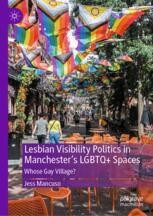
This April I published a book about lesbian (in)visibility within Manchester’s LGBTQ+ spaces (Mancuso, 2026). I investigate LGBTQ+ women's experiences of LGBTQ+ spaces in the UK and question why queer women spaces are so rare (a pattern seen in other cities across the globe too). I’m interested in the relationships between visibility and senses of belonging occurring in LGBTQ+ social spaces and the inclusion/exclusion practices that govern who feels they belong or not. I look at these spaces as LGBTQ+ territories, carved out, and claimed in a heteronormative society. They are spaces for LGBTQ+ people to use; yet not all LGBTQ+ people have a strong or positive affinity to them due to issues of inequality shaped by a wide range of oppressive forces such as classism, ableism, racism, sexism, transphobia, and ageism. Although my book does not focus on Pride events specifically – I explore social spaces like LGBTQ+ nightclubs, club nights, and bars – there are important parallels between them that I would like to discuss. In this piece I will outline differences between commercial and alternative LGBTQ+ Pride spaces as well as their relationality. I conclude with a reflection on the responsibility to LGBTQ+ rights that commercial Prides have, given their success and high visibility.
In the UK you can see the commercialisation of Pride in a few different ways. You may notice different companies showing support for LGBTQ+ people during the month of June. For example, some change their marketing to include rainbows and LGBT+ inclusive statements, some sponsor and participate in local Pride marches. Companies can also recognise the month by putting on LGBTQ+ events to celebrate LGBTQ+ culture and history, showing that they see and support their LGBTQ+ employees and customers. These examples can make people feel included in their workplace and provide access to events and resources they might not have access to. Seeing organisations support their LGBTQ+ members and walking in the parade can provide a level of visibility that was not always possible. While these Prides are usually very large festivals, they work to raise funds to support LGBTQ+ organisations, initiatives and campaigns. Indeed, I can see benefits to the kind of visibility commercialisation of Pride offers.
However, commercialised practices of Pride are questioned and criticised as performative inclusivity and rainbow-washing. For instance, organisations stating they support LGBTQ+ rights, but do not make substantial changes to internal policies or only raise support during Pride month (Schopper, Berbers & Vogelgsang, 2025). There can also be political tensions based on the sponsors of prides. For example, protests Manchester Pride (2023-2025) have taken place to demand they cut ties with booking.com, who allegedly has profited off the Palestine conflicts (Maidment, 2024). Such dynamics increase distrust and raise critical concern that these marches are forgetting their political roots and prioritising profit. Lastly, the big commercial pride celebrations are often framed around ‘cosmopolitan’ LGBTQ+ culture, that is dominated by hedonism and a space that is classed, racialised, cis-centred, male-dominant, and ableist. This speaks to wider structures of oppression that exist within many LGBTQ+ spaces, influencing how and if people will use them based on their positionality. Overall, the point I am trying to make is that commercial Prides are layered with different socio-political complexities that should not be deprioritised by the grand celebrations.
In response to issues like the ones outlined above, groups create alternative Pride marches and events that challenge and resist commercial pride norms. For example, Reclaim Pride is centred around grassroot queer activism. You may have come across or attended different events that centre LGBTQ+ people from ethnic minority groups, queer women spaces, or trans events. These exist to give more space, visibility, and sense of belonging to those who are not as seen or perhaps whose political values are not prioritised in commercial prides. For example, some alternatives to Pride in London are Black UK Pride, the largest free pride event for LGBTQIA+ Black and POC, as well as London Trans+ Pride, which is for trans, non-binary, intersex, and gender non-conforming people. In Manchester there are many alternative club night events which will raise funds for a charity. There are more family friendly events, like daytime neighbourhood prides and Sparkle which is a weekend festival in Manchester celebrating gender diversity. You can also find spaces like Superbia who frame their events around LGBTQ+ arts and cultures, and not hedonism like commercial prides. My intention of giving you a flavour of these alternative Pride events is to try and show a commonality across them – these events are created, in part, as a response to different issues of commercial and mainstream Prides. They counter politics of visibility by creating spaces for LGBTQ+ people to feel more seen and attend events with political and cultural values more aligned to their own. Overall, what I hope to have shown so far is that the commercial and alternative Pride events exist in relation to one another. What makes a space alternative is dependent on its relation to the central mainstream Pride, and together during Pride month, both commercial and alternative events provide people with various kinds of LGBTQ+ spaces.
I see alternative pride spaces as a fantastic way to advocate and support the diversity of people that make up the acronym LGBTQ+. I want them to exist always and they are extremely important. However, one thing I explore in my research is that alternative spaces are not the antidote to the lack of inclusive queer politics and activism of bigger commercial Pride festivals because they do not have the same visibility privileges. Commercial spaces are not absolved from responsibility to be more inclusive, critical and politically active because smaller groups are creating spaces and conducting grassroot work. They are incredibly visible and successful and that comes with significant responsibility to help protect and fight for all LGBTQ+ people in their cities. Yet these spaces, and some major organisations that contribute to them, are still heavily criticised as not advocating for critical issues for LGBTQ+ people. When thinking how to change this and how to creative inclusive spaces, I think there a few questions we can start to ask. In the UK, are prides cutting ties with companies that are profiting off war? Are you working with companies that are addressing their gender, LGBTQ+ and racial inequalities? Are they transparent about their support for trans lives, especially considering the new EHRC draft code of practice? Are they doing anything to stop it? This June (and every other month of the year) I urge all of us to consider what can be done. How can the visibility of commercial Prides be used to challenge and fight intersecting oppressive systems that hurt and harm LGBTQ+ people? In this piece I focused mainly on what can be done at group level. But also, to us as individuals, what can we do in our everyday lives to never forget the first pride was a riot.
References
Maidment, A. (2024) ‘Protesters march through the city centre in response to Manchester Pride sponsorship’. Manchester Evening News
Mancuso, J. (2026) Lesbian Visibility Politics in Manchester’s LGBTQ+ Spaces: Whose Gay Village? Palgrave Macmillan.
Schopper, T., Berbers, A. and Vogelgsang, L. (2025) ‘Pride or Rainbow-Washing? Exploring LGBTQ+ Advertising from the Vested Stakeholder Perspective’, Journal of Advertising, 54(2), pp. 233–250.
Dr Jess Mancuso is a Sociology Lecturer at The University of Manchester, UK, with a research focus in the field of gender and sexuality, LGBTQ+ spaces and queer women.

Follow the Topic
-
Palgrave Macmillan
Palgrave Macmillan is a world-class publisher of books and journals with more than 175 years’ experience in the Humanities and Social Sciences.

Introducing: Social Science Matters
Social Science Matters is a campaign from the team at Palgrave Macmillan that aims to increase the visibility and impact of the social sciences
Continue reading announcement