Dung beetles in degraded areas: unexpected insights from the Brazilian Cerrado
Published in Earth & Environment and Zoology & Veterinary Science
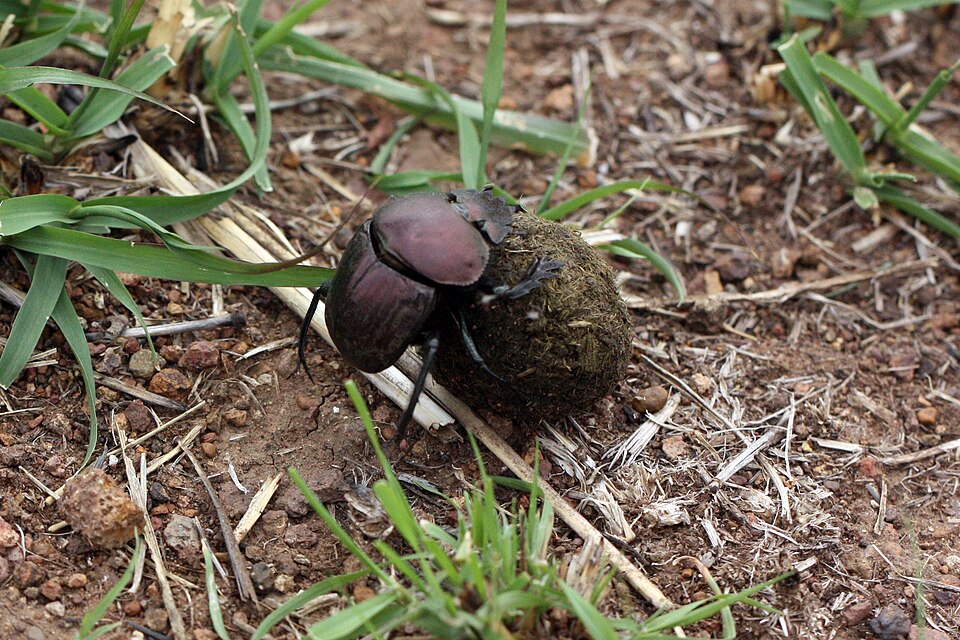

Ecological restoration is often evaluated by asking whether species return to disturbed areas. Yet the recovery of ecosystem functions can be just as important. A new, open access study published in Neotropical Entomology explores this question through an unlikely but highly influential group of insects: dung beetles.
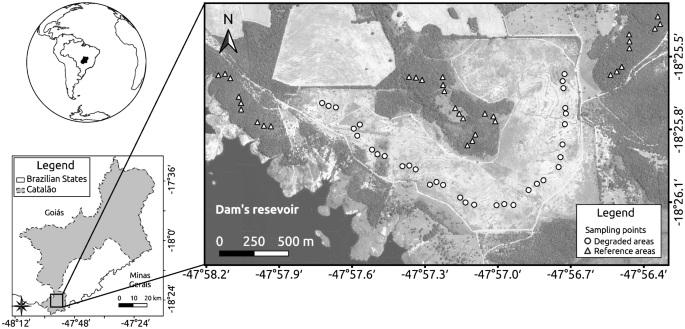
The research focused on a severely degraded area of the Brazilian Cerrado where topsoil had been removed during dam construction, alongside a nearby less-disturbed reference site. Dung beetles are well known for their contribution to nutrient cycling, soil modification, and the secondary dispersal of seeds. Because of these roles, they are frequently used as indicators of ecosystem condition.
The authors examined both the taxonomic composition and the functional characteristics of dung beetle communities. They also measured seed-removal rates, an ecological process closely linked to plant regeneration. The expectation was that degradation would reduce biodiversity, functional diversity, and ecosystem functioning.
Preference for the degrated site
The results challenge that assumption. The degraded site contained higher dung beetle abundance, slightly greater species richness, and higher functional richness than the reference area. Seed-removal rates were also higher. In addition, traits associated with digging and rolling behavior were more strongly represented in the degraded habitat, suggesting that species with particular functional characteristics were thriving there.
At the same time, the study highlights an important nuance. Although ecosystem functioning remained high, the degraded site showed lower functional divergence, meaning that fewer ecological strategies were represented within the community. The assemblage was dominated by abundant species with similar trait profiles. This may allow essential functions such as seed dispersal to continue, but it could also make those functions more vulnerable if environmental conditions change further.
These findings contribute to a growing discussion in restoration ecology: recovering ecosystem processes does not always follow the same trajectory as recovering biodiversity. By linking species traits, community composition, and ecological functioning, this study offers a valuable perspective on how degraded landscapes can remain biologically active while still facing important challenges for long-term resilience.
Author's note: I used Microsoft Copilot to assist in creating this post.
Image: Charles J. Sharp, from Sharp Photography (CC BY-SA 4.0)

Follow the Topic
-
Neotropical Entomology
Neotropical Entomology is an international journal focusing on fundamental and applied research in Entomology and Acarology, with a focus on the Neotropical region. Fauna from other regions is welcome as long as its impact is globally relevant.

Related Collections
With Collections, you can get published faster and increase your visibility.
Alien Insect Species
Please check the Call for Papers here.
Publishing Model: Hybrid
Deadline: Sep 30, 2026
Emerging Technologies in Entomology
Please check the Call for Papers here.
Publishing Model: Hybrid
Deadline: Nov 30, 2026


Please sign in or register for FREE
If you are a registered user on Research Communities by Springer Nature, please sign in