Editor story- Prof. Ir. Pei Song CHEE
Published in Bioengineering & Biotechnology


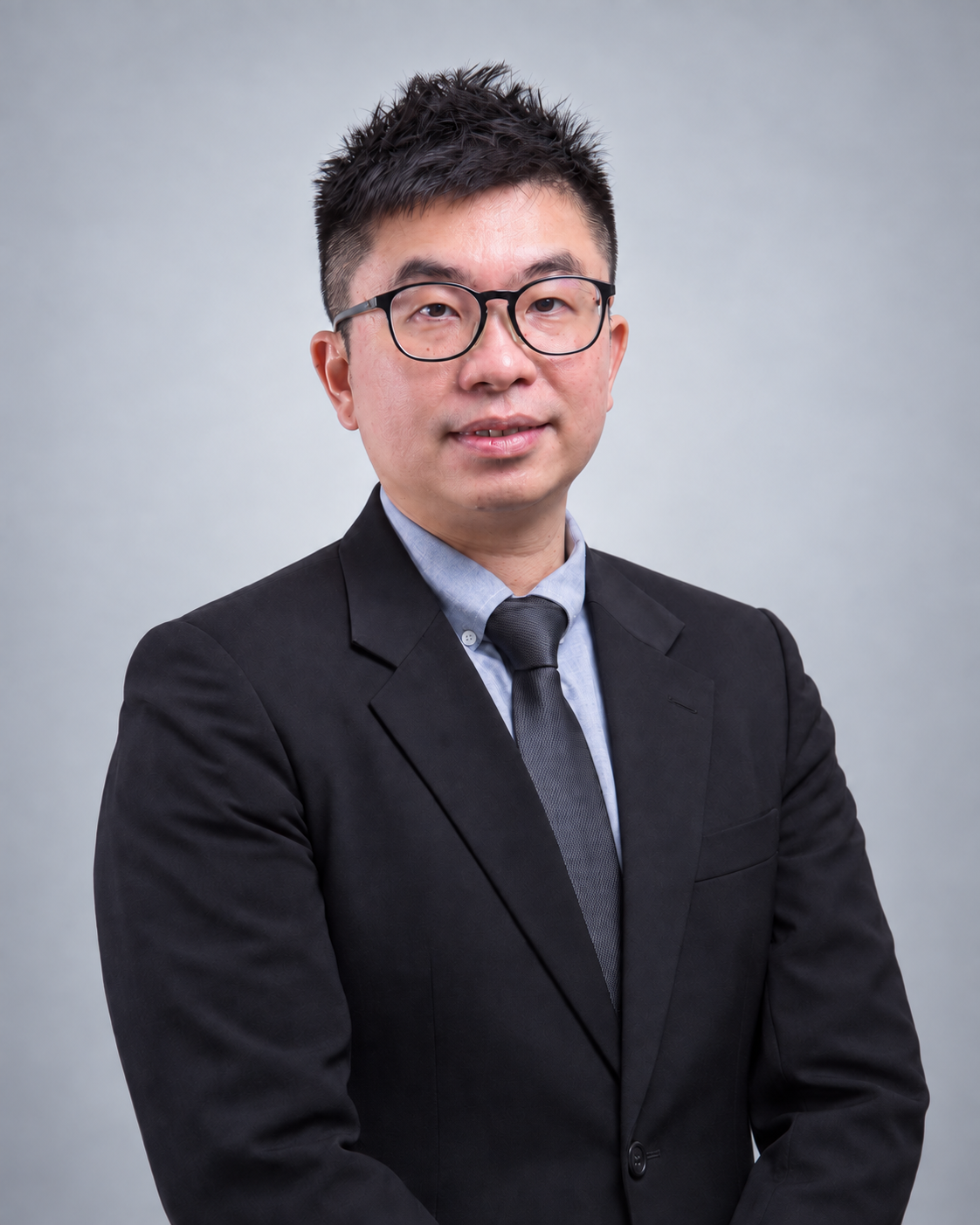
Prof. Ir. @Pei Song CHEE is a Professor in the School of Engineering, Faculty of Engineering and Technology, at Sunway University, Malaysia. His research explores how wearable devices can be powered wirelessly and how they can help people interact with machines. He brings together advanced materials, antennas, and flexible electronics to develop sensors and actuators. One example includes a graphene thread that can be powered wirelessly, which his research group aims to integrate into gloves for recognizing objects and gestures. His work combines simulation and experiments, with AI supporting the interpretation of sensor signals and optimisation of material fabrication. He joined the editorial board of Scientific Reports in 2025 and is currently guest editor for “Wearable sensors in healthcare” collection.
***
We recently invited Prof. Ir. Pei Song CHEE for a Q&A where they answered questions about their research and what it is to work as an Editorial Board Member at Scientific Reports. Some of the questions they answered are below:
How has your experience as an Editorial Board Member shaped your perspective on scientific publishing?
As a multidisciplinary researcher, I am pleased to see journals such as Scientific Reports create space for work that connects different fields. Being on the Editorial Board allows me to contribute to that community and support the journal’s development. Since joining in 2025, I have gained a better understanding of the responsibilities editors carry. What I value most is helping sound research receive fair consideration while remaining alert to unreliable data and unsupported claims, especially as AI-assisted writing can make inaccurate information appear convincing.
What do you like most about handling manuscripts at Scientific Reports?
I particularly appreciate the practical support provided to editors. The online orientation sessions helped me get started, and I refer to the EBM guidelines and resources when specific questions arise. The editorial team’s checks before manuscripts reach us, this helps to resolve formatting issues, making it easier to focus on the content. I also value being able to indicate when I am unavailable for editorial duties. These arrangements make the role more manageable alongside my research and teaching, while allowing me to contribute to a multidisciplinary community.
We know that finding reviewers is one of the hardest parts of an editorial role. Do you have any tricks on finding reviewers?
Finding reviewers becomes more complicated when a paper combines several disciplines. A wearable sensor study, for example, may involve material science, electronics, and AI, so a single reviewer may not cover every aspect. I start with the journal’s reviewer suggestions and invite more candidates than required, knowing some will be unavailable. If needed, I search Google Scholar and Scopus using keywords for the different parts of the study. My advice is to think about the combination of expertise the paper needs when selecting reviewers.
If you were to give a piece of advice to other Editors, what would that be?
My advice is to read the reviewers’ comments and the authors’ responses carefully before making a decision. If a reviewer recommends rejection, check whether the reasons are supported by the manuscript and whether the authors have addressed them. Consider whether suggested citations are relevant, especially when reviewers ask authors to cite their own papers. Editors should make their own assessment, using the reviews to inform their decision. Our responsibility is to maintain scientific standards and treat authors fairly.
How important is reproducibility in research? As an Editor, how do you help authors report reproducible results?
Reproducibility is essential because other researchers should be able to follow the published methods and obtain comparable results. For experimental studies, I look for evidence that the results are consistent across repeated tests. I pay particular attention to fabrication details, including materials, process parameters, and testing conditions. These should be described clearly enough for another researcher to fabricate the device and evaluate its performance. When the methodology is too brief, I advise authors to provide the missing details so that readers can verify the findings and build on the work.
What would you like to share with your fellow researchers on publishing in an inclusive journal?
Working across disciplines has taught me that useful ideas can come from people who approach a problem differently. I would encourage researchers to keep those readers in mind when writing. Explain the problem you are trying to solve and why your findings matter, without assuming everyone shares your technical background. Be clear about the methods and honest about the limitations. For me, the value of an inclusive journal is the chance to reach beyond familiar research circles, allowing people with different expertise and experiences to contribute to the conversation.
What are the biggest challenges that you see for the future of research and research dissemination?
A major challenge is the misuse of AI to fabricate data or produce convincing manuscripts with unsupported claims. Reviewers who rely on AI-generated assessments without critically evaluating the manuscript may overlook these problems. AI can accelerate manuscript production, increasing the pressure on editors and reviewers and making unreliable research harder to identify and investigate. My concern is that the speed of publication could outpace our ability to assess the evidence carefully. Protecting trust in research will require clear accountability from authors, reviewers, and editors, supported by effective checks on data and methods. Regarding AI, I see potential to support editorial work, provided that scientific judgement and accountability remain with people. I believe authors should clearly explain how they used AI, including whether its use was limited to polishing grammar. AI must never be used to fabricate data presented as experimental findings. Any use should comply with journal policy and protect confidentiality of manuscripts and reviewer reports. Outputs need careful scrutiny, particularly references and factual claims. Building on the helpful in-house tutorials, practical training could help editors understand permitted uses, recognise unreliable outputs, and discuss concerns with AI specialists.
You are leading one of our Guest-Edited Collections, “Wearable sensors in healthcare”. What interested you about becoming a Guest Editor? What is your Collection focused on?
I became a Guest Editor because wearable healthcare devices bring together many areas of research, from materials and power sources to sensing and data interpretation. Scientific Reports provides a multidisciplinary platform where readers can consider how these components work together as a complete system. Our collection welcomes wearable sensors, biosensors, flexible electronics, smart wearables, skin-mounted devices, and implantable sensors for healthcare. I hope it helps researchers connect advances in individual components with the practical needs of health monitoring, disease prevention, and treatment, and see where their expertise can contribute to the wider system.
Links
Professor Ir. Chee Pei Song, Staff Profile | Sunway University
Follow the Topic
-
Scientific Reports
An open access journal publishing original research from across all areas of the natural sciences, psychology, medicine and engineering.



