Seeing the Invisible: where does hydrogen really reside inside a metal?
Published in Materials

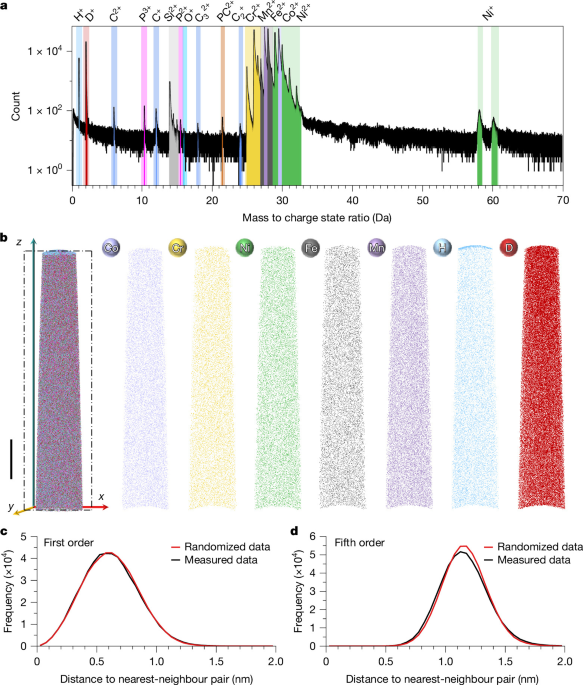

Hydrogen embrittlement has challenged materials scientists for more than a century 1. Even a small amount of hydrogen (H) can severely compromise the mechanical reliability of structural alloys. Yet, despite extensive research, one fundamental question remains difficult to answer experimentally: where does H reside inside a metal, and in what physical state?
Hydrogen can occupy interstitial sites within a regular crystal lattice, where it exists as a solute. Alternatively, it can become trapped at defects such as vacancies, dislocations and precipitate 2. These states are fundamentally different. They influence H transport, its interaction with microstructures and, ultimately, the mechanical properties.
For decades, much of our understanding of these processes has relied on indirect measurements and theoretical models. Directly examining H at the nanoscale is exceptionally challenging because H is both highly mobile and difficult to distinguish from experimental background signals.
Our study set out to address this challenge. Rather than simply asking whether we could detect H, we wanted to determine whether hydrogen observed inside a metal could be distinguished from hydrogen trapped at defects.
Stablishing the spatial distribution of hydrogen
We used cryogenic atom probe tomography (cryo-APT), combined with deuterium isotope labelling, to investigate the three-dimensional distribution of H in metals.
Deuterium (D) is a stable isotope of H. Its distinct mass provides an experimental route to separating introduced H isotopes from some of the background signals encountered during APT analysis. Cryogenic workflow and analysis help preserve H-related information that would otherwise be difficult to retain3.
Our first task was to examine the spatial statistics of detected deuterium in a single-phase material.
The three-dimensional reconstruction allowed us to examine whether D formed localized clusters or was distributed in a manner consistent with a random solid solution. By comparing experimental spatial statistics with randomized reference datasets, we could evaluate the degree of spatial heterogeneity rather than relying on visual inspection alone.
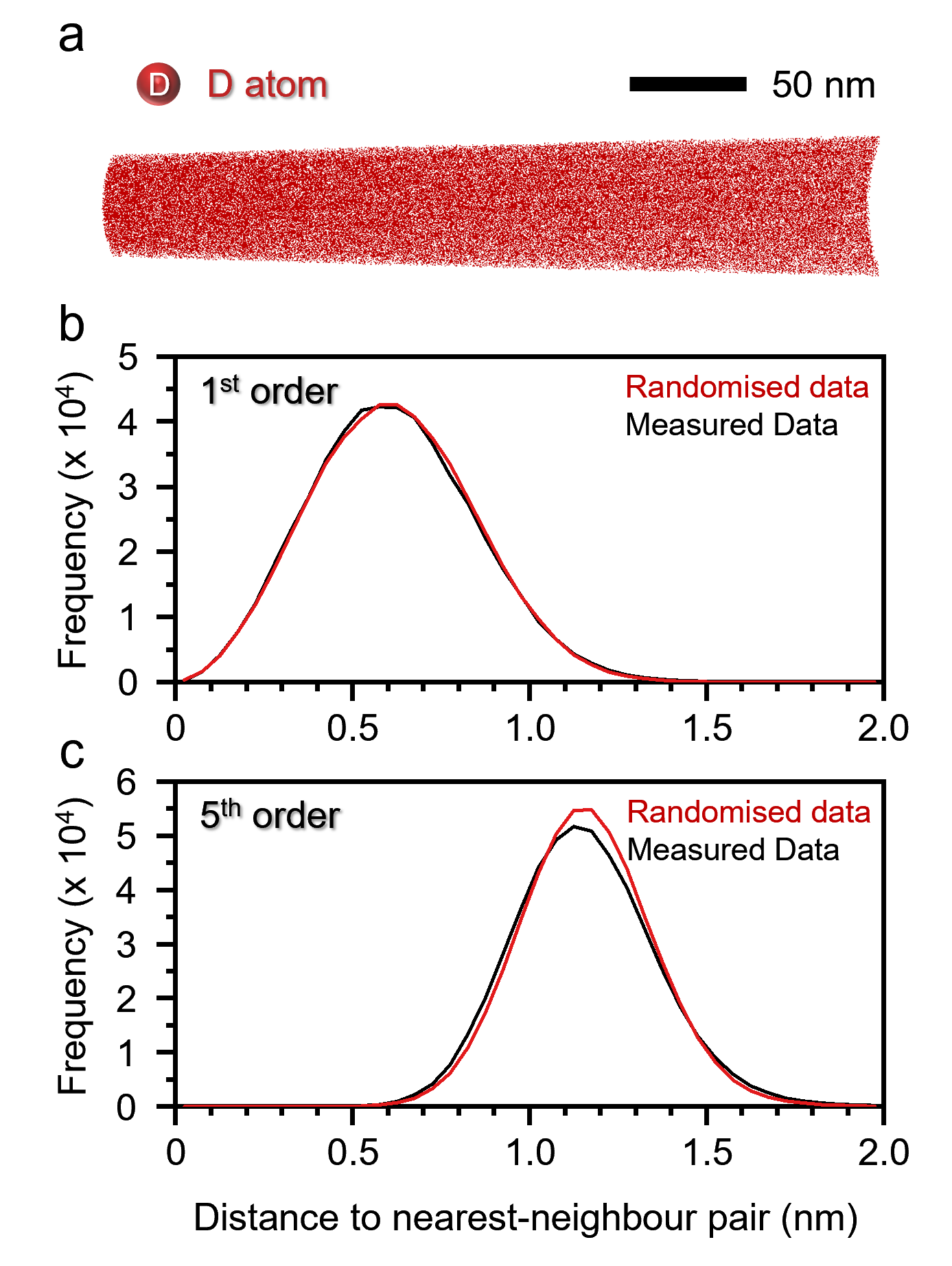
Fig. 1: Three-dimensional deuterium distribution and comparison with randomized reference data.
This was an important starting point. Detecting D throughout a reconstruction does not automatically demonstrate that it occupies regular lattice interstitial sites. A convincing interpretation requires us to consider whether the observed distribution could instead arise from trapping at structural defects.
A key observation, hydrogen inside coherent L12 precipitates
We next investigated an alloy containing a face-centered cubic matrix and ordered L12 precipitates.
The coherent relationship between these two phases was particularly useful. It provided an opportunity to examine D partitioning between different crystal environments without introducing the kind of highly defective interface commonly associated with strong H traps4,5.
Correlative electron microscopy established the crystal structure and coherent nature of the matrix-precipitate interface. Cryo-APT then revealed a striking result: D was preferentially enriched within the L12 precipitates, rather than being confined to their interfaces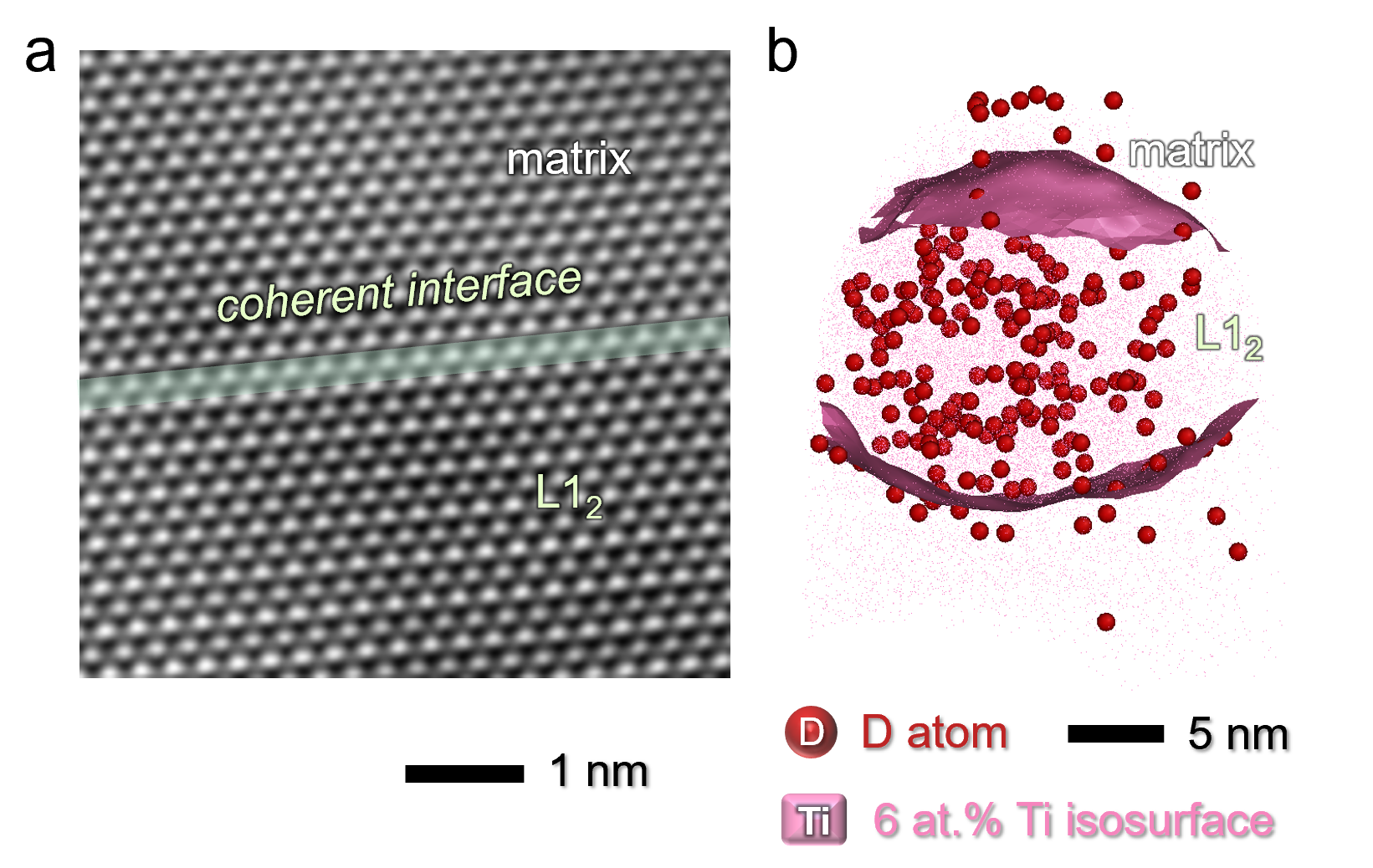
Fig. 2 Atomic-resolution image of the coherent matrix/L12 interface and corresponding three-dimensional deuterium distribution.
At first glance, enrichment of D within a precipitate might seem to be another example of H trapping. Indeed, previous studies have shown that precipitates can act as effective H traps, particularly when they contain vacancies or other defects 6. But this interpretation raised a crucial question. Could the measured D concentration be explained by the available trapping sites?
To address it, we combined our microscopy observations with positron annihilation measurements, irradiation-based controls and thermodynamic analysis. These investigations helped us assess the contribution of vacancies and other potential trapping sites. The evidence indicated that conventional defect trapping could not account for the observed D enrichment.
First-principles calculations provided a complementary explanation: H is energetically more favorable in the ordered L12 phase than in the surrounding matrix.
Taken together, these results supported a different physical picture. The L12 precipitates were not simply accumulating H at defects. Instead, they could accommodate H as an interstitial solute within the crystal lattice.
For us, this was the central result of the study. The significance was not merely that D could be detected in a nanoscale precipitate, but that its spatial distribution could be connected to a distinct physical state.
A further test: two precipitate structures in the same alloy
An important question remained. Was this behaviors unique to the particular alloy we had studied, or could the preference for interstitial H be related more generally to crystal structure and chemistry?
We explored this question using Inconel 718, an engineering alloy containing different types of ordered precipitates. In particular, the alloy contains L12 precipitates associated with Ni3(Al,Ti) and D022 precipitates associated with Ni3Nb. These phases have different atomic arrangements and chemical environments, making them a useful comparison for examining the factors that govern H solubility.
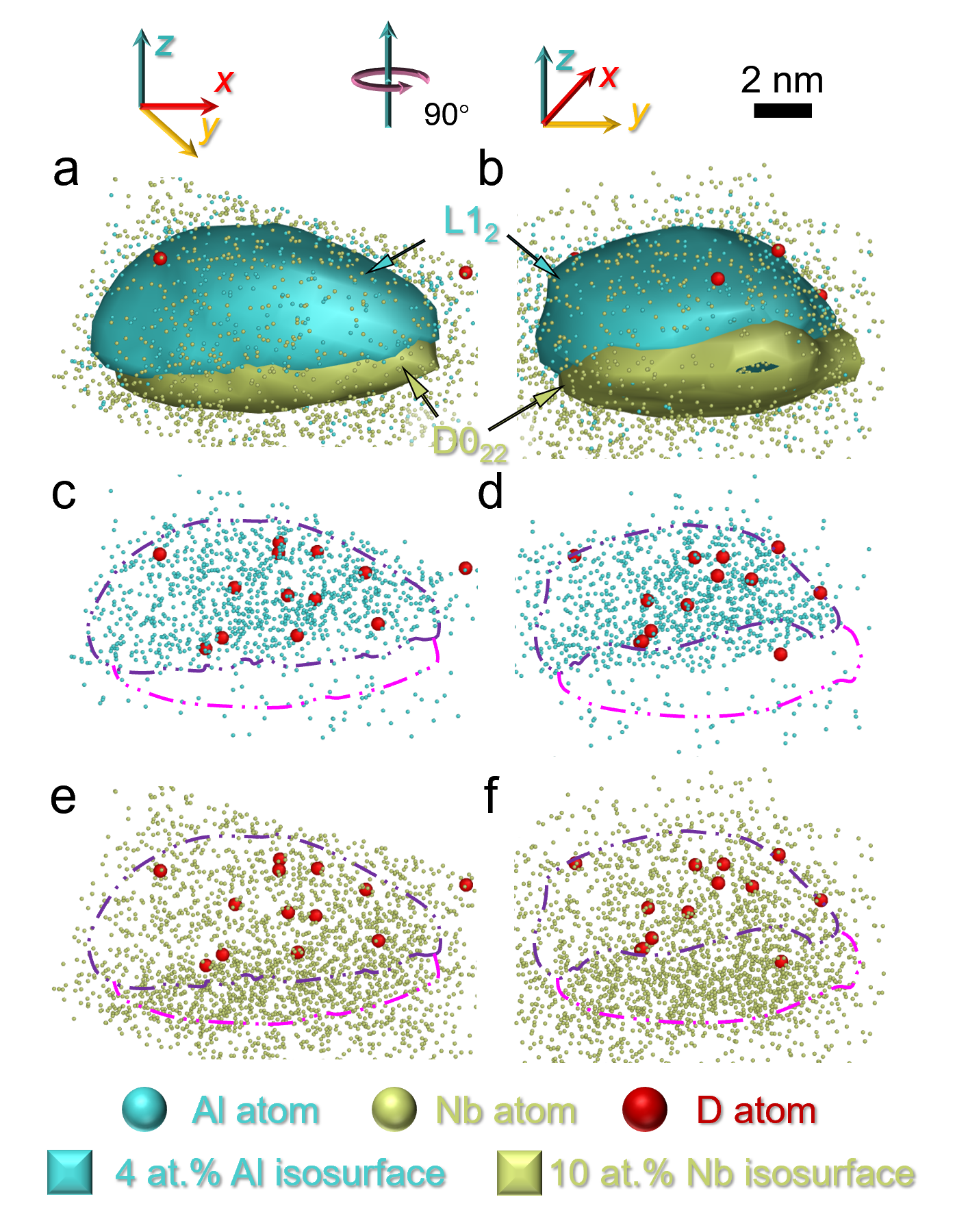
Fig. 3: Three-dimensional Al, Nb and deuterium distributions showing the L12 and D022 precipitates.
The cryo-APT reconstructions revealed that D was detected preferentially within the L12 precipitates, whereas the D022 phase did not exhibit comparable enrichment under the same experimental conditions.
This contrast was particularly revealing. If H enrichment were simply a generic consequence of the presence of a precipitate, both phases might be expected to behave similarly. Instead, they showed markedly different H distributions.
The observations were consistent with first-principles predictions of different hydrogen solution energies in the two phases.
This result strengthened our interpretation of the earlier experiments. It demonstrated that the crystal structure and chemical environment of a phase can influence its ability to accommodate hydrogen in solid solution.
From hydrogen maps to hydrogen physics
Atom probe tomography can produce visually striking three-dimensional reconstructions, but an image alone cannot fully establish the physical state of H.
That distinction shaped the entire study.
We needed to connect the observed D distributions with independent information about crystal structure, defect populations and H energetics. Each technique addressed a different part of the problem: electron microscopy identified the phases and interfaces; cryo-APT revealed nanoscale D distributions; positron annihilation and control experiments examined alternative trapping mechanisms; and first-principles calculations helped explain why hydrogen favored crystal environments.
The combination was essential. No single image or measurement would have been sufficient to support the central conclusion.
Our findings provide experimental evidence that hydrogen can be characterized as an interstitial solute in metallic crystal lattices, and that its distribution can be governed by differences in hydrogen solution energy between phases, not only by conventional defect trapping.
This distinction has implications for how we understand H transport and interpret H-related measurements in complex alloys. It also provides an experimental foundation for testing models that have long treated lattice hydrogen and trapped hydrogen as separate populations.
What comes next?
Understanding where hydrogen resides is only the beginning.
Hydrogen embrittlement ultimately involves processes that evolve during deformation: H migrates, dislocations move, defects form and cracks initiate. The next challenge is to connect nanoscale hydrogen distributions with these dynamic events.
We hope to combine cryogenic H mapping with in situ microscopy, mechanical testing and modelling to better understand how hydrogen interacts with evolving microstructures.
Our longer-term goal is to move from identifying hydrogen’s location and physical state towards explaining, and eventually predicting, how hydrogen affects the reliability of structural metals.
The smallest atom in a metal can have an enormous influence on its behaviors. To understand that influence, we first need to establish not just where hydrogen is, but why it is there.
Reference
1 Chen, Y.-S. et al. Hydrogen trapping and embrittlement in metals – A review. International Journal of Hydrogen Energy 136, 789-821 (2025). https://doi.org/10.1016/j.ijhydene.2024.04.076
2 Chen, Y. S. et al. Observation of hydrogen trapping at dislocations, grain boundaries, and precipitates. Science 367, 171-175 (2020). https://doi.org/10.1126/science.aaz0122
3 Huang, C. Cryogenic atom probe tomography for mapping materials. Nature Reviews Clean Technology (2026). https://doi.org/10.1038/s44359-026-00182-1
4 Huang, C. et al. Strong hydrogen trapping by tangled dislocations in cold-drawn pearlitic steels. Acta Materialia 296, 121231 (2025). https://doi.org/10.1016/j.actamat.2025.121231
5 Huang, C. et al. An atom probe tomography approach to distinguish weak and strong hydrogen traps in alloys. International Journal of Hydrogen Energy 284, 158082 (2026). https://doi.org/https://doi.org/10.1016/j.ijhydene.2026.158082
6 Liu, P. Y. et al. Engineering metal-carbide hydrogen traps in steels. Nat Commun 15, 724 (2024). https://doi.org/https://doi.org/10.1038/s41467-024-45017-4
Follow the Topic
-
Nature
A weekly international journal publishing the finest peer-reviewed research in all fields of science and technology on the basis of its originality, importance, interdisciplinary interest, timeliness, accessibility, elegance and surprising conclusions.