Effect of alloying elements on the structure and corrosion resistance of TCP conversion coating formed on different aluminum alloys
Published in Materials and Mechanical Engineering

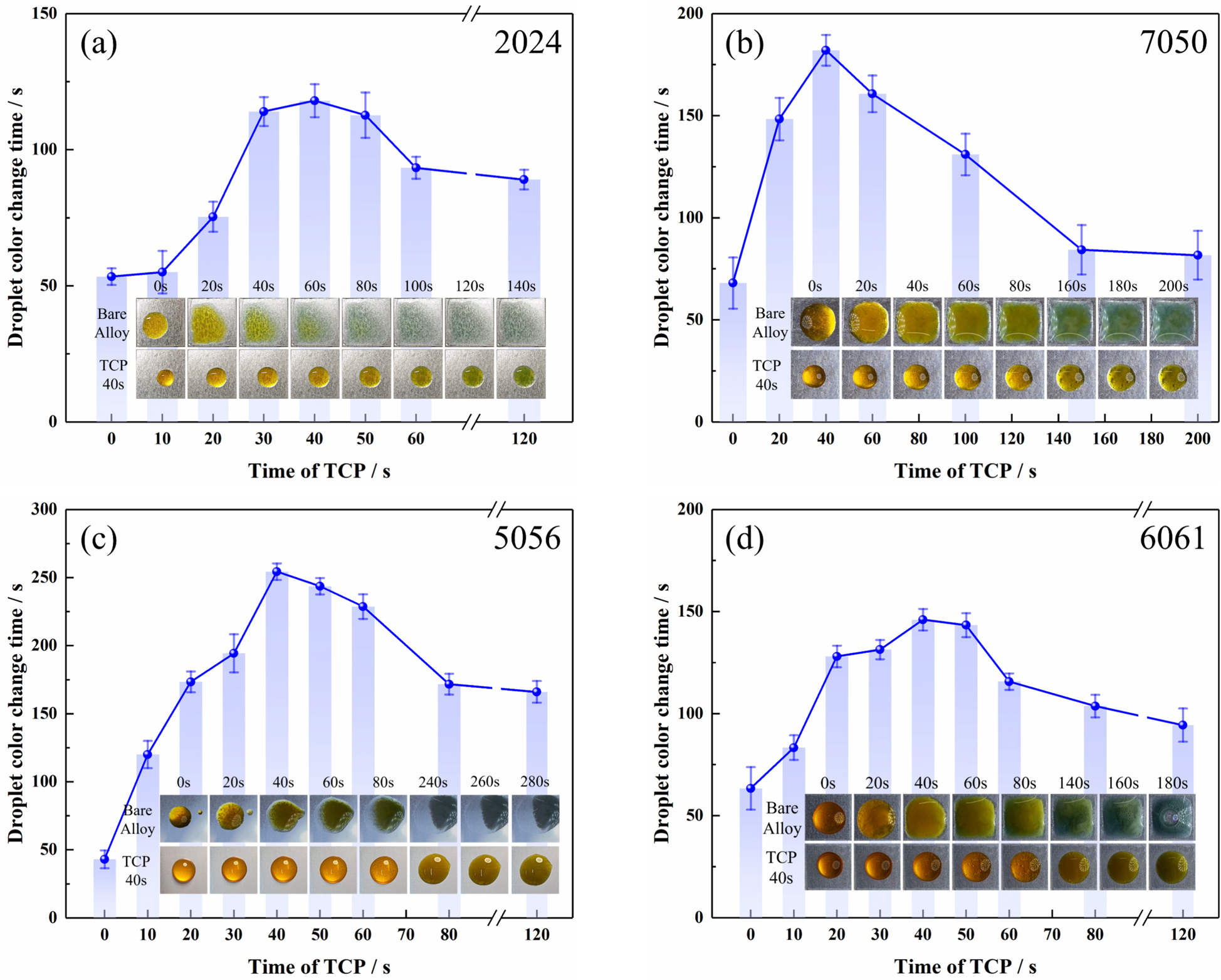
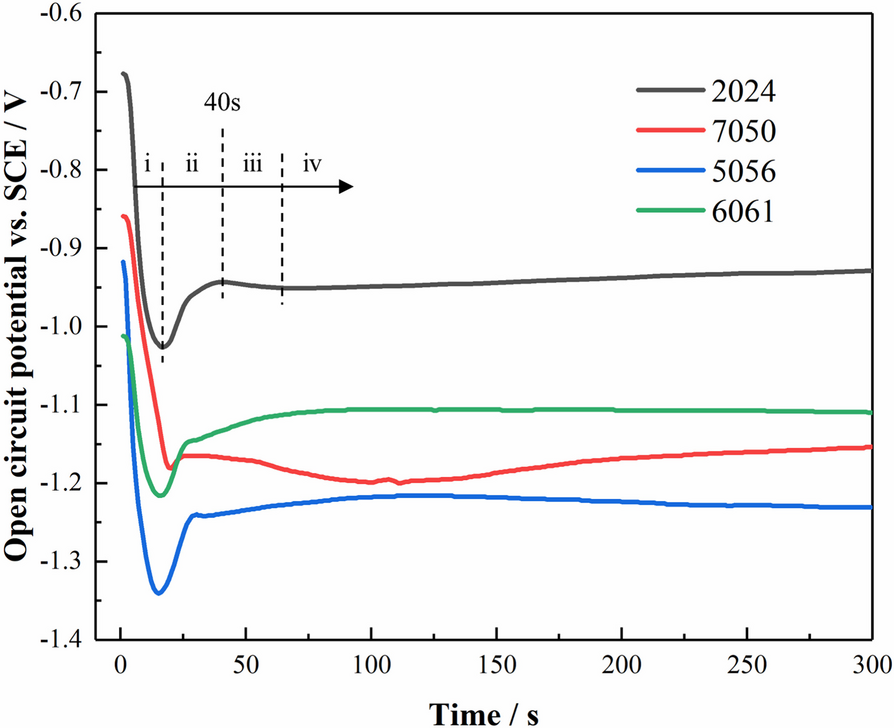

Trivalent chromium process (TCP) conversion coating has been widely used on aluminum alloys due to its high corrosion resistance and relatively low toxicity. Much work has indicated that the corrosion resistance of TCP conversion coating is highly dependent of aluminum alloy type, but the associated mechanism is still not clear. In this paper, based on a Cr-Zr-Ti conversion solution, the structure and corrosion resistance of the TCP coating on four typical aluminum alloys, namely 2024-T351, 7050-T7451, 6061-T6 and 5056-H18, have been investigated. It was found that the TCP coatings formed on 5056 and 6061 alloys showed higher corrosion resistance than those formed on 2024 and 7050 alloys, and the corrosion resistance was negatively related to the amount of Cu in the coating. Mg and Zn were present as oxides and hydroxides in the coating, beneficial to the compactness of the TCP coating. Compared with Cu, Mg and Zn, Si had less effect on the structure and corrosion resistance of the coating. It is suggested that the incorporation of the alloying elements from the alloy substrate into the TCP coating have contributed greatly to different structure and corrosion resistance of the TCP coatings formed on different aluminum alloys.
-
The corrosion resistance of Cr-Zr-Ti TCP coatings varies significantly depending on the substrate alloy. Specifically, coatings formed on 5056 and 6061 alloys exhibit superior corrosion resistance compared to those formed on 2024 and 7050 alloys.
-
Copper (Cu) adversely affects the corrosion resistance of the TCP coating. Alloys with high Cu content (2024 and 7050) produce TCP coatings incorporating substantial copper, resulting in diminished corrosion resistance.
-
Magnesium (Mg) and Zinc (Zn) enhance the corrosion resistance of the TCP coating. These elements form oxide and hydroxide compounds within the coating, promoting the development of a dense, defect-free structure. Silicon (Si), in contrast, has negligible impact on either the structure or corrosion resistance of the TCP coating.
Editor of Surface Science and Technology, which is an a peer-reviewed, open- access journal (free of APC), aiming to promote the scientific and technological innovations on science, technology and engineering in surface and interface science, and to bridge the transformation of innovations and application in engineering. The journal is published by Springer Nature and indexed by SCI, EI, SCOPUS.
Follow the Topic
-
Surface Science and Technology
This is an open access journal, to promote innovations on science, technology and engineering in surface and interface science.

Related Collections
With Collections, you can get published faster and increase your visibility.
Corrosion and Protection
This collection is mainly about the corrosion mechanism, technology and process of anti-corrosion; anti-corrosion materials, film and coating.
Topics include but not limited:
- Corrosion mechanism
- Corrosion preventive technology
- Corrosion-resistant material
- Coatings and films
Publishing Model: Open Access
Deadline: Ongoing
Functional coatings
This collection is mainly about the thermal barrier coating, environmental barrier, high temperature stealth coating, wear-resistant corrosion resistant coating, high temperature oxidation resistance and thermal corrosion resistant coating, sealing coating and ablative coating.
Topics include but not limited:
- Thermal barrier coating
- Environmental barrier
- High temperature stealth coating
- Wear-resistant corrosion resistant coating
- High temperature oxidation resistance and thermal corrosion resistant coating
- Sealing coating and ablative coating
Publishing Model: Open Access
Deadline: Ongoing