Emergence of Rhodotorula mucilaginosa among pet animals: a possible public health risk on the move
Published in Microbiology and Plant Science
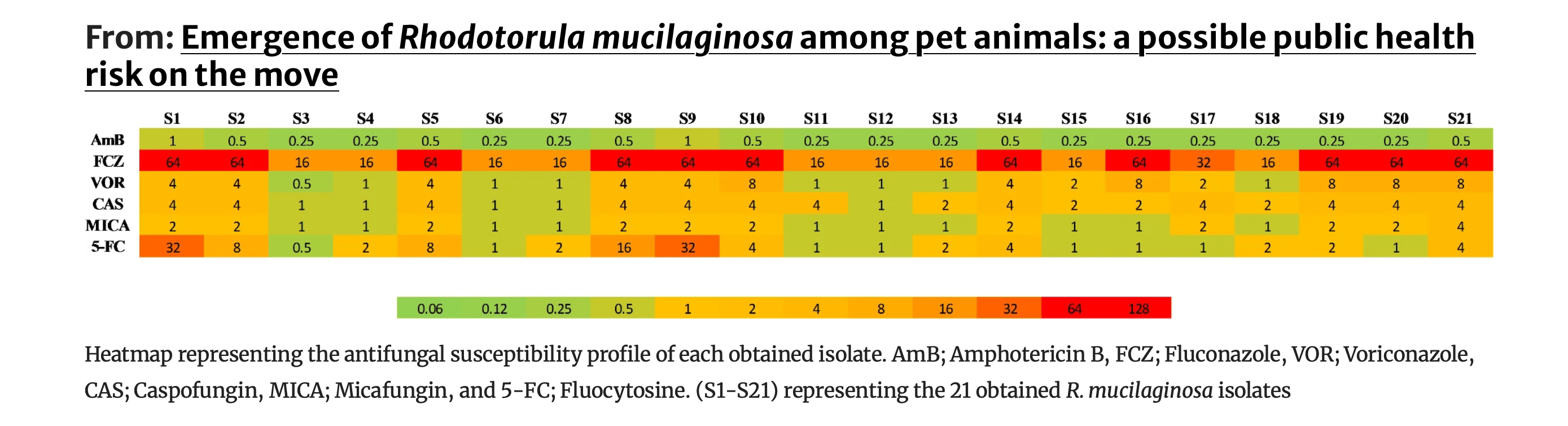




Rhodotorulae are environmentally ubiquitous yeasts that were originally considered non-pathogenic. However, over the last fifty years, Rhodotorula mucilaginosa (R. mucilaginosa) has established itself as an emerging opportunistic pathogen incriminated in several systemic and localized infections in humans and animals. Most of the rhodotorulosis cases were linked directly or indirectly to an immunocompromising event in the affected cases. Nevertheless, recently, a few non-immunocompromised cases were reported. In the current study, performed throughout the period from April/2023 to April/2024, 450 samples were collected from pet animals and investigated for the existence and coexistence of Rhodotorula spp. in different clinically diagnosed infectious cases. 173 (38.5%) samples showed positive direct microscopic slides of different sizes of Gram-positive budding yeast cells, 21 (4.7%). Rhodotorula isolates mixed with other yeasts and/or bacterial pathogens were recovered from nasal passages and ear canal swabs collected from dogs and cats suffering from nasal affection and otitis externa. Laboratory investigations were based on sample collection, microscopic examination, primary isolation and identification, biochemical and post-culturing characterization, antifungal susceptibility testing, VITEK 2 Compact Identification System, DNA extraction, PCR amplification, sequencing, and phylogenetic analysis. Moreover, antifungal susceptibility testing based on the standard broth microdilution test was applied to the recovered Rhodotorula isolates. In conclusion, the present findings spotlighted a prospective insight into the role of the emergence of R. mucilaginosa among pet animals and its possible public health concerns.
Hippocrates was the first to describe a yeast infection caused by Candida albicans in the fifth century and named it “thrush”. Since then, the primary and the most frequently isolated yeast associated with human and animal infections is Candida albicans. Non-albicans Candida and other new and emerging yeast agents have been demonstrated in various forms and types of disease, some of which are systemic life-threatening and others are local superficial conditions. Despite the recognition of different yeasts as agents of disease, little medical or scientific concern was given to them, in contrast to the many serious and highly prevalent bacterial infections recognized in the late 1800s. However, the advent in the 1960s of new modalities to treat cancer, increasing use of central venous catheters, an explosion in new antibacterial agents’ development, increases in average life expectancy, and other medical developments soon paved the way for innocuous yeasts to cause serious infections.
With further developments in medical intervention, increasing the population of immunosuppressed and immune-deficient patients, and raising animal-human interaction habitual occasions, the list of yeasts that can cause disease continues to grow. Disturbances of the microbiome niche environment and conditions that adversely affect the host immune system predispose and facilitate the pathogenicity transition of opportunistic microbes and emerging new infectious diseases. Factors predisposing the human or animal host to fungal infection establishment are long-term or repeated prescription of broad-spectrum antibiotics, impairments of epithelial barriers especially that reflect on the skin and the gastrointestinal tract e.g., by chemotherapy, surgical interventions, or catheter-based medical processes, and treatment with immunosuppressive drugs such as corticosteroids. Rhodotorula spp. are saprophytic yeasts that are usually isolated from dairy products and dumpy or moist environmental sources including bathroom surfaces, swimming pools, and planted places as commensal inhabitants of the gastrointestinal tract and skin of mammals.
Reported infections with Rhodotorula spp. in pet animals are rare and usually confirmed by laboratory isolation, identification, antifungal susceptibility testing, and the degree of treatment response during the case follow-up. Opportunistic Rhodotorula infection of humans, which is known as rhodotorulosis, is increasing in predisposed immunocompromised cases and is associated with high mortality rates despite interceptive antifungal treatments. Therefore, rhodotorulosis showed an increasing concern as a zoonotic threat that can be transmitted directly to susceptible humans from infected or apparently healthy companion animals, or to a patient from a medical occupation member who raises an infected pet animal, or indirectly through medical equipment manipulation such as catheters and other medical prosthetic transplants.
Nowadays, fungal infections, whether zoonotic or sapronotic, are increasingly important to public health worldwide. A number of these infections are due to established potentially pathogenic fungal agents such as dermatophytosis, histoplasmosis, and candidiasis. On the other hand, it is notable that some emerging opportunistic pathogens with zoonotic potential have inadequate attention by international public health efforts, leading to insufficient attention to their precautionary measures. Therefore, the current study highlighted the incrimination of one of those neglected causes; R. mucilaginosa in several mixed infection cases among pet animals.
The current study represents the first elucidation of the predicted evolution of the emerging opportunistic fungal pathogen, R. mucilaginosa, focusing on the cross-kingdom-talks conceptualization as well as hitting the warning bell to be ready for any uprising microbial-based danger that may face humanity in the upcoming few years. Also, it is worth mentioning that controlling human contact with animal reservoirs helps to safeguard vulnerable groups and is an essential part of any prospective prevention strategy. To more accurately describe the burden, distribution, mortality, and socioeconomic effects of any possible neglected zoonotic or sapronotic potentials and to provide an integrated platform of prevention and control techniques, greater awareness-raising initiatives are required. Additional research investigations on the pathogenesis, expected risks, molecular and epidemiological tracing and follow-up, diagnostic techniques, as well as efficient and early therapeutic protocols are currently of importance. The current findings leave us with a very urgent question; Does R. mucilaginosa pose a public health risk or is it an exaggerated concern? Therefore, and due to the scarce contribution of the scientific community in this area of inquiry, further studies should be performed to ascertain the etiologic significance of different Rhodotorula spp. in other and more clinical diseases of humans and animals that may be incriminated in, currently and prospectively.

Follow the Topic
-
BMC Microbiology
This is an open access, peer-reviewed journal that considers articles on all microorganisms - bacteria, archaea, algae and fungi, viruses, unicellular parasites and helminths.

Related Collections
With Collections, you can get published faster and increase your visibility.
Mycobacteria: advances in physiology and mycobacterial diseases research
Mycobacteria are a large and diverse group of microorganisms, known for their adaptability and resistance to environmental stresses, particularly due to their unique thick, hydrophobic cell wall rich in mycolic acids. While most mycobacteria are not pathogenic, some of them (e.g. Mycobacterium tuberculosis or Mycobacterium leprae) have evolved to become very successful human pathogens, with complex pathogen-host interactions that are still poorly understood. Often because of their unique physiological properties that facilitate survival in different environments, persistence in a latent state within the host and evasion of host immune responses, mycobacteria pose significant challenges to global public health. A greater understanding of the physiology and mechanisms underlying mycobacterial infections is essential to develop effective treatments, diagnostics and preventive measures, especially considering the rise of drug-resistant mycobacterial strains, and the global burden of tuberculosis- and non-tuberculosis-related diseases. Recent advances in understanding mycobacterial basic biology and physiology, pathogenesis, and immune evasion are paving the way for novel therapeutic strategies, including the development of new vaccines, as well as new molecular diagnostics.
In support of United Nations’ SDG 3 (Good health and well-being), BMC Microbiology presents the Collection Mycobacteria: advances in physiology and mycobacterial diseases research. This Collection invites research on mycobacteria, focusing on advances in understanding their physiology, pathogenesis, and the diseases they cause. We welcome submissions that explore host-pathogen interactions, immune system responses, drug-resistance mechanisms, and innovative approaches for the prevention, diagnosis and treatment of mycobacterial infections. Research without a clear focus on microorganisms or pathogen-host interactions will not be considered. We will consider research articles that investigate, but are not limited to, the following topics:
- Physiology, metabolism, stress response mechanisms, adaptation to environmental stresses, sources of transmission and environmental persistence of mycobacteria
- Mycobacterial pathogenesis and immune evasion
- Innate and adaptive cellular immune responses to M. tuberculosis and non-tuberculous mycobacteria (NTM) infections
- Drug-resistance mechanisms, persistence and dormancy in mycobacteria
- Mycobacterial reactivation and transmission
- Host-pathogen interactions in mycobacterial diseases
- Advances for combating mycobacterial co-infections
- Conserved and specialized functions of Type VII secretion systems (T7SS) (ESX or ESAT-6 systems) of mycobacteria
- Advances in molecular diagnostics and biomarkers for the detection of mycobacterial infections, disease progression and cure
- Vaccine development for mycobacterial infections
- Novel drug targets and therapeutic strategies against mycobacterial infections
All manuscripts submitted to this journal, including those submitted to collections and special issues, are assessed in line with our editorial policies and the journal’s peer-review process. Reviewers and editors are required to declare competing interests and can be excluded from the peer review process if a competing interest exists.
Publishing Model: Open Access
Deadline: Jul 17, 2026
Microbes in built environments
The microbial communities (e.g. bacteria, fungi, viruses) that inhabit human-built environments are diverse, dynamic and complex, and they play a significant role in human health and wellbeing. From indoor air quality to the surfaces and building materials we touch daily, we interact with a range of microbes that come from a variety of sources such as other humans, pets, plants, pests, and other outdoor sources. Investigating and understanding these interactions require interdisciplinary approaches that integrate microbiology, ecology, and engineering principles, among other disciplines. As our understanding of microbial dynamics within built environments advances, it becomes increasingly clear that built-environment microbes and microbiomes can strongly affect human health, either positively or negatively.
Recent research has highlighted the potential importance of indoor microbial diversity in influencing human health (e.g. respiratory health, allergies, and the spread of multidrug-resistant organisms, particularly in healthcare settings). Innovations in monitoring and modelling microbial communities are opening new avenues for designing healthier indoor environments and mitigating risks from unwanted microbial exposures. Ongoing research in the field has the potential to yield novel insights into how these microbes respond metabolically to certain stressors and how we can leverage that knowledge. Additionally, a better understanding of microbe-host interactions could aid in developing novel approaches in building design and public health initiatives. Adaptive antimicrobial methods based on real-world conditions (such as occupancy, ventilation, and microbial indicators) offer a promising pathway to control microbial risks while minimizing unintended impacts.
In support of the United Nations’ Sustainable Development Goal 3 (SDG 3, Good Health and Well-Being), BMC Microbiology launches the Collection Microbes in built environments. This Collection invites research articles that contribute to the understanding of microbes and microbiomes in human-built environments, encompassing microbial ecology, diversity, metabolism, and their implications for human health. Submissions are welcome on topics ranging from indoor microbial communities to the impact of design on microbe-host interactions in the built environment. Research without a clear focus on microorganisms, microbial communities, or microbiomes in built environments will not be considered. We invite researchers and experts in the field to submit research articles covering a broad range of topics, including, but not limited to:
- Interactions between microorganisms/viruses and hosts in built environments
- Microbial physiology, metabolism, adaptation and diversity of the built environment
- Impact of microbes in the built environment on human health and diseases
- Antimicrobial resistance of the built environment
- Holistic pathogen defence in the built environment
- Microbial ecology of the built environment
- Microbial adaptation and evolution in response to anthropogenic disturbances in built environments
- Viruses in the built environment
- Food surfaces and disinfection in the built environment
- Role of indoor air quality, ventilation and HVAC systems in microbial community dynamics
- Impact of surface and building materials on microbial colonisation
- Bioremediation and microbial management in built environments
- Interventions to promote/discourage microbial exposures in built environments
- Environmental monitoring methods of microbes in built environments
- Adaptive antimicrobial strategies in built environments
All manuscripts submitted to this journal, including those submitted to collections and special issues, are assessed in line with our editorial policies and the journal’s peer-review process. Reviewers and editors are required to declare competing interests and can be excluded from the peer review process if a competing interest exists.
Publishing Model: Open Access
Deadline: Oct 22, 2026

Please sign in or register for FREE
If you are a registered user on Research Communities by Springer Nature, please sign in