Marine Antimicrobial Peptides: From Ocean Biodiversity to Genome Mining, Multi-Omics Discovery, and Biotechnological Innovation in the Battle Against Antimicrobial Resistance
Published in Microbiology
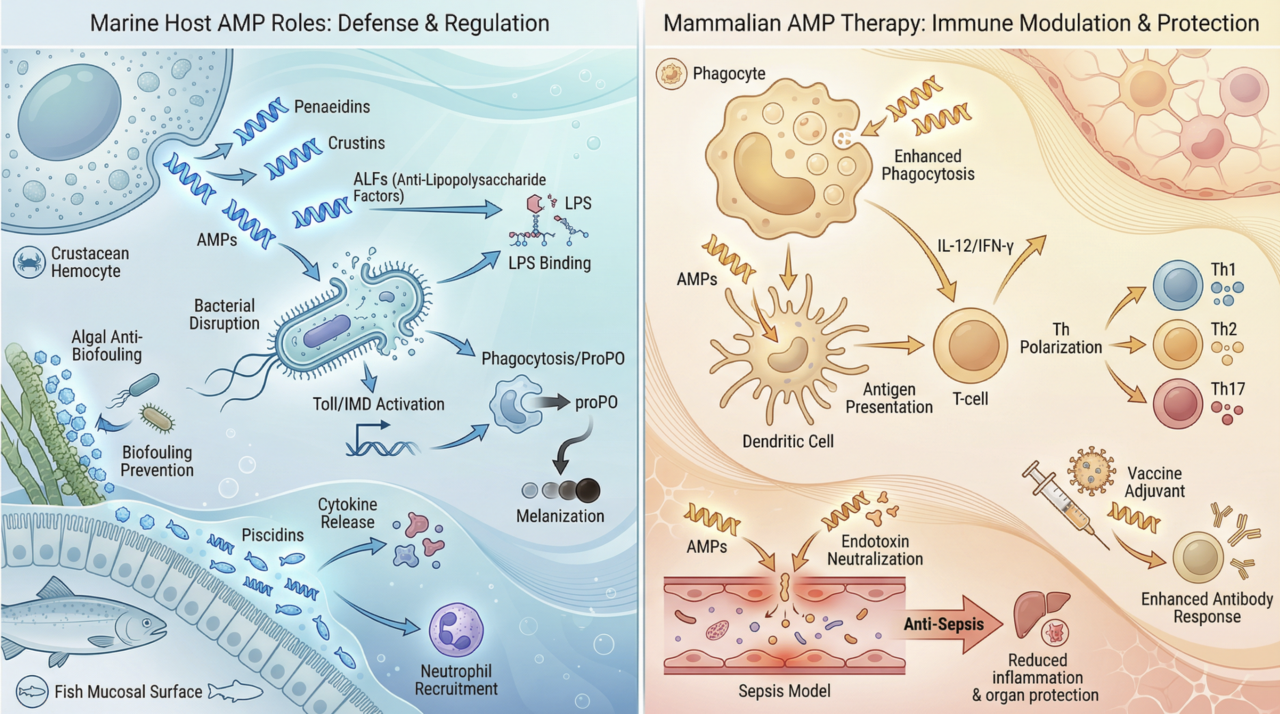


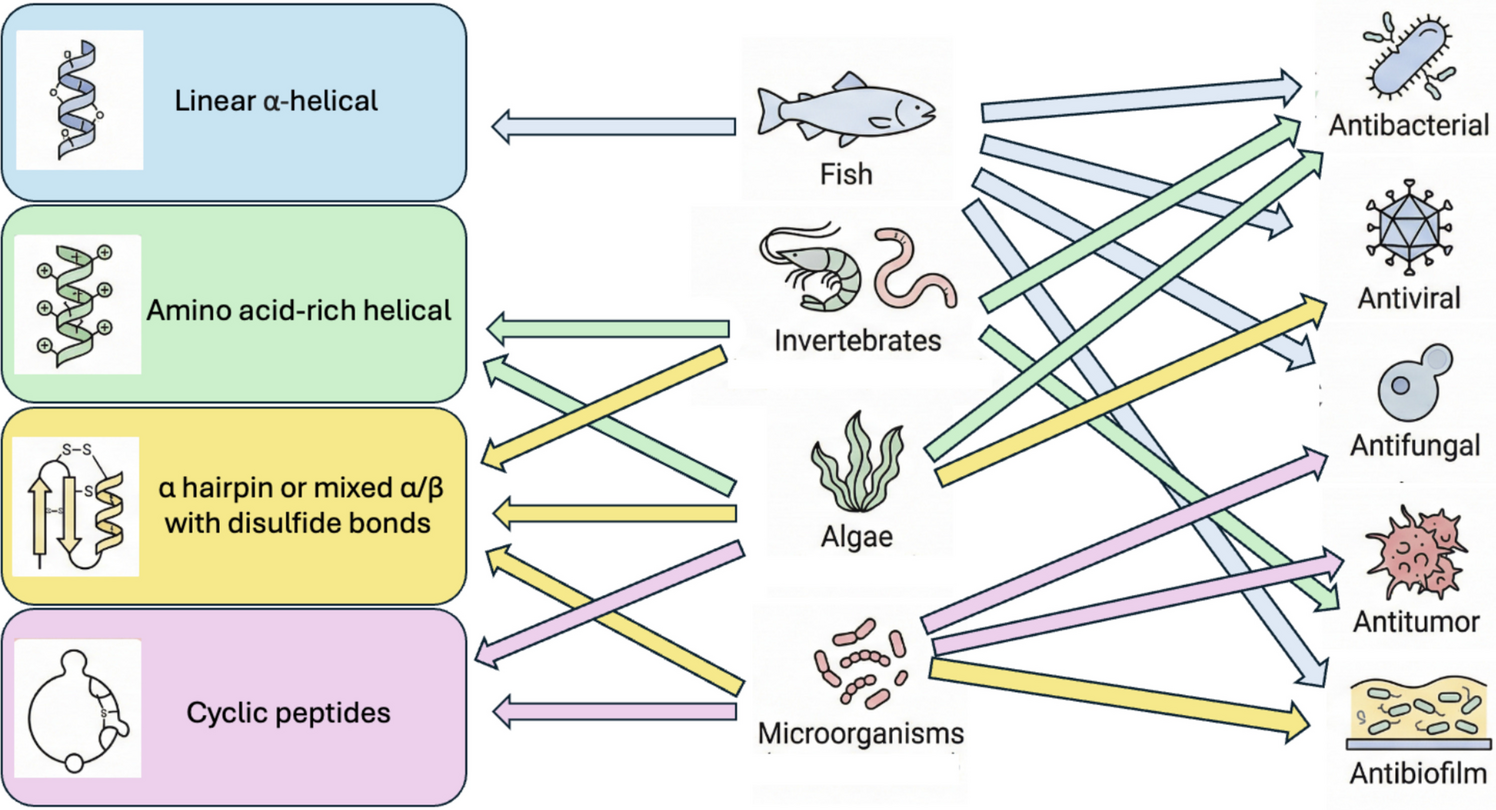

Bacterial AMR, driven by multidrug-resistant (MDR) and extensively drug-resistant (XDR) pathogens, has emerged as one of the greatest global health threats of the twenty-first century. Once confined largely to hospital environments, resistant pathogens are now widespread in the community, creating a critical public health concern. The rapid spread of AMR is fueled by globalization, the excessive and uncontrolled use of antibiotics in human medicine, animal husbandry, and aquaculture, and the overreliance on broad-spectrum drugs combined with weak antimicrobial stewardship. As a result, treatment options are dwindling, and it is projected that without novel interventions, effective antibiotics may be exhausted by 2050.
The maritime environment, encompassing over 70% of the Earth's surface, constitutes the largest and most diverse ecosystem, yet is significantly underexplored relative to terrestrial areas. Marine species, flourishing under harsh conditions of salt, temperature, pressure, and nutrient scarcity, have developed distinctive metabolic and structural adaptations. The production of AMPs encompasses unique attributes, including salt tolerance, significant immunomodulatory activity, chitin-binding capacity, and various post-translational modifications or peptide variants derived from fragmentation that exhibit enhanced bioactivity.
Marine invertebrates constitute a significant reservoir of AMPs, with increasing evidence from molluscs, crustaceans, annelids, echinoderms, cnidarians, and tunicates. Notable instances include mussel myticins/mytilins, defensin-like peptides, crustacean crustins, penaeidins, annelid arenicins, and tunicate styelins/clavanins, all of which exhibit extensive antibacterial, antifungal, and anti-biofilm properties, thereby aiding mucosal and hemolymph defense, in conjunction with peptides derived from marine invertebrate venoms and secretions. These traits collectively distinguish marine AMPs from terrestrial counterparts and underscore their significant biotechnological potential. Recent research underscores the influence of habitat pressure, microbiome exposure, and pathogen-driven selection on the composition of AMP repertoires, affirming their significance as bioactive scaffolds for biotechnology and therapeutics.
While numerous reviews have catalogued the discovery and properties of marine AMPs, this work provides a forward-looking, integrated perspective. We highlight the comprehensive translational pipeline—connecting omics-informed discovery, computational and AI-driven design, recombinant and synthetic production methodologies, and nanotechnology-facilitated delivery systems—and evaluate it from a time-to-application perspective. Recent preclinical studies illustrate the significant translational potential of marine AMPs, such as piscidin-1, epinecidin-1, and halocyntin, which display in vivo efficacy against multidrug-resistant bacteria and retain structural integrity in high-salinity conditions. Moreover, advancements in AI-driven peptide discovery—specifically deep-learning methodologies for AMP identification and design and molecular de-extinction techniques that reconstruct effective antibiotic candidates from genomic data—are broadening the available chemical landscape and expediting the development of next-generation marine-derived therapeutics.
This cohesive framework organizes the review, progressing from sources and mechanisms to resistance and engineering, and culminating with practical applications. This review focuses exclusively on AMPs derived from marine species. The coverage encompasses their inherent diversity, modes of action, immunological functionality, resistance characteristics, and advancements in translational biotechnology, with a deliberate emphasis on concrete examples from fish, marine invertebrates, marine microorganisms, and algae.
Marine AMPs are evolutionarily conserved molecules that form a vital first line of defense across diverse organisms. Their cationic and amphipathic properties enable selective disruption of microbial membranes, while their multifunctionality—including immunomodulatory, antiviral, anticancer, and antiparasitic activities—underscores their value as candidates for next-generation therapeutics and biotechnological applications. Despite rapid advances, key barriers remain: the low abundance of AMPs in marine organisms, challenges in large-scale isolation, and limitations such as hemolysis, proteolytic degradation, and poor PK. These constraints highlight the need for innovative biotechnological approaches. Recombinant expression, peptide engineering, nanodelivery systems, and omics-guided discovery are already enhancing stability, scalability, and functional optimization, extending AMP use beyond human medicine to aquaculture, food preservation, and industrial biofilm control. Looking forward, the integration of marine biotechnology with synthetic biology, nanotechnology, and computational peptide design provides a clear pathway for overcoming current challenges. By converting naturally occurring AMPs into engineered, stable, and cost-effective molecules, these approaches can establish marine AMPs as a cornerstone in the global fight against AMR. Achieving this vision will depend on sustained multidisciplinary collaboration that bridges marine biology, biotechnology, and translational medicine. Quantitative advances in yield, cost reduction, and PK highlight that marine AMPs are moving beyond exploratory biology toward feasible translational pipelines.

Follow the Topic
-
Probiotics and Antimicrobial Proteins

This journal aims to advance fundamental knowledge and exploration of the applications of probiotics, natural antimicrobial proteins and their derivatives in biomedical, agricultural, veterinary, food, and cosmetic products.

Please sign in or register for FREE
If you are a registered user on Research Communities by Springer Nature, please sign in