Enhancing Public Health and Environmental Safety through Onsite Waste Segregation in Animal Research Facilities
Published in Biomedical Research, Public Health, and Behavioural Sciences & Psychology



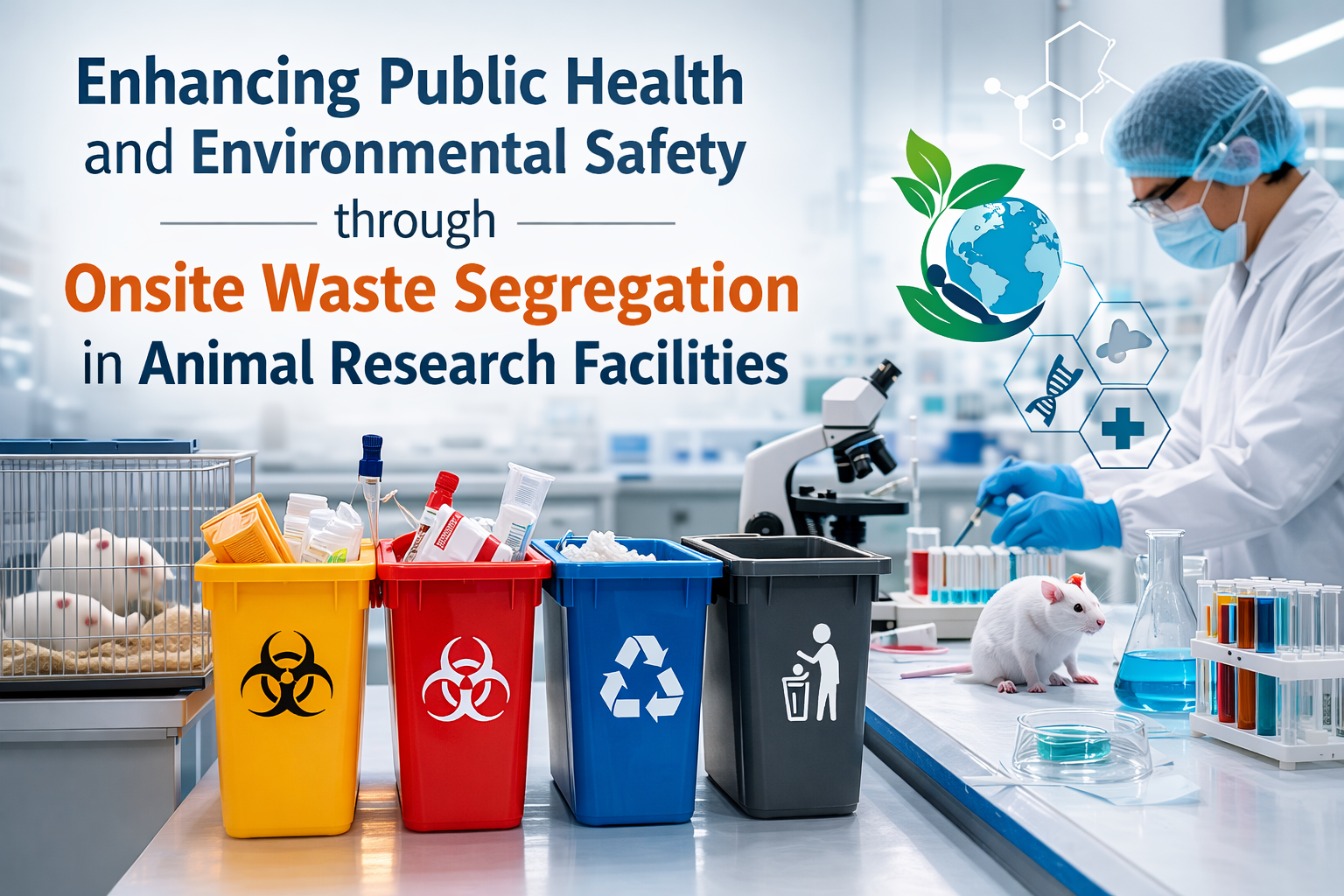
Why Onsite Waste Segregation Matters in Animal Research Facilities
Animal research facilities play a crucial role in advancing biomedical science. Research conducted in these facilities contributes to major breakthroughs in drug development, vaccine research, cancer treatment, and the understanding of complex diseases. Through carefully controlled experimental environments, animal studies help scientists explore biological mechanisms that ultimately support improvements in human and veterinary medicine.
However, alongside these scientific contributions lies an important operational responsibility that often receives less attention: biomedical waste management.
Animal research facilities generate a wide range of waste streams, including infectious biological materials, sharps, chemical reagents, pharmaceutical residues, animal tissues, and contaminated bedding. Managing these wastes safely is essential not only for maintaining laboratory operations but also for protecting workers, surrounding communities, and the environment.
Our recent study, Enhancing public health and environmental safety through onsite waste segregation in animal research facilities, examines how onsite waste segregation can significantly improve public health protection and environmental safety in these specialized research environments.
The importance of segregation at the point of generation
Biomedical waste management systems typically involve several stages, including collection, storage, transportation, treatment, and final disposal. While each stage is essential, the effectiveness of the entire system largely depends on the initial segregation of waste at the point where it is generated.
In practical terms, this means that the moment a researcher, laboratory technician, or animal handler discards waste after a procedure becomes a critical step in the waste management chain.
If waste is incorrectly segregated at this stage, downstream processes cannot fully correct the mistake. For example, non-infectious waste mixed with infectious waste increases treatment requirements and operational costs. Conversely, infectious materials disposed of in general waste streams may create potential safety risks for waste handlers and sanitation workers.
These seemingly minor mistakes can therefore have significant downstream consequences across the waste management system.
Unique challenges in animal research facilities
Animal research facilities present unique challenges for biomedical waste management compared with standard hospital environments.
In hospitals, waste streams are primarily generated through patient care activities such as surgical procedures, diagnostics, and clinical treatments. In contrast, animal research environments combine laboratory experimentation with animal husbandry, creating more diverse waste sources.
Examples include:
- Experimental procedures involving biological agents
- Drug and vaccine testing
- Routine animal care and cage maintenance
- Laboratory diagnostics and sample analysis
Each of these activities produces different waste categories that require specific handling and disposal pathways. This diversity increases the complexity of waste segregation and highlights the importance of clear protocols and effective waste management systems.
Protecting occupational health and safety
Improper biomedical waste segregation can expose workers to significant occupational hazards. Researchers, laboratory technicians, animal handlers, and sanitation staff may all encounter risks if hazardous waste is not properly contained.
Sharps injuries remain a well-recognized risk in biomedical environments. Similarly, exposure to infectious biological materials may occur if contaminated waste is mishandled during collection, transport, or disposal.
Effective segregation at the point of generation reduces these risks by ensuring that hazardous materials are correctly identified and placed into appropriate waste streams.
By strengthening segregation practices, research institutions can significantly improve occupational safety and reduce potential health risks for personnel working within these environments.
Environmental implications of biomedical waste
Biomedical waste management also carries important environmental implications. Improper handling or disposal of hazardous waste can contribute to environmental contamination through soil pollution, water contamination, or emissions generated during waste treatment processes.
Mixing incompatible waste streams may also increase the environmental burden of treatment methods such as incineration or chemical processing.
Onsite waste segregation helps minimize these impacts by ensuring that each waste category follows an appropriate treatment pathway. When waste streams remain properly separated, treatment systems can operate more efficiently while reducing environmental risks.
In this way, effective segregation supports broader goals of environmental protection and sustainable waste management practices.
Strengthening institutional waste management systems
Improving biomedical waste segregation in animal research facilities requires a combination of institutional policies, infrastructure, and staff awareness.
Facilities that maintain effective waste management systems typically implement several key practices.
First, clear waste segregation protocols aligned with regulatory guidelines help ensure that staff understand the correct disposal pathways for different waste categories.
Second, regular staff training programs help reinforce proper waste handling practices among researchers, technicians, and animal care personnel.
Third, accessible infrastructure, including properly labeled waste containers and disposal stations, ensures that staff can easily follow segregation procedures during routine work activities.
Finally, monitoring and compliance mechanisms, such as waste audits and internal reviews, help identify potential segregation errors and support continuous improvement in waste management practices.
Together, these strategies create an operational environment that supports safer and more effective waste management.
Waste management as part of responsible research practice
Animal research facilities operate under strict ethical and regulatory oversight. Responsible research practices extend beyond experimental design and animal welfare considerations to include environmental stewardship and occupational safety.
Maintaining high standards in biomedical waste management reflects an institution’s commitment to protecting workers, safeguarding ecosystems, and ensuring responsible scientific practice.
Strengthening waste segregation practices therefore contributes not only to safer laboratory environments but also to the overall credibility and accountability of biomedical research institutions.
Looking ahead
As biomedical research continues to expand globally, the volume and diversity of waste generated in research facilities are also likely to increase. Addressing these challenges will require continuous attention to operational practices within laboratories and animal research units.
Future improvements may involve enhanced training strategies, improved waste monitoring systems, and greater integration of operational insights into laboratory waste management practices.
Ultimately, effective biomedical waste management begins with a simple yet critical step: correct segregation at the point where waste is first generated.
Closing perspective
This work also complements our earlier research on behavioral aspects of biomedical waste management, including the development of Bhadran’s Point-of-Generation Segregation Theory (PGST). Together, these studies highlight how both institutional systems and human decision-making at the point of waste generation influence the safety and effectiveness of biomedical waste management practices.
Read the full article:
https://link.springer.com/article/10.1186/s12982-026-01641-7

Renjith Seela Bhadran, developer of Bhadran’s Point of Generation Segregation Theory (PGST), is an Indian academic and public health researcher whose work integrates behavioral science with public health to address systemic challenges in healthcare waste management. He is an Assistant Professor in the Department of Public Health at Amrita School of Medicine, Amrita Vishwa Vidyapeetham, Kochi, India, where he primarily teaches Social and Behavioral Science to healthcare students.
Bhadran holds a Master of Science in Public Health (MSc PH) from the University of Bedfordshire and an MBA from the University of Nottingham, United Kingdom. His academic work reflects a multidisciplinary perspective that combines public health systems analysis, behavioral science, and environmental sustainability. His research initially focused on onsite biomedical waste segregation challenges in healthcare facilities and later expanded to investigate the cognitive and behavioral determinants influencing segregation practices at the point of generation.
During his doctoral research (PhD) at Amrita School of Medicine, Bhadran developed the Point-of-Generation Segregation Theory (PGST), a behavioral–systems framework that conceptualizes biomedical waste segregation as a precision-dependent behavioral process occurring at the moment of waste generation. The theory introduces analytical constructs such as the Precision Behavior Score (PBS) and Moment-Based Precision Behavioral Fidelity (MBPBF) to evaluate segregation accuracy at the point of disposal, along with behavioral drift analysis to monitor system performance and support improvement over time.
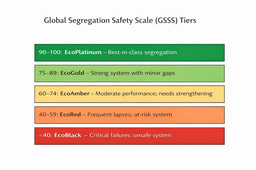
PGST also proposes the Global Segregation Safety Scale (GSSS), a structured benchmarking framework designed to classify institutional segregation performance and support international comparisons in biomedical waste management practices. By reframing waste segregation as a behavioral decision-making process rather than solely an operational activity, the framework provides a new interdisciplinary perspective linking healthcare worker behavior, environmental sustainability, and public health safety.
Bhadran’s research sits at the intersection of behavioral systems research, public health impact assessment, health education, and environmental health management. His work is increasingly gaining international academic attention for its potential to strengthen training systems, institutional audits, and evidence-based policy development in biomedical waste management.
Follow the Topic
-
Discover Public Health
This is an open access journal publishing research from all fields relevant to public health.

Your space to connect: The Psychedelics Hub
A new Communities’ space to connect, collaborate, and explore research on Psychotherapy, Clinical Psychology, and Neuroscience!
Continue reading announcementRelated Collections
With Collections, you can get published faster and increase your visibility.
Antimicrobial Resistance: The New Challenge to Global Health in a Post-Pandemic World
Antimicrobial resistance (AMR) is a seriously ongoing threat to global health, occurring when bacteria, fungi, viruses, and parasites evolve to resist the drugs designed to kill or block them. The COVID-19 pandemic has both directly and indirectly exacerbated the problem of AMR, as the overuse of antibiotics has accelerated the development of resistance in many pathogens. COVID-19 may have subsided, but AMR continues to pose a significant risk to the effectiveness of global healthcare systems, threatening to reverse decades of progress in combating infectious diseases. The interplay between population health and AMR has become increasingly critical as healthcare practices have shifted in response to the pandemic. Understanding this relationship is essential for developing effective strategies to mitigate the impact of AMR on population health in a post-COVID context.
The motivation for launching this Collection arises from the urgent need to address the rising tide of AMR as healthcare systems grapple with the long-term effects of the pandemic. Increased antibiotic use during COVID-19 treatment, changes in healthcare access, and disruptions in public health interventions have all contributed to an environment where AMR can thrive. Moreover, the pandemic has highlighted the importance of a multidisciplinary approach to tackling AMR, involving epidemiology, policymaking, and community health initiatives. This Collection aims to provide a platform for researchers and practitioners to share insights and findings that can inform future strategies to combat AMR while considering the broader implications for population health.
This Collection aims to highlight the multifaceted nature of AMR in a post-pandemic environment. We solicit articles that investigate the particular issues provided by the pandemic in terms of AMR development and containment, examine the impact of AMR on many sectors of healthcare, and propose novel strategies to minimize resistance propagation. Submissions may include original research, policy assessments, program evaluations, and comments on the following major areas:
• Epidemiology and trends of AMR post-pandemic
• Impact of COVID-19 on antibiotic usage
• Surveillance strategies for AMR
• AMR and stewardship
• Prevention and control measures to limit AMR spread
• Policies and programs to promote antibiotic stewardship
• Economic and social implications of AMR
• Global collaboration and initiatives to tackle AMR
By addressing these critical issues, this Collection aims to provide a comprehensive understanding of the emerging challenges in antimicrobial resistance in a post-pandemic world and to promote effective strategies to preserve the power of our current antimicrobials.
Keywords: antimicrobial resistance; COVID-19; antibiotics; global health; infectious diseases; public health; policy; prevention
This Collection supports and amplifies research related to SDG 3.
Publishing Model: Open Access
Deadline: Jun 30, 2026
Digital Frontiers in Public Health: Data-driven Solutions and Technologies for Efficiency, Effectiveness, and Equity
In recent years, the landscape of public health has been transformed by unprecedented access to high-quality data, advances in data storage and processing, and a growing willingness to share information across jurisdictions. The global response to the COVID-19 pandemic exemplified how coordinated data use and technological innovation can accelerate decision-making, enhance surveillance, and save lives. These developments mark a new era in which the application of modern data analytics in evidence-driven public health practices is not only possible but essential.
Building on this momentum, contemporary innovations are contributing to significant improvements in the three Es of public health: efficiency, effectiveness, and equity. Improved efficiency enables resources to be allocated and managed in a manner that generates the maximum attainable outputs; enhanced effectiveness ensures that public health policies, interventions, and practices achieve the expected health outcomes; and strengthened equity promotes fair access to healthcare and public health services across all populations. Together, these dimensions reflect the evolving priorities and capabilities of modern public health systems.
This Collection, “Digital Frontiers in Public Health: Data-driven Solutions and Technologies for Efficiency, Effectiveness, and Equity,” invites contributions that explore these themes through empirical studies, methodological advancements, case studies, and policy analyses. We seek manuscripts that highlight innovative data applications, cross-sector collaborations, digital health initiatives, and strategies that enhance equity through technology and data integration, as well as collaborative public health practices.
Topics of interest include, but are not limited to:
- Applications of novel data linkage and analytics methods in public health
- The role of participation and co-creation in addressing public health issues
- Digital and technological innovations in public health
- Complete or partial assessments of triple Es in public health
- Economic evaluations of public health interventions
By showcasing diverse approaches from around the world, this Collection aims to provide a comprehensive overview of how data-driven innovations are reshaping public health practice today, and in the future. Researchers, practitioners, and policymakers are encouraged to share their insights and experiences to contribute to this critical dialogue on the future of public health.
This Collection supports and amplifies research related to SDG 3.
Keywords: digital applications; data sharing; data infrastructure; economic evaluations; health equity; public health; policy analysis; health informatics
Publishing Model: Open Access
Deadline: Sep 30, 2026


Please sign in or register for FREE
If you are a registered user on Research Communities by Springer Nature, please sign in