Exploration of Social Medicine and Community Health in India Through Film Making
Published in Social Sciences, Public Health, and Arts & Humanities
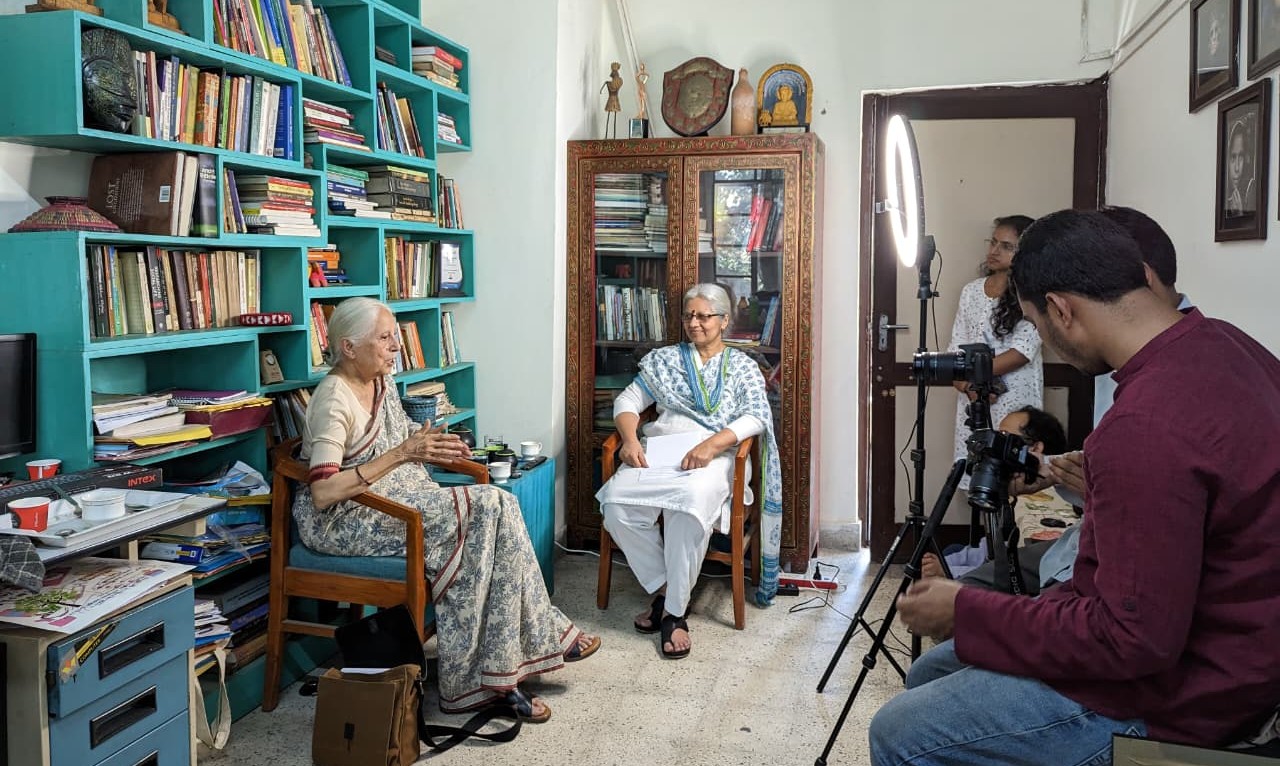

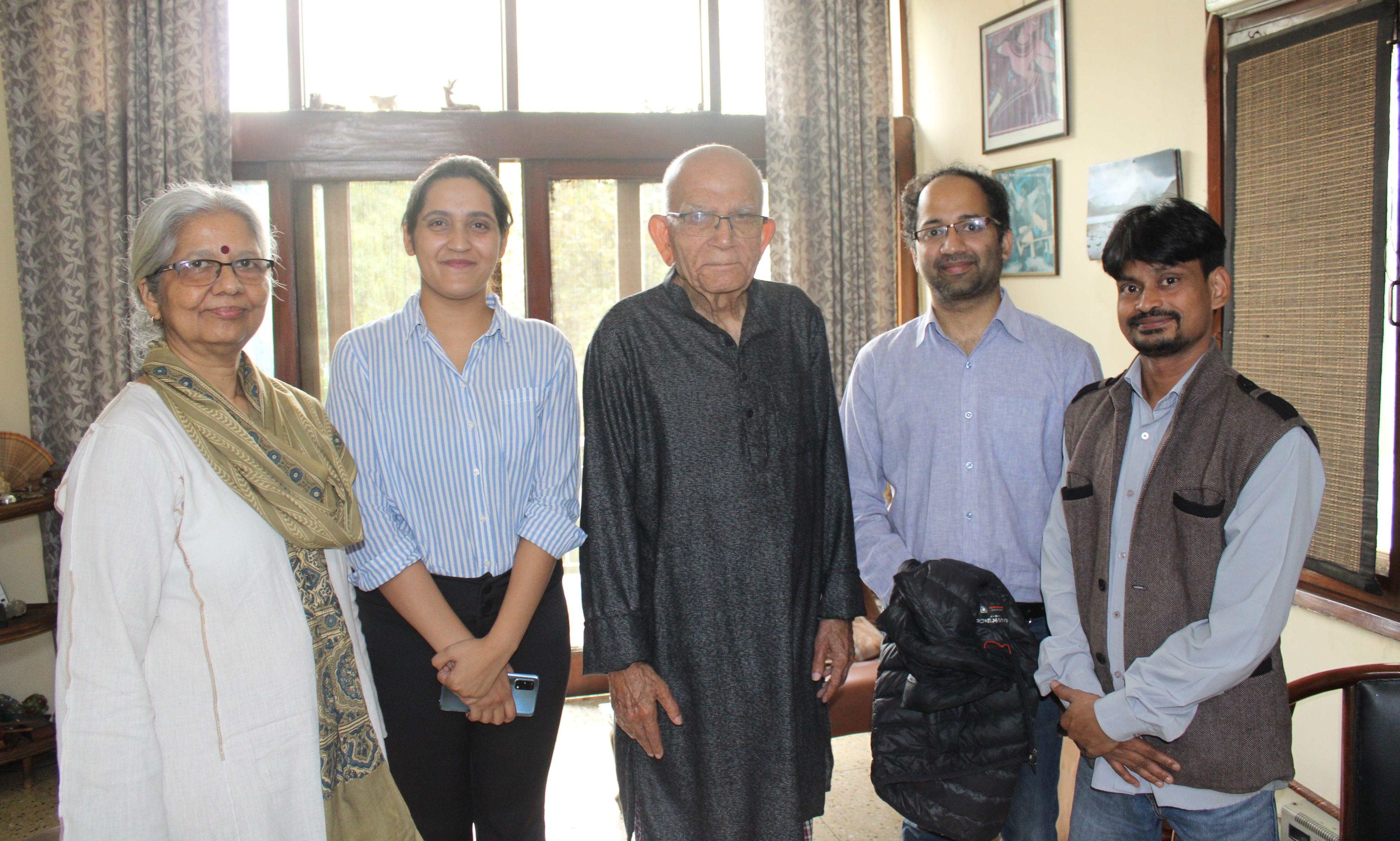
The Centre of Social Medicine and Community Health (CSMCH) at Jawaharlal Nehru University, New Delhi completed its 50 years in 2021. While the whole world slowed down during the pandemic, the only racing communities were the medical scientists and public health experts. So were the CSMCH scholar, academicians and the alumni of the centre. Once life gained pace and university was opened, the due celebration received attention in 2023. Among the planned academic activities and Alumni Meet on the occasion of 50 years celebration, making and screening of a documentary film about the historical evolution of the centre was proposed. The responsibility of making the film came to me with a team of students/scholars under the guidance of a faculty member Prof. Ritu Priya.
Before drafting a concept note for the documentary film and interview questions, I went through writings of the founding members of the centre, Dr Debabar Banerji and Dr Imrana Qadeer. The survey of the literature introduced me to a few concepts that needed discussion in the film. One of the concepts Dr Banerji wrote in his autobiography was the “New Grammar of Public Health.” The concept argues for indigenously produced knowledge and people centric technology as a core value of the Indian public health system. The idea that technology should be subordinated to the people emerged from “The Nineteen Village Study of Health Behaviour” conducted in the late 1970s. The film explored these ideas along with the question of how the centre was established and evolved over the years, particularly focusing on problem oriented interdisciplinary courses where social science and medicine are seen as equal partners?
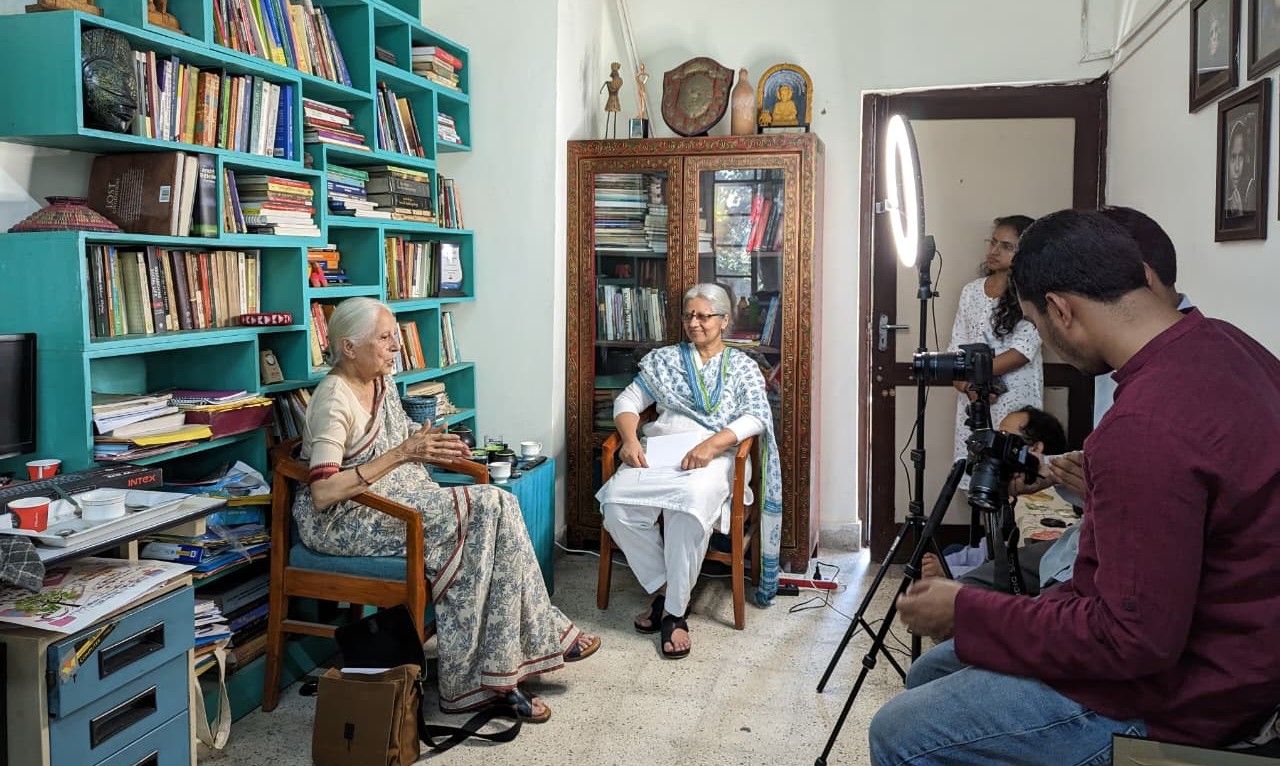
Despite that the film captured historical evolution of the centre and its ideological development, some of the claims and discussion in the film warranted academic explorations. For example, the history of social medicine has dominantly associated with the West despite contributions from across the world including India, where integration of social science and medicine have been harmonized. Second, it was surprising to know that the Primary Health Care Approach introduced in the Alma-Ata Declaration of 1978 emerged from Global South, particularly India and the Centre played a significant role. The third crucial question was to explore the legacy in the second line of academic leadership at the Centre which the film has not covered.
While editing the film of around 18 minutes from more than 2 hours of interviews, I realised the potential to use the qualitative information supported by follow up discussions with the faculty members. During the celebration of the 50 years of the Centre on April 13, 2023, academic lectures and post-film screening informal discussions with the attendees particularly with Dr Sayan Das reinforced my confidence to explore the evolution of social medicine and community health in India through academic research. After the post-film production and screening, I engaged in searching papers and reports available at the Centre’s Documentation Cell dedicated to archive reports, papers, thesis and other sources of knowledge.
Interestingly I could find one of the papers presented at Earthscan press briefing seminar that discusses the Primary Health Care approach at London on June 5, 1978. The meeting was organised by the WHO as a pre-conference preparation and to hold a discussion around Dr. Banerji's presentation on Primary Health Care approach of rural India, three months before the Alma-Ata Conference. The presentation was around the famous tagline “people’s health in people’s hand” deriving from India’s rural health schemes running in the 1970s. And this is what the core idea of the Primary Health Care approach advocated worldwide since the Alma-Ata Declaration of 1978. I remember, when I found the unpublished article that was presented at the WHO meeting titled “Façade of the rural health care scheme of India as an opportunity” in the centre’s archive, the last page of the article was missing. Prof. Ritu, on reporting a missing page, visited the documentation unit herself and with the help of documentation unit in-charge, we located the missing page. The article has been restored at the Centre’s Documentation Cell and made a copy to keep in our personal libraries.
I also contacted Dr. N. Brimnes, who has extensive research on Mahler’s life and career. He sent me a paper “Negotiating social medicine in a postcolonial context: Halfdan Mahler in India 1951-61” that indicates Mahler was inspired by the idea of people centric health systems, the government aspired to build in the country and academicians argued for its implementation. In fact, in rural India “communitising the health” was in practice where health care has been envisioned from people’s perspective and through community participation. Learning from India and other countries where he worked, Mahler wrote extensively about the Primary Health Care approach. When he became Director General of WHO, he along with the team envisioned the Primary Health Care approach and the Alma-Ata Declaration was proposed.
A responsibility of making a documentary film about the centre as a PhD scholar being interested and passionate about creative arts (poetry, stories and film making) compelled me to explore less explored and unanswered questions through academic research. This shows how the disciplines are not distinct but rather connected and integrated. Socialising medicine and “communitising health” are not only about social sciences marrying the medicine but it also shows how artistically they are engaged with each other in the presence of humanities and arts.
While a paper has been published, there are still a few questions that remain. Why has social medicine always been, or at least pre-dominantly been, associated with the West? Since the nineteenth century was a period when Western countries were engaged in exploitative colonialism and imperialism, how did scholars in the West conceptualise the idea of social medicine without reference to the East and the colonised countries? During the period when it was said that the sun never set on the British Empire, how did the socialisation of medicine come to be seen as flourishing only in the West. The histories of the East and the West are interconnected and not binary; therefore, there is a need to explore the history of social medicine and community health in a holistic sense by connecting the East and the West.
Dr. Asrarul Haque Jeelani is a social worker and public health researcher with interdisciplinary expertise in environmental health, social determinants of health, and mixed-methods research. He holds a Ph.D. from Jawaharlal Nehru University (JNU), New Delhi, and is currently a faculty member in the Department of Social Work at Jamia Millia Islamia, New Delhi.
His doctoral research adopted a historical eco-social perspective to explore the complex relationship between water and health in Bihar, examining how environmental, social, and historical processes shape health outcomes.
Dr. Jeelani has led and contributed to research projects addressing public health and social inequalities.
Beyond academia, he is deeply engaged in creative arts, with interests in poetry, short-story writing, and documentary filmmaking.
Follow the Topic
-
Indian Journal of History of Science
The Indian Journal of History of Science is dedicated to promoting research on the history of science from various historical perspectives.