Exploring Seasonal Variations in Seoul's Underground Subway Microbiome
Published in Microbiology
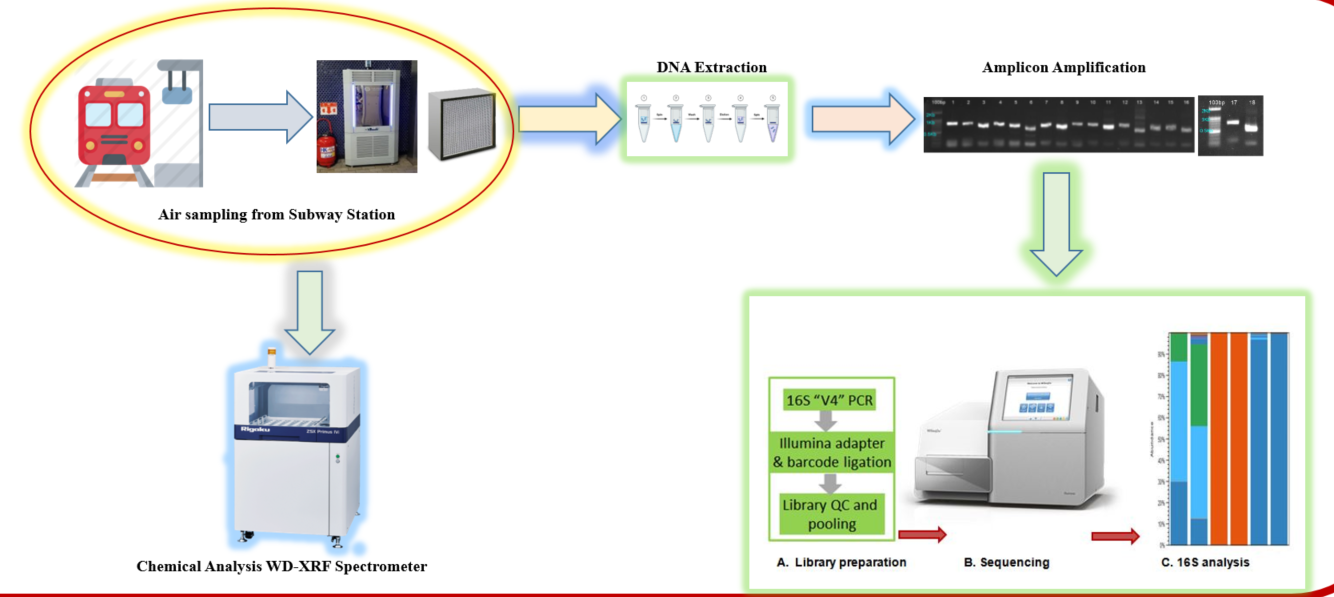


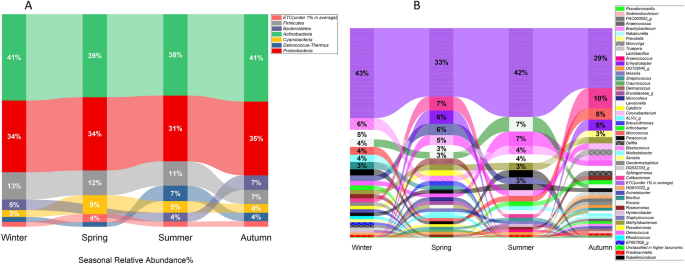

Previous studies had examined microbiomes in subway systems of other major cities like New York, Hong Kong, and Barcelona, but the SMRT—one of the world's largest public transportation networks with 9 lines spanning 327 km—remained largely unexplored from a microbial perspective. Given that Seoul commuters spend significant time in these enclosed spaces, understanding the composition of airborne particles became crucial not just for scientific knowledge but potentially for public health considerations.
Our approach
We collected particulate matter samples from air purifiers installed on the platforms of three major SMRT stations, including the system's busiest station. Using next-generation sequencing of 16S rRNA and ITS genes, we were able to identify the bacterial and fungal communities present in the air. Additionally, we conducted chemical analysis using wavelength dispersive X-ray fluorescence (WD-XRF) spectrometry to determine the elemental composition of these airborne particles.
Key findings
Our analysis revealed fascinating seasonal patterns in the subway microbiome:
- Bacteria: We found that Actinobacteria was the most dominant phylum (39.6%), followed by Proteobacteria (33.3%) and Firmicutes (11.4%). Many of the bacterial genera were associated with human skin microbiota, including Cutibacterium, Micrococcus, and Staphylococcus.
- Seasonal variation: Some genera showed distinct seasonal patterns. For example, Kocuria was strongly related to summer with an abundance of 7.1%, while Cutibacterium was more prevalent during autumn and spring.
- Fungi: The fungal diversity was primarily dominated by Ascomycota and Basidiomycota, with interesting seasonal fluctuations. Ascomycota was most abundant during spring (69.7%), autumn (66.5%), and winter (62.6%), but decreased significantly in summer (39.3%).
- Chemical composition: Iron was the most abundant element at the subway stations (average 60.2%), likely generated from the friction between train wheels and rail lines, as well as between wheels and brake systems.
The bigger picture
Perhaps most interestingly, our study revealed that the SMRT stations harbored different phylogenetic communities based on both alpha and beta diversity comparisons. The microbial assemblages varied not only by season but also by station, suggesting that local environmental factors and commuter demographics play important roles in shaping these invisible ecosystems.
The summer season showed the highest microbial diversity (Shannon index H'=5.5), which aligns with previous studies suggesting that higher temperatures and wind speeds may contribute to increased microbial abundance and migration.
Why this matters
Subway stations and public transport systems are often considered potential hubs for the dissemination of microbial infections. Our research provides valuable baseline data about the microbial communities present in one of the world's busiest subway systems throughout different seasons.
This knowledge could be particularly valuable for public health officials and transit authorities, especially as we continue to navigate concerns about airborne disease transmission in crowded public spaces. Understanding the "normal" microbiome of these environments helps us better identify potential concerns and develop appropriate strategies for air quality management.
The road ahead
While our study makes significant progress in understanding the microbiomes and chemical components of subway station aerosols, there's still much to learn. Future research could focus on more specific health-related aspects of these microbial communities, perhaps exploring how they might interact with human respiratory systems or investigating potential correlations with seasonal respiratory illnesses.
As cities continue to expand their public transportation networks, incorporating this type of environmental microbiology into urban planning and public health considerations could lead to healthier transit systems for the millions who rely on them daily.

I am a Postdoctoral Fellow at the Department of Bio-Analytical Sciences at the Korea Research Institute of Standards and Science. My major work is to develop rapid and robust detection methods for emerging infectious viruses, in addition to Next Generation Sequencing.
Furthermore, I have interests in Bioaerosol Metagenomics and environmental virology.
I have skills in animal cell culturing, especially MRC-5 cell lines, viral RNA extraction, RT-PCR, Sequencing libraries preparation and sequencing with both short-reads and long-reads (Illumina and Oxford Nanopore Technologies).
I am looking for a challenging career that demands the best of my professional abilities regarding technical and analytical skills and helps me broaden and enhance my current skills and knowledge.
Follow the Topic
-
Scientific Reports
An open access journal publishing original research from across all areas of the natural sciences, psychology, medicine and engineering.

Related Collections
With Collections, you can get published faster and increase your visibility.
Cancer Prevention and Control
Publishing Model: Hybrid
Deadline: Feb 19, 2027
Healthy Aging
Publishing Model: Open Access
Deadline: Dec 31, 2026