Exploring sensitivity and initiative in a mother-baby dyad with Video Intervention Therapy (VIT): a case study in a high-risk population
Published in Behavioural Sciences & Psychology


Movement, Mind & Meaning is a professional and research group that has been meeting for the past three years to explore transformative paradigms in psychotherapy and psychological interventions. Our work is grounded in intersubjective approaches informed by:
-
Developmental and evolutionary psychology/neuroscience (Daniel Stern, Colwyn Trevarthen, Adolfo Perinat, Michael Tomasello, Ruth Feldman),
-
Interpersonal neurobiology (Dan Siegel, Allan Schore, Jaak Panksepp), and
-
Attachment theory (John Bowlby, Mary Ainsworth, Allan Sroufe, Peter Fonagy, Jeremy Holmes, Mario Marrone, Arturo Ezquerro).
The group includes interdisciplinary experts such as Argentinian psychiatrist Dr. Eliana Montuori, Mexican-French psychotherapist Christian Herreman, Spanish psychologist Dr. María Julia Sánchez, and myself, Marc Pérez Burriel.
Two core concepts guiding our understanding of psychotherapeutic change are:
-
Agency (loosely defined as an individual’s capacity to act within a given environment), and
-
Intentionality (the ability to act deliberately, guided by goal-directed mental representations).
These dimensions are viewed as two sides of the same coin, shaping therapeutic processes.
Pilot Study: Maternal Vulnerability and Interaction Analysis
This pilot study examines a case of a highly vulnerable mother through:
-
Video Intervention Therapy (VIT; Dr. George Downing) to analyze and enhance interactive patterns, and
-
Coding Interactive Behavior (CIB; Dr. Ruth Feldman) for systematic behavioral assessment.
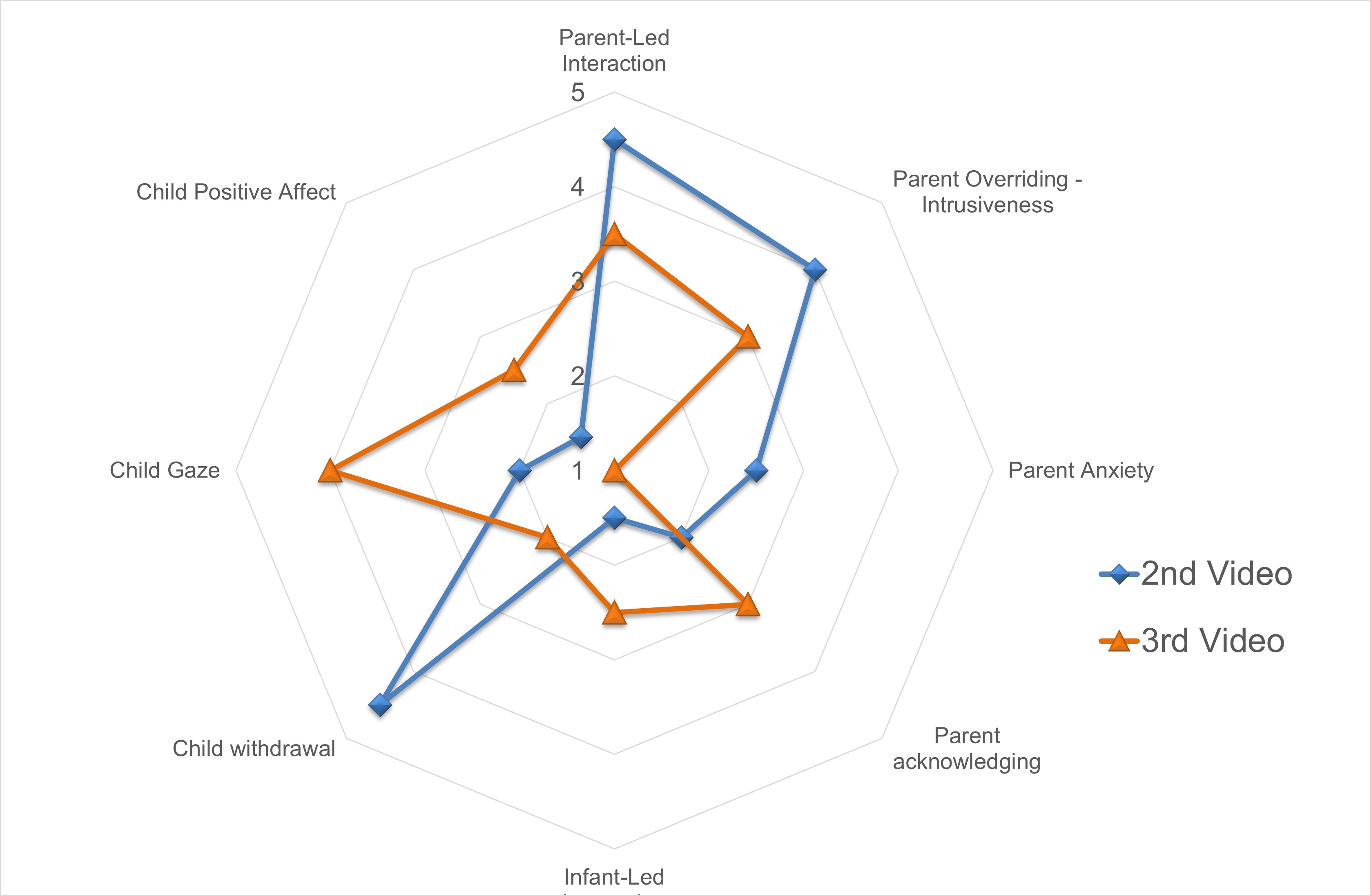
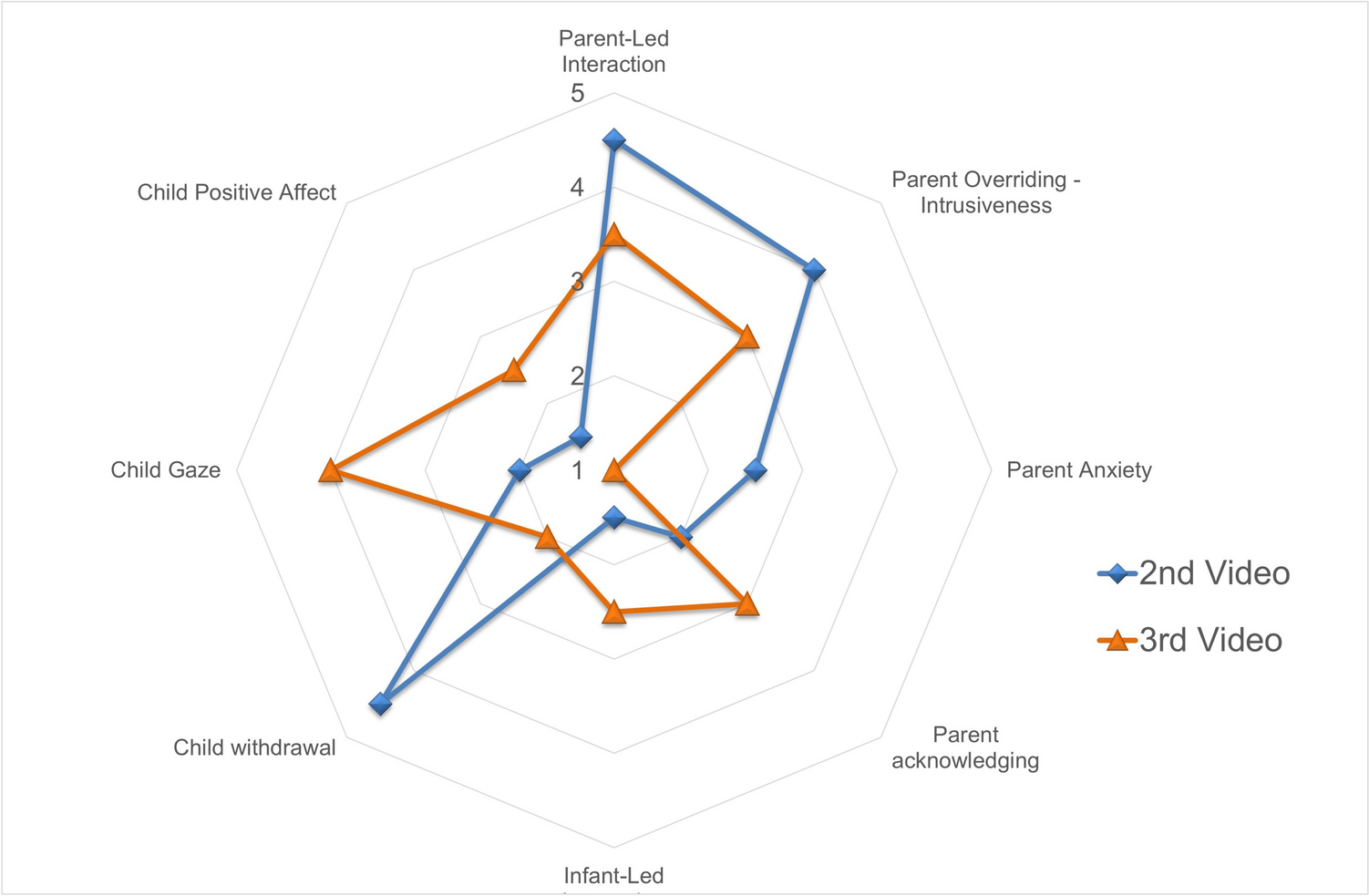
Preliminary findings highlight the importance of agency and intentionality as focal points for observation and intervention. The study also explores the feasibility of further research on:
-
Psychotherapeutic support for immigrant/forcibly displaced mothers experiencing trauma, mental health struggles, and disrupted social/family networks.
-
The role of relational interventions in mitigating psychological distress in marginalized populations.

Follow the Topic
-
Current Psychology
This is a journal for dissemination of peer-reviewed research on diverse psychological issues.

Related Collections
With Collections, you can get published faster and increase your visibility.
High Sensitivity Through the Lens of Context - Challenges and Potential
Collection Title: “High Sensitivity Through the Lens of Context - Challenges and Potential”
Guest Editor: Dr. Alon Goldberg, Tel-Hai College, Department of Education, Upper Galilee 12210 Israel. https://orcid.org/0000-0002-3267-1947
Contact: alongol@telhai.ac.il
And
Dr. Mona Vintila, West University of Timişoara, mona.vintila@e-uvt.ro
Overview and Rationale
Highly sensitive personality (HSP) is a temperamental trait characterized by deep cognitive processing of sensory and emotional information, heightened emotional reactivity, and increased sensitivity to environmental subtleties. While high sensitivity has long been framed predominantly through a vulnerability lens, recent research suggests it may also confer adaptive advantages in certain contexts.
This collection would seek to broaden the scientific exploration of HSP by encouraging research that addresses both its challenges and adaptive potential across diverse contexts and by inviting empirical, theoretical, and conceptual contributions that reflect the full range of HSP-related outcomes. This includes studies that examine environmental mismatches resulting in distress or dysfunction, as well as investigations into creative adaptation, resilience, growth, and flourishing in supportive settings.
Aim of the Collections
The aim of the Collections would be to expand the focus on high sensitivity in psychology by exploring the dynamic interplay between the trait and environmental, social, cultural, and psychological contexts. We would particularly welcome contributions that adopt a contextualized lens, whether the outcomes are positive, negative, or complex. Our objective would be not to exclude studies that emphasize vulnerability but to broaden the scientific discourse to include variability in experiences and outcomes.
Scope and Topics
We would encourage a wide range of submissions from different psychological subfields, including but not limited to:
•
Developmental psychology
•
Individual differences and personality research
•
Clinical and counseling psychology
•
Educational psychology (e.g., how highly sensitive students respond to classroom demands, teacher-student dynamics or sensory stimulation in learning environments)
•
Occupational and organizational psychology (e.g., how highly sensitive individuals experience workplace demands, leadership styles, sensory overstimulation, or derive meaning and satisfaction in various occupational contexts)
•
Cognitive psychology - deep processing, attentional sensitivity, and adaptive decision-making in contextually supportive conditions
•
Socioemotional psychology - emotion regulation, positive emotionality, and prosocial behavior of those with HSP
•
Health psychology (e.g., association between HSP and health issues and onset of disease)
•
Neuroscience and genetics
•
Evolutionary psychology (e.g., theoretical frameworks examining HSP as an adaptive survival strategy)
•
Cultural psychology - cultural perceptions and expressions of high sensitivity, sensitivity in diverse sociocultural contexts and settings
Key Themes May Include:
•
The interaction of HSP with supportive vs. non-supportive environments
•
Adaptive and maladaptive responses to context among highly sensitive individuals
•
The role of creativity, imagination, or environmental shaping as coping mechanisms
•
Longitudinal trajectories and developmental factors influencing HSP
•
Context-sensitive interventions and clinical applications
•
Sociocultural or policy implications for educational, occupational, or therapeutic environments
Clarification on Inclusion Criteria
This collection would welcome studies that report on both strengths and vulnerabilities associated with high sensitivity. Manuscripts that address adverse outcomes, particularly when contexts are not aligned with the needs of highly sensitive individuals, would be, not only welcome, but considered essential to the goal of understanding variability. We also would like to invite theoretical or empirical work on mechanisms, including stress reactivity, differential susceptibility, biological sensitivity to context, and gene-environment interactions.
Article Types and Methodologies
We would be open to a variety of article types, including empirical research (quantitative, qualitative, or mixed methods), meta-analyses, systematic reviews, theoretical papers, and innovative methodological approaches. We also would encourage cross-disciplinary collaborations and perspectives that integrate multiple levels of analysis (e.g., biological, psychological, contextual). Submission deadline for full manuscripts Sep. 1, 2026
Publishing Model: Hybrid
Deadline: Oct 10, 2026
Personality, Identity, and the Self in Digital Environments: Expression, Amplification, and Inference
Guest Editor
Dr Marco Giancola
Department of Biotechnological and Clinical Sciences
University of L’Aquila, L’Aquila, Italy
This Collection introduces a new lens for understanding personality, identity, and the self in digital environments through three main interdependent processes: Expression, Amplification, and Inference (EAI).
- Expression (E) - Individuals express personality, identity, and the self through digital behaviours, including self-presentation (e.g., profiles, avatars), communication styles, and patterns of interaction. These expressions reflect both stable dispositions and context-dependent adaptations.
- Amplification (A) - Digital environments amplify personality, identity, and the self through platform affordances (e.g., anonymity, visibility, feedback mechanisms), algorithmic reinforcement (e.g., recommendation systems), and social dynamics (e.g., virality, echo chambers), intensifying both adaptive and maladaptive traits.
- Inference and Feedback (I) - Digital interactions generate rich behavioural traces, such as clicks, linguistic patterns, usage logs, and interaction networks, which can be used by computational systems, including machine learning and natural language processing, to infer, model, and predict personality, identity, and self-related processes. These inferred profiles may then be used to personalise digital environments, creating recursive feedback loops that shape future behaviours, identity expression, and self-perception.
Topics
To ensure conceptual coherence while maintaining breadth, this Collection welcomes contributions addressing the following three core domains.
- Expression (E). Studies examining how individuals present, negotiate, and adapt their personality, identity, and self in digital contexts through self-presentation, communication styles, and avatar-based or AI-mediated interactions.
- Amplification (A). Research exploring how digital environments intensify adaptive (e.g., prosocial behaviour and creativity) and maladaptive (e.g., cyber-aggression, manipulation, and problematic technology use) manifestations of personality, identity, and the self.
- Inference and Feedback (I). Contributions investigating how digital behavioural traces, including clicks, linguistic patterns, usage logs, interaction networks, profiles, and avatars, can be used to assess, infer, model, and predict personality, identity, and the self, as well as how algorithmic systems personalise digital environments and shape future behaviour, identity expression, and self-perception.
Manuscript types
The Special Issue welcomes:
- Original articles, including quantitative (e.g., cross-sectional, longitudinal, experimental, and digital trace data analyses) and qualitative research (e.g., interviews, digital ethnography, and thematic analyses of online behaviours)
- Systematic reviews and meta-analyses
- Theoretical and conceptual papers
- Methodological papers
Interdisciplinary contributions are strongly encouraged.
Keywords
- Personality
- Identity
- Self
- Self-concept
- Big Five/HEXACO
- Dark Triad/Dark Tetrad
- Digital Personality
- Digital Identity
- Digital Self
- Social Media
- Online Behaviours
- Behavioural Traces
- Digital Phenotyping
- Algorithmic Personality Inference
- Psycho-informatics
- Machine Learning
- Computational Psychology
- Human-AI Interaction
- Problematic Technology Use
- Cyberpsychology
Publishing Model: Hybrid
Deadline: Jun 30, 2027