Factors associated with Iraqi dental students’ intention to perform dental implant therapy after graduation: a cross-sectional study
Published in General & Internal Medicine
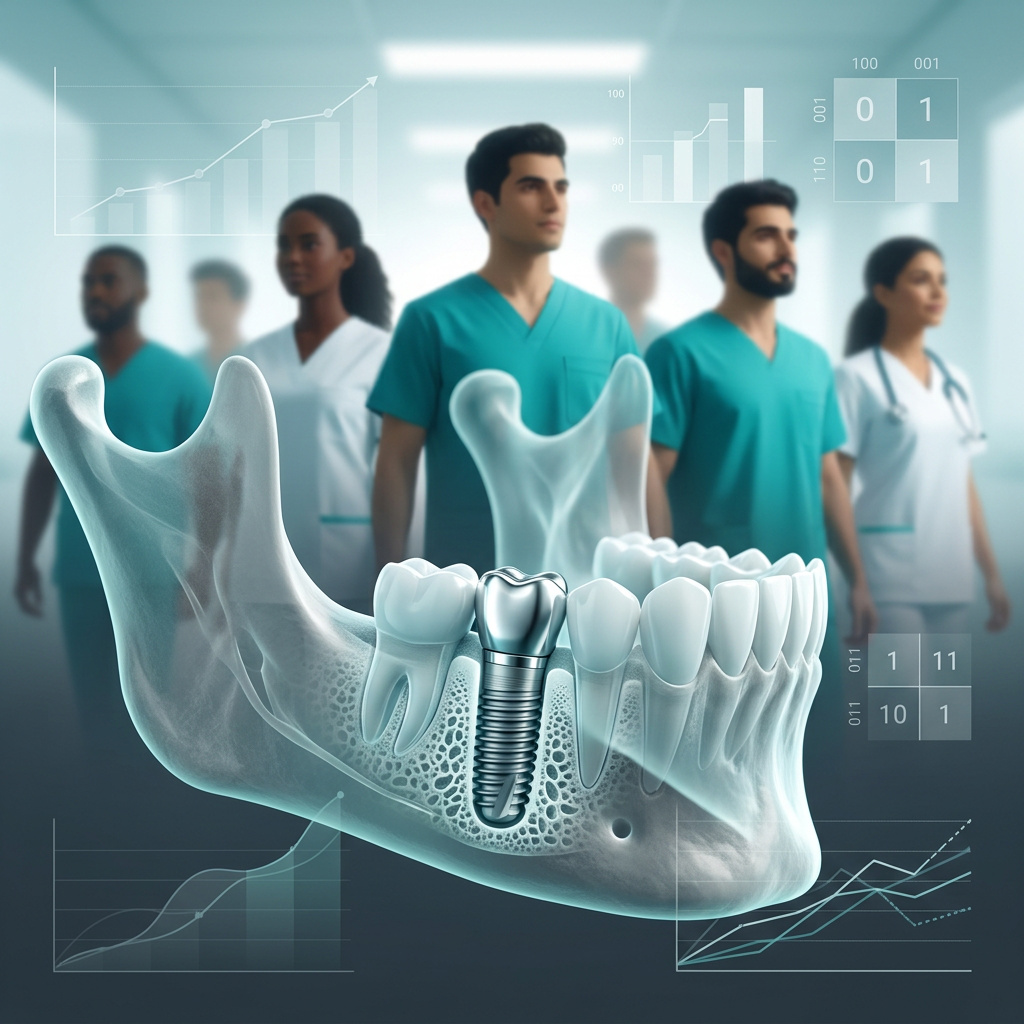
What shapes dental students’ plans to provide implant treatment
As dental students approach graduation, they begin to imagine the kind of dentistry they want to practise. Dental implants may feature prominently in those plans. But what goes alongside that ambition? Is it the information students encounter, their stage of training, their views about treatment, or the place they believe implants should have in dental education?
These questions motivated our study of Iraqi dental students. We wanted to explore the factors associated with their intention to provide dental implant therapy after graduation, and what their answers might tell us about undergraduate education.
During the 2024–2025 academic year, we used an online questionnaire to ask fourth- and fifth-year students about their information sources, treatment preferences, views on implant teaching and future plans. After screening submissions for eligibility and data quality, we analysed responses from 304 students.
Around two-thirds, 65.8%, said they intended to perform implant therapy after graduation. That shows considerable interest among the students who participated. It does not tell us whether they were clinically ready to provide treatment or whether they would eventually do so. Those are different questions, requiring different kinds of research.
One of the clearest findings concerned how students approached a severely compromised tooth. Those who preferred extraction followed by an implant had higher odds of intending to provide implant treatment than those who preferred root canal treatment and rebuilding the tooth. This association remained after accounting for other factors in our analysis.
The finding points towards a connection between treatment preferences and professional plans. It should not be read as an argument for extracting teeth. Instead, it raises an educational question: how can we help students weigh tooth preservation and replacement thoughtfully? Teaching can use clinical cases to explore prognosis, patient preferences, maintenance needs and the consequences of each option.
Students’ views about the importance of implants also mattered. Those who described implants as “essential” were more inclined to plan to provide them than those selecting “very important” or “important”. However, these labels may mean different things to different students. We therefore treated this finding cautiously, rather than assuming it revealed a simple scale of commitment.
How students wanted implant dentistry to be taught was another part of the picture. Students who supported implantology as a separate subject were more likely to report an intention to provide implant treatment. This does not prove that creating a separate course would change students’ plans. Students already interested in implants might also be more likely to want a dedicated subject. The survey could not establish which came first.
Some expected connections were less clear. We did not find statistically significant associations between future intention and academic year or the main source of implant information. Videos, books, social media and workshops may all contribute to learning, but the reported information source alone did not distinguish students’ future plans in this sample. This does not mean those resources lack educational value.
Familiarity with implant systems also produced an uncertain result. An association appeared in the main analysis, but it did not hold when we regrouped students into those reporting any familiarity and those reporting none. That makes it an unstable finding, rather than a firm basis for educational decisions.
Female students reported lower odds of intending to provide implant treatment than male students. Our study did not assess clinical ability, and this result cannot be interpreted as a difference in competence. It raises questions for further research about mentorship, confidence, access to clinical opportunities and career expectations. We did not directly test these possible explanations.
For educators, these findings suggest useful areas to investigate. Students could work through cases that connect implant knowledge with diagnosis, treatment planning, restoration, maintenance and referral. Such learning would also make room for discussing uncertainty and recognising the limits of one’s training. Future studies need to test whether these experiences improve clinical reasoning, confidence and later practice.
Our study provides a snapshot, with several limitations. Participation was voluntary, recruitment took place through open online channels, and the sample was mostly female and in the fifth year. Of 542 submissions, 238 were excluded during screening, which may have affected who was represented. The questionnaire was developed for this study and relied on self-reported answers. The results therefore should not be treated as representing every Iraqi dental student, or as proof that any educational approach causes a particular career choice.
Following students into practice would help us understand how intentions develop into professional decisions. Listening to their experiences could also reveal opportunities or barriers that a questionnaire misses. The educational goal is to help future dentists make sound decisions about implant care, including when to preserve a tooth, when replacement may be appropriate and when to refer. Students’ interest gives us a starting point; education must help turn that interest into informed, responsible practice.

Follow the Topic
-
BMC Oral Health
This is an open access, peer-reviewed journal that considers articles on all aspects of the prevention, diagnosis and management of disorders of the mouth, teeth and gums, as well as related molecular genetics, pathophysiology, and epidemiology.

Related Collections
With Collections, you can get published faster and increase your visibility.
Pregnancy and oral health
The relationship between pregnancy and oral health is an area of growing interest within dental and medical research. Pregnancy induces significant hormonal changes that can affect oral health, leading to conditions such as gingivitis and periodontitis. Additionally, pregnant individuals may face unique challenges in maintaining oral hygiene due to physical, emotional, and social factors. Understanding these interactions is crucial for developing targeted interventions that promote oral health during pregnancy, ultimately benefiting both the mother and the developing fetus.
Research has shown that poor oral health can lead to systemic complications, including adverse pregnancy outcomes such as preterm birth and low birth weight. Recent advances in this field include the development of tailored dental care guidelines and evidence-based interventions aimed at improving oral hygiene practices among pregnant individuals. Continued research can help bridge gaps in knowledge and practice, leading to better health outcomes for mothers and infants alike.
Ongoing exploration of the connections between oral health and pregnancy holds the promise of enhancing preventive strategies and interventions. By integrating dental care into prenatal healthcare, future studies may reveal innovative approaches to managing oral health concerns, ultimately contributing to healthier pregnancies and improved health outcomes.
We invite submissions on a range of topics that include, but are not limited to:
- Interventions for improving oral hygiene during pregnancy
- Impact of gingivitis on pregnancy outcomes
- Oral-systemic complications during pregnancy
- Importance of dental care in prenatal health
This Collection supports and amplifies research related to SDG 3: Good Health and Well-being.
All manuscripts submitted to this journal, including those submitted to collections and special issues, are assessed in line with our editorial policies and the journal’s peer review process. Reviewers and editors are required to declare competing interests and can be excluded from the peer review process if a competing interest exists.
Publishing Model: Open Access
Deadline: Jan 05, 2027
Advanced dental implants
Dental implantology is undergoing a profound transformation driven by advances in biomaterials science, digital technologies, regenerative approaches, and personalized treatment strategies. Dental implants are a critical component of modern dentistry, enabling the replacement of missing teeth and improving the quality of life for individuals with tooth loss. Recent innovations in materials science, surgical techniques, and prosthetic designs have enhanced the success rates and longevity of dental implants, making them a viable option for a broader range of patients.
The significance of research in modern implantology is underscored by the growing need for effective solutions to combat tooth loss, driven by factors such as aging populations, periodontal diseases, and lifestyle factors. Advances in biocompatible dental materials and implant designs have led to improved osseointegration and reduced complications. Moreover, the integration of digital technologies, such as 3D printing and guided surgery, has optimized the planning and execution of implant placement, ensuring more predictable outcomes and more personalized care.
We invite submissions on a range of topics, including, but not limited to:
- Innovations in biocompatible dental materials
- State-of-the-art research on osseointegration
- Digital technologies in implant dentistry
- Customization of dental prostheses
- Advances in implant surface modifications
- Clinical outcomes and long-term implant performance
All manuscripts submitted to this journal, including those submitted to collections and special issues, are assessed in line with our editorial policies and the journal’s peer review process. Reviewers and editors are required to declare competing interests and can be excluded from the peer review process if a competing interest exists.
Publishing Model: Open Access
Deadline: Feb 22, 2027