Forest disturbances in Europe could double by the end of the century
Published in Earth & Environment and Education
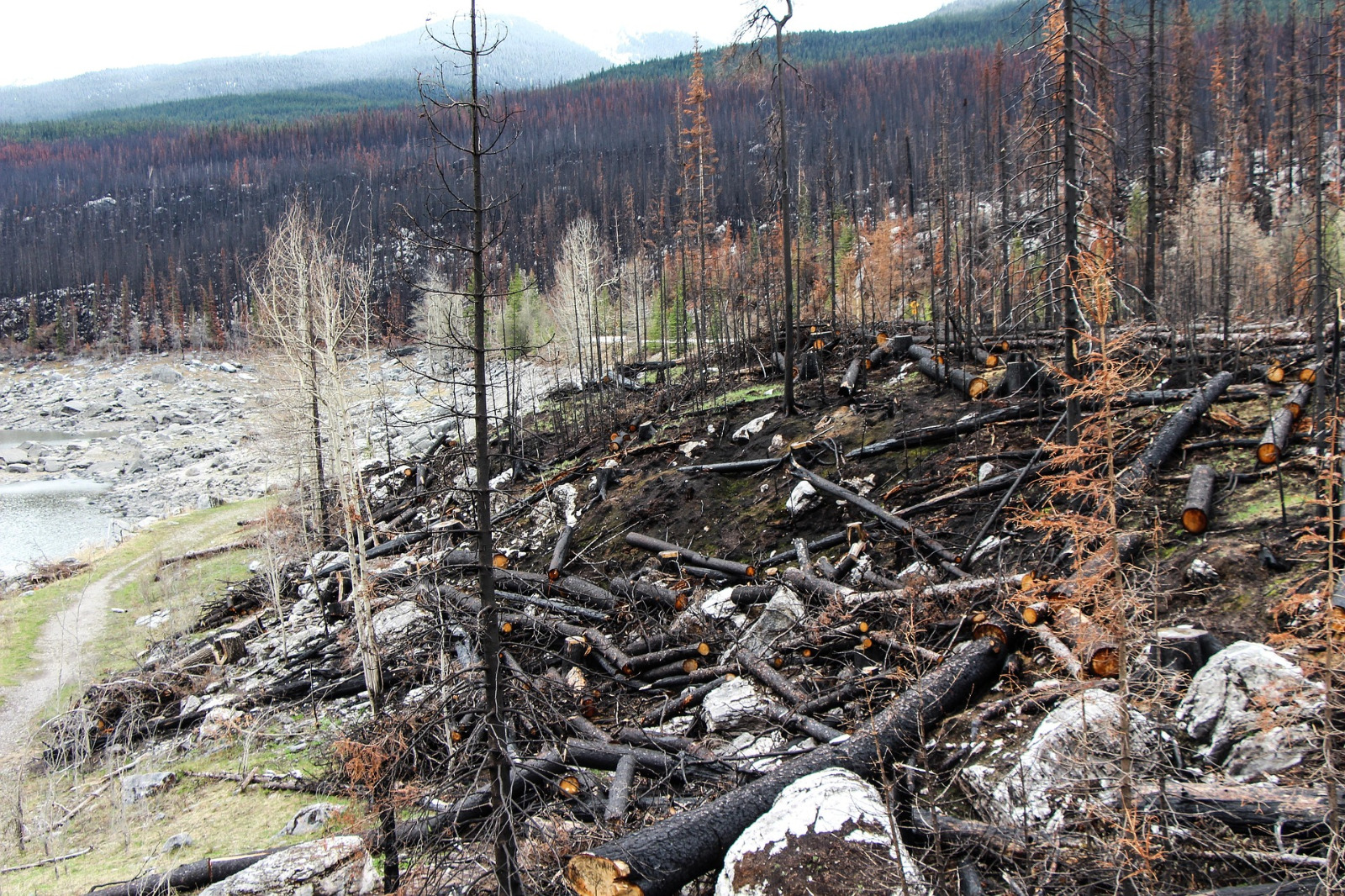

Forests are dynamic systems in which tree mortality is a natural and necessary process. However, climate change is amplifying both the frequency and intensity of large-scale disturbances. In recent years, several European regions—particularly in Central and Southern Europe—have experienced unprecedented forest damage linked to extreme weather events, prolonged drought, and insect outbreaks. These developments raise critical questions about the long-term stability of forest ecosystems and their ability to continue delivering essential services such as carbon sequestration, timber production, biodiversity conservation, and climate regulation.
To address this challenge, an international research team combined more than three decades of satellite observations (1986–2020) with advanced forest ecosystem simulations conducted at 13,000 sites across Europe. The resulting dataset, comprising approximately 135 million simulation data points, was used to train an artificial intelligence–based modelling framework capable of projecting forest development and disturbance regimes at a spatial resolution of one hectare.
This integrated approach enabled a spatially explicit assessment of how disturbance risk may evolve under a range of climate pathways. The results indicate a consistent signal: forest disturbances are projected to increase in all considered scenarios. Even under moderate warming trajectories, future damage levels exceed those observed during the already disturbance-intensive reference period of the late 20th and early 21st centuries. Under high-emission scenarios associated with global temperature increases exceeding 4°C by 2100, the total forest area affected by disturbances could more than double.
The analysis published on Science journal also reveals marked regional differences. Southern and Western Europe emerge as particularly vulnerable, with strong increases in wildfire activity and drought stress, conditions that also favor the spread of damaging insects. Northern Europe is projected to be less severely impacted at the continental scale, although localized hotspots of increasing disturbance risk are expected there as well. These findings suggest that forest disturbances are becoming a systemic issue across Europe, with implications for timber markets, carbon balances, and ecosystem resilience.
While the projected rise in disturbance represents a significant risk, it may also create opportunities for transformation. Post-disturbance regeneration processes can facilitate the establishment of forest stands better adapted to future climatic conditions, provided that management interventions are informed by sound scientific evidence.
Overall, the study demonstrates that climate change is likely to profoundly reshape disturbance regimes in European forests throughout the 21st century. Anticipating these changes through integrated modelling, continuous monitoring, and adaptive forest management will be essential to safeguard the ecological and socio-economic functions of Europe’s forests in a rapidly warming world.

Alessio Collalti is a Senior Research Scientist at the Italian National Research Council (CNR), Head of the Forest Modelling Lab, and Editor-in-Chief of Current Climate Change Reports. He holds an M.Sc. in Natural Sciences and a Ph.D. in Forest Ecology. His research integrates forest ecology, ecophysiology, Earth observation, and process-based ecosystem modelling to investigate carbon and nitrogen cycling, ecosystem resilience, climate change impacts, and sustainable forest management. He leads the development of the 3D-CMCC-FEM forest ecosystem model, one of Europe's leading process-based models for simulating forest productivity, biogeochemical cycles, biodiversity, and ecosystem responses under alternative climate and management scenarios.