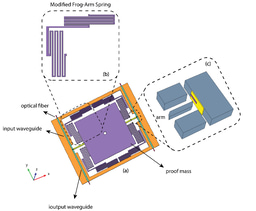
From a Classroom Idea to an Optimized MEMS Design for Glaucoma Monitoring
Published in Bioengineering & Biotechnology, Materials, and General & Internal Medicine
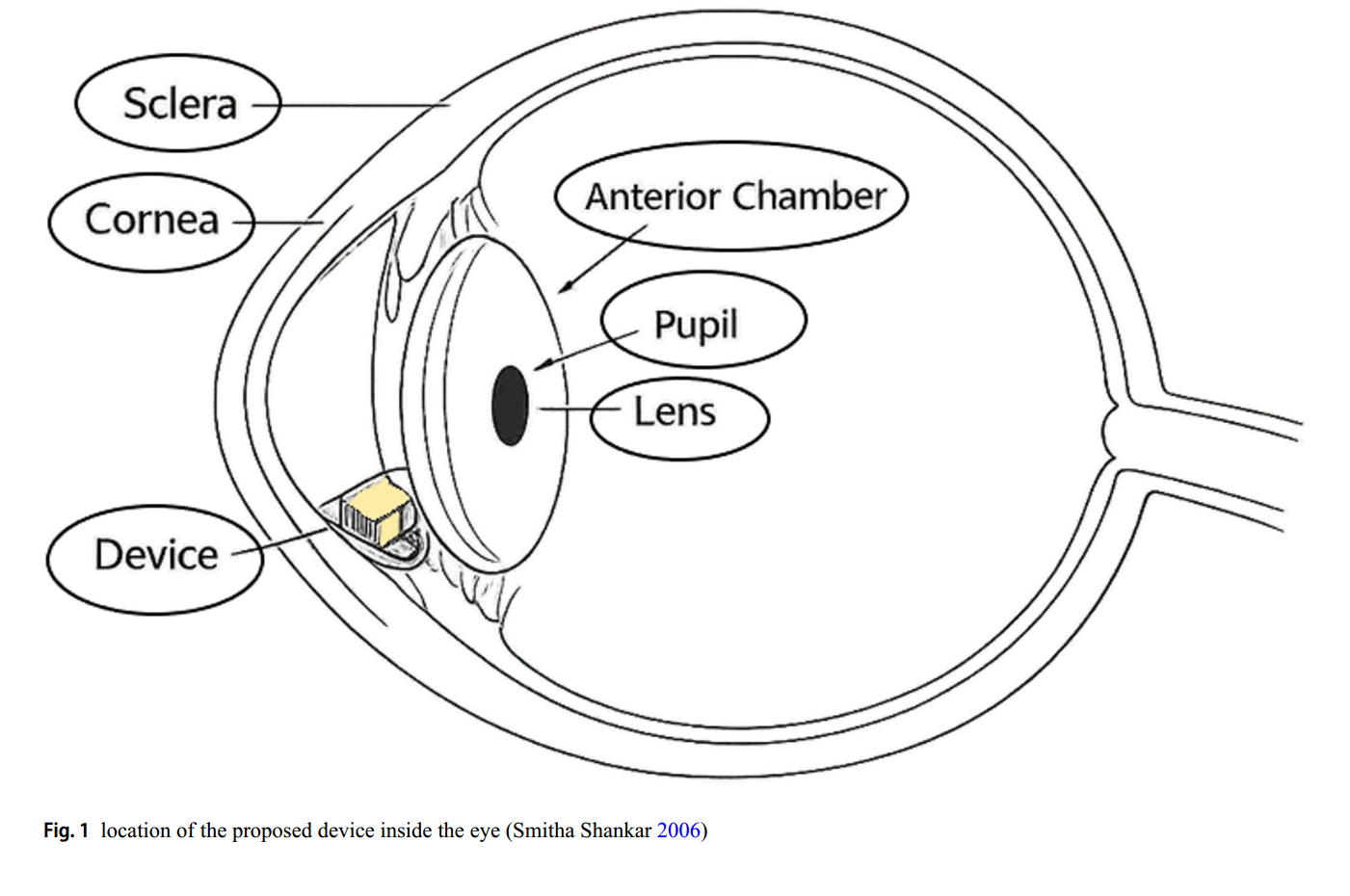


We are excited to share our latest research, “Design and Numerical Analysis of a MEMS Capacitive Pressure Sensor with Engineered Serpentine Springs for Intraocular Pressure Monitoring,” just published in Microsystem Technologies.
This project began in a biosensor class, but the motivation behind it was deeply personal. Witnessing the struggles of family and friends in managing glaucoma—a leading cause of irreversible blindness—highlighted a critical gap in current care. Intraocular pressure (IOP) is a vital metric for these patients, yet it is often measured only through sporadic “snapshot” visits to the doctor. Because IOP fluctuates significantly throughout the day and night, we believe the future of patient care lies in reliable, high-resolution, continuous monitoring.
It is important to emphasize that this work focuses on the computational design and comprehensive numerical analysis of a MEMS capacitive pressure sensor. The core engineering challenge was the trade-off between miniaturization and sensitivity. To overcome this, we moved beyond conventional symmetric designs and introduced a new geometric parameter, γ(gamma), to engineer the asymmetry of the serpentine spring suspensions. Through this systematic numerical optimization, we found that tuning γ acts as a precise design knob to balance structural stability and sensitivity.
Our results indicate that this asymmetric design achieves a superior Figure of Merit (FOM), effectively demonstrating that we can significantly boost performance—both mechanically and capacitively—for low-pressure biomedical applications.
The journey from a classroom concept to a rigorous numerical study has been incredibly rewarding. While this paper presents a computational framework and design optimization, we believe this “engineered asymmetry” offers a compelling and robust path forward for future researchers looking to develop high-precision, compact biomedical pressure sensors. Beyond pressure sensing, we believe this design methodology—leveraging the geometric asymmetry of serpentine structures—can be extended to optimize the performance of various other MEMS devices, offering a versatile design strategy for the broader micro-system community.

Follow the Topic
-
Microsystem Technologies
Microsystem Technologies is a journal that covers electromechanical, materials, design, and manufacturing issues of microsystems and their components.