Beyond Traditional Sensing: Introducing the First Tri-Axis Plasmonic Accelerometer
Published in Bioengineering & Biotechnology, Materials, and Physics




In the field of MOEMS, a fundamental challenge remains: achieving high sensitivity across all three axes simultaneously without compromising signal integrity through high cross-axis sensitivity. Over the past two years, I have had the privilege of supervising the Master’s thesis project of my graduate student at Urmia University. Our goal was to overcome this multidimensional sensing bottleneck by merging the mechanical domain with the extreme light-confinement capabilities of nanophotonics and plasmonics.
Our research, which culminated in this thesis, is now published in Scientific Reports:
Read the full paper here: https://www.nature.com/articles/s41598-026-60918-8
The Innovation: A Dual-Axis Approach
This research introduces the first tri-axis plasmonic accelerometer, defined by two primary innovations:
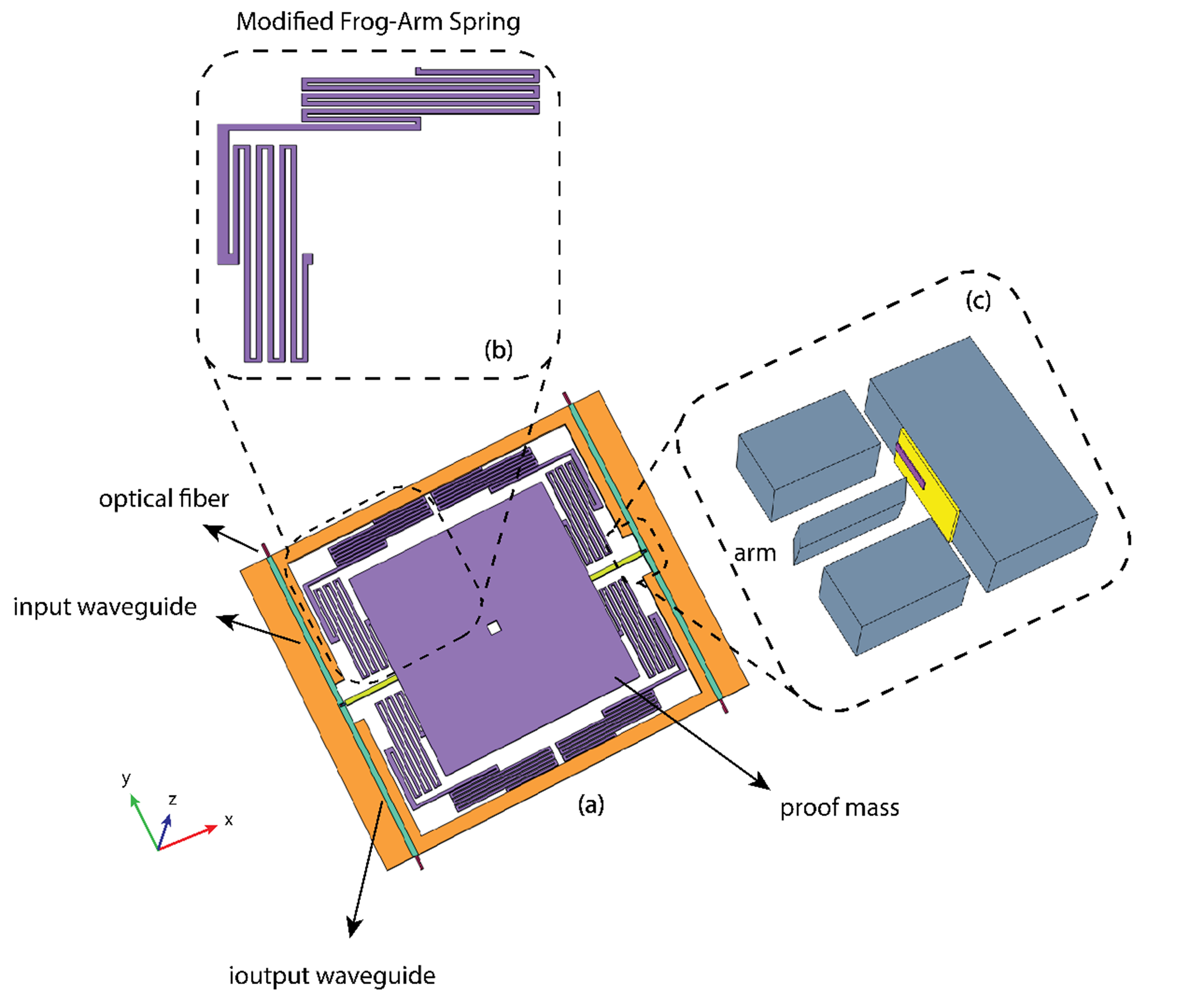
- The Optical Breakthrough: We developed a hybrid plasmonic waveguide (HPW) architecture, rigorously modeled through FDTD simulations. By engineering this structure, we created a mechanism where orientation-dependent optical signatures act as the primary sensing mechanism, allowing for three-axis sensing with exceptional precision.
- The Mechanical Breakthrough: We designed a modified “frog-leg” suspension structure. Through rigorous Finite Element Analysis (FEA), we achieved a balance between mechanical robustness and compliance. This design successfully achieves micro-g level resolution while maintaining extremely low cross-axis sensitivity, ensuring independent and accurate signal detection across all three dimensions within the MOEMS architecture.
A Dedicated Research Journey
This project represents two years of intensive research. As the supervisor, it was inspiring to see this work evolve from initial conceptualization to final simulation. Hengameh Farrokhi’s commitment to refining the sensor architecture and her persistence in overcoming the simulation challenges were the driving forces behind these high-performance results.
Why It Matters
By shifting the paradigm toward “structural-optical signatures” and enabling robust, decoupled three-axis sensing, we believe this work is a significant step toward next-generation inertial sensing. The ability to deliver micro-g resolution with minimal cross-axis interference makes this approach a valuable roadmap for future researchers working on miniaturized, high-sensitivity devices that bridge the gap between optical and mechanical domains.
We invite the community to explore our design principles and the project overview here:
We welcome your feedback and discussions, which you can also find on our LinkedIn post:
LinkedIn Discussion: https://www.linkedin.com/feed/update/urn:li:share:7482399038902943744/

Follow the Topic
-
Scientific Reports
An open access journal publishing original research from across all areas of the natural sciences, psychology, medicine and engineering.

Related Collections
With Collections, you can get published faster and increase your visibility.
Healthy Aging
Publishing Model: Open Access
Deadline: Dec 31, 2026
Kidney Disease and Health
Publishing Model: Open Access
Deadline: Oct 22, 2026