




It all began with a salt stain.
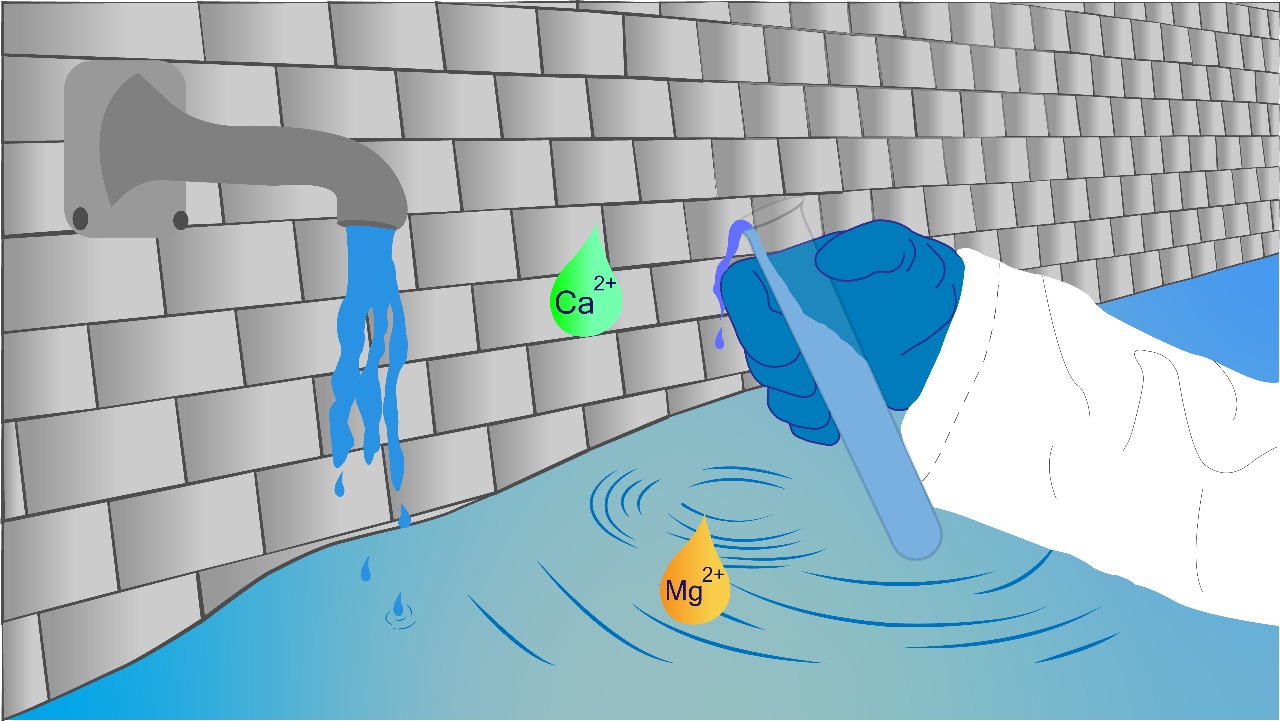
One afternoon in a kitchen in Cholula, a picturesque town in Puebla, Mexico, a few drops of tap water dried on the sink, leaving behind a chalky white residue. This everyday scene—familiar to anyone living with hard water—sparked the idea that eventually grew into our research. What at first seemed like a simple nuisance revealed a deeper question: what does it really mean to live using hard water, and how can materials science help with it?
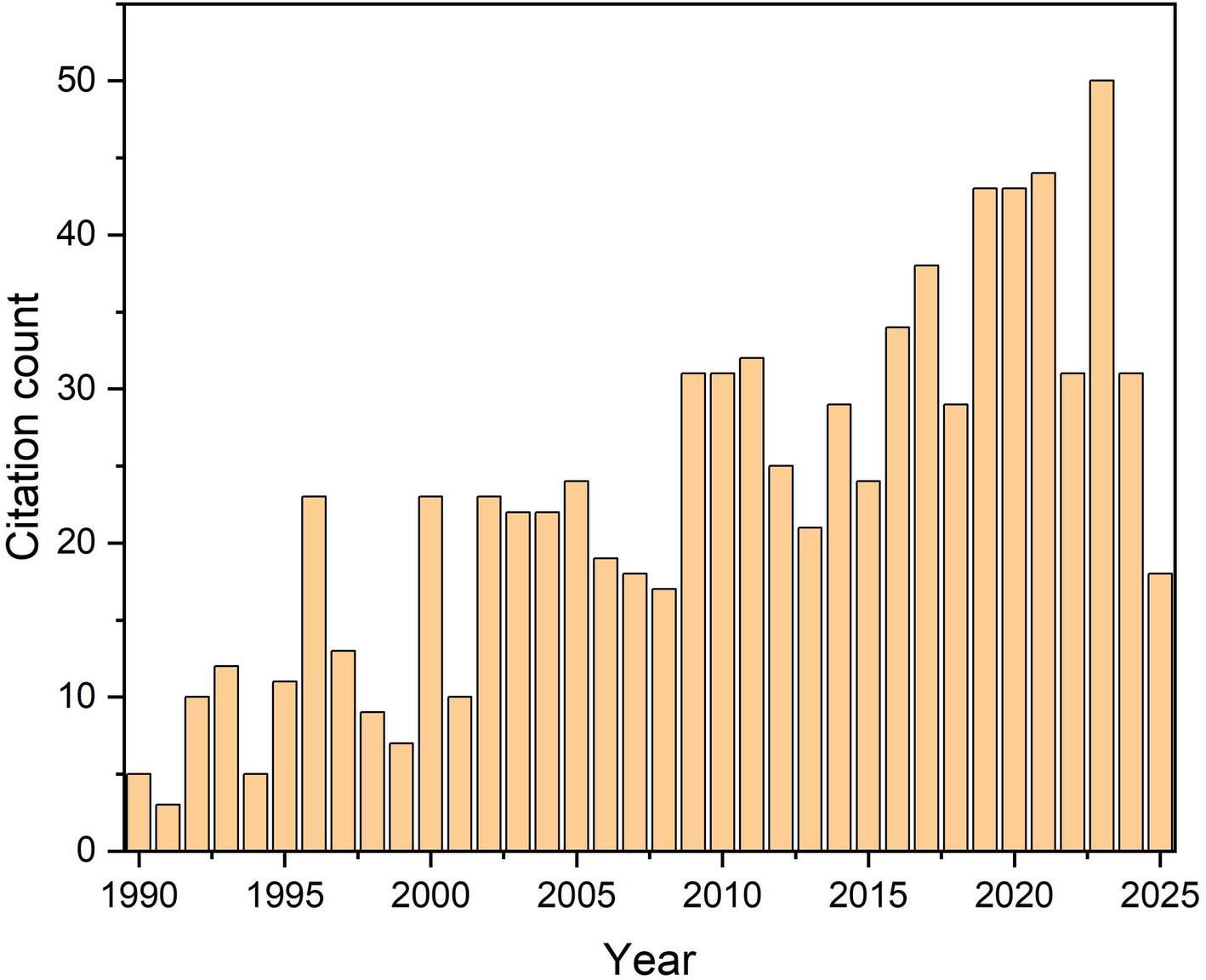
Functional polymeric materials for hard water treatment a comprehensive review.
For one of us, the issue was more than aesthetic. Prolonged use of hard water—rich in calcium and magnesium ions—had triggered episodes of eczema, serving as a personal reminder of how water quality can subtly impact health. That experience inspired us to look closer, and soon we realized that the problem extended far beyond a single kitchen or household.
A common problem with global reach
The hard water situation of Cholula is far from unique. As we delved into literature, we were surprised to discover just how widespread hard water is globally. Most cities around the world rely on hard water supplies.
In the United States, more than 85% of households live with hard water. Across Mexico, groundwater hardness is the norm. In Europe, cities such as London and Oxford often exceed 200 ppm CaCO₃, whereas parts of Africa, Asia, and Australia exhibit significant regional variations, depending on their geology and rainfall.
Globally, the numbers are staggering. Hard water affects household appliances, shortens the lifespan of heaters and pipes, increases soap consumption, and contributes to environmental issues such as scaling and energy inefficiency. More importantly, it can impact health, ranging from skin irritation and hair damage to more complex concerns. Research suggests a relationship between water hardness and chronic disease: moderate levels of calcium and magnesium in drinking water may have protective effects against cardiovascular disease and even reduce the risk of some cancers. However, very hard water has increased risks of bladder cancer, malignant melanoma, hematological malignancies, non-Hodgkin lymphoma, and higher rates of breast and prostate cancer compared to soft water.
Understanding this changed the way we thought about that kitchen sink. What appeared to be a local inconvenience was, in fact, part of a global challenge.
Searching for better solutions
Traditional treatments include ion exchange, chemical precipitation, reverse osmosis, and electrocoagulation. They work, but often at a price: high operational costs, fouling, significant energy demands, and chemical waste. Furthermore, such systems are out of reach for many households.
So, that’s when we turned our attention to whether polymers can help with.
Polymers are fascinating due to their versatility in shaping, mechanical properties, and thermal properties, and chemical tunability. Their chemistry can be tailored to interact with specific ions, surfaces can be modified for enhanced selectivity, and their structures—such as hydrogels, membranes, and composites—can be designed for regeneration and reuse. This flexibility opens possibilities that conventional technologies struggle to match.
In our work titled, Functional Polymeric Materials for Hard Water Treatment: A Comprehensive Review, we examined the state of the art:
- Hydrogels, with their remarkable swelling and ion capture capacity, can remove Ca²⁺ and Mg²⁺ with high efficiency.
- Polyelectrolyte systems, like PAA/PVA, calcium chelate, can be processed into membranes or fibrous mats.
- Dextrin-based nanosponges, porous and selective, offer good regeneration cycles.
- Bio-based composites, combining natural polymers with synthetic ones, balance sustainability with performance.
Two sides of the polymer story
Of course, no solution is perfect. Polymers offer several clear advantages, including tunability, selectivity, potential cost-effectiveness, and, in some cases, biodegradability. They can be engineered to be reusable, reducing waste. Some systems already demonstrate over 90% removal of hardness ions under laboratory conditions.
But they also face challenges. Many remain at the proof-of-concept stage, tested with simplified water samples rather than real-world supplies. Some rely on petroleum-derived monomers or energy-intensive processes, raising sustainability concerns. Even biodegradable polymers may have mechanical limitations or degrade slowly under natural conditions. And scalability remains a key barrier—what works in the lab may not yet be viable for households or municipal plants.
In short, polymers hold great promise, but the journey from lab bench to real-world application is still unfolding.
Beyond chemistry: equity and impact
What struck us most while writing this review was not just the science, but the human dimension. Hard water disproportionately affects marginalized communities, where access to expensive technologies like reverse osmosis is limited. In such contexts, this search for polymer-based solutions is more than a technical challenge—it is also a question of equity and sustainability. Designing affordable, regenerable, and environmentally compatible polymer systems, they could transform daily life for millions of people.
From stains to solutions
For us, this journey began with a stubborn salt mark in a Cholula kitchen and the personal struggles that many share, such as skin irritation, scaling pipes, and damaged appliances. It has since expanded from a global perspective, recognizing that the same challenge unites households worldwide.
Our review seeks not only to summarize the progress in functional polymers for hard water treatment, but also to invite further collaboration and innovation. The problem is widespread, but so is the potential for science to address it.
From a single kitchen sink to a worldwide challenge, polymers may one day transform hard water treatment—making it more equitable and sustainable.
Functional polymeric materials for hard water treatment a comprehensive review.

Follow the Topic
-
Discover Materials
This is a broad, open access journal publishing research from across all fields of materials research.

Related Collections
With Collections, you can get published faster and increase your visibility.
Smart Materials for Biomedical and Healthcare
The rapid convergence of materials science, biotechnology, and artificial intelligence is transforming the landscape of modern healthcare. The emergence of next-generation smart materials engineered to dynamically sense, respond, and adapt to biological stimuli represents one of the most exciting frontiers in biomedical innovation. This special issue aims to bring together pioneering advances, conceptual breakthroughs, and translational research in the evolving domain of intelligent and multifunctional materials designed for healthcare applications. The focus extends beyond conventional biomaterials to encompass adaptive, stimuli-responsive, and bioinspired systems that can autonomously interact with their environment, enabling precise diagnostics, targeted therapy, regenerative healing, and continuous health monitoring.
In recent years, the field has witnessed remarkable progress in the development of nanostructured, polymeric, hydrogel-based, and hybrid materials capable of mimicking natural tissues and dynamically interfacing with biological systems. Smart materials integrated with biosensing, drug delivery, and regenerative functionalities are opening new avenues for personalized medicine, soft robotics in surgery, and bioelectronic interfaces that seamlessly connect with neural and muscular tissues. Equally transformative is the integration of artificial intelligence and data-driven materials design, where predictive modeling and machine learning algorithms accelerate the discovery and optimization of novel materials with programmable and adaptive properties. These interdisciplinary approaches hold enormous potential for precision healthcare, point-of-care diagnostics, and remote patient monitoring. The issue will explore the convergence of bioelectronics, flexible and wearable materials, and energy-harvesting systems for sustainable biomedical devices that can function autonomously within or outside the human body. From biodegradable implants and self-healing materials for tissue engineering to magneto- and photo-responsive systems for controlled therapeutic release, the scope embraces both fundamental science and practical engineering perspectives. Emerging directions such as organ-on-chip platforms, 4D printing of shape-memory biomaterials, and quantum-inspired materials for biosensing further expand the boundaries of what is possible in healthcare technologies.
The Collection aims to foster collaboration among material scientists, biomedical engineers, clinicians, and data scientists to accelerate the translation of laboratory innovations into real-world healthcare solutions. By highlighting cutting-edge research and forward-looking perspectives, it seeks to inspire novel paradigms for intelligent, sustainable, and patient-centric materials systems that redefine diagnostics, therapy, and rehabilitation. Ultimately, the compilation aspires to create a vibrant knowledge exchange platform to drive the next wave of discovery and innovation in smart materials for biomedical and healthcare applications.
1. AI-driven bioinspired composites for dynamic tissue regeneration and autonomous healing response
2. Next-generation piezoelectric and triboelectric nanomaterials for self-powered implantable biosystems
3. Quantum-engineered smart materials for ultrafast biosensing and precision molecular diagnostics
4. Multifunctional biointerfaces integrating neuromorphic computing for adaptive neuroprosthetic applications
5. 4D bioprinted shape-transforming materials for personalized regenerative and surgical interventions
6. Biohybrid soft robotics using responsive polymers for minimally invasive medical procedures
7. Photonic and plasmonic nanomaterials for real-time, noninvasive health monitoring platforms
8. Sustainable and biodegradable smart polymers for green healthcare and environmental biosafety
9. Magneto-responsive nanostructures for controlled gene editing and spatiotemporal therapeutic delivery
10. Cognitive materials coupled with embedded ai for predictive therapeutic decision-making systems
11. Metamaterial-based bioelectronics for high-fidelity signal transduction and neural communication enhancement
Keywords:
• Smart materials
• Biomedical engineering
• Healthcare innovation
• Bioinspired materials
• Stimuli-responsive systems
• Adaptive biomaterials
• Regenerative medicine
• Intelligent materials
• Multifunctional materials
• Personalized medicine
This Collection supports and amplifies research related to SDG 3, SDG 9, and SDG 12.
Publishing Model: Open Access
Deadline: Feb 28, 2027
Materials in Structural Engineering: Challenges and Innovations under Extreme Loading Conditions
In materials science and engineering, the pursuit of robust and resilient materials capable of withstanding extreme loading conditions and demanding service environments is more pressing than ever. The field of structural engineering and related materials and computational engineering disciplines, at the forefront of this endeavor, faces constant challenges posed by natural hazards, complex service environments, and high-temperature exposure. The ability of structural systems and materials to endure such events depends crucially on their properties and performance. Discover Materials, as part of the Discover journal series committed to advancing materials research, provides an ideal platform for addressing these challenges and accelerating innovation across the full spectrum of materials design, modelling, processing, and application.
The Collection, titled “Materials in Structural Engineering: Challenges and Innovations under Extreme Loading Conditions,” aims to delve deeply into the intersection of materials science and structural resilience across experimental, numerical, and applied perspectives. This collection is driven by the urgent need to develop advanced materials, structural systems, and engineering methodologies that can withstand diverse forms of extreme loading, including blast and impact forces, as well as thermal, durability-related, and environmental effects, while ensuring reliable performance across experimental, computational, and real-world engineering applications.
This Collection will encompass a diverse array of topics essential to advancing our understanding and capabilities in structural, materials, and interdisciplinary engineering systems. Key themes include but are not limited to:
(1) Experimental studies on the behavior of structural materials subjected to blast and impact forces, high temperatures, and other severe service conditions, aiming to uncover fundamental mechanisms and develop protective measures;
(2) Analytical modeling approaches to simulate and predict the response of structures under extreme loading conditions, including coupled mechanical and thermal effects, facilitating the design of resilient systems;
(3) Numerical simulations that leverage advanced computational methods to model complex interactions between materials and dynamic forces, including finite element and related numerical techniques;
(4) Application of machine learning techniques to analyze vast datasets and extract actionable insights for enhancing structural resilience and performance prediction.
Additionally, the scope of this collection is broadened to include studies on multifunctional and advanced engineering materials, materials processing, manufacturing processes, and optimization techniques, as well as data-driven and artificial intelligence-based engineering systems, relevant to structural, mechanical, civil infrastructure systems, and multidisciplinary engineering systems.
At its core, this topic collection aligns with Discover Materials’ mission to catalyze innovation in materials research across diverse applications. By publishing pioneering research in structural engineering and related advanced and functional material systems, the collection aims to not only expand our fundamental understanding of materials behavior but also to accelerate the development of materials with enhanced properties for a safer and more sustainable built environment including conventional, advanced, and emerging material systems.
Authors are invited to submit original research articles, reviews, and case studies that contribute to the understanding of structural and functional materials, their processing and performance behavior, and related computational, experimental, and data-driven approaches under extreme loading and engineering service conditions. Submissions should emphasize practical applications and theoretical advancements relevant to the fields of structural engineering, materials science, and allied engineering domains.
This Collection will serve as a valuable resource for researchers, engineers, and policymakers involved in the design, analysis, and implementation of advanced materials and engineering systems, spanning experimental studies, numerical modeling, data-driven approaches, and real-world applications. It aims to foster collaboration and innovation in addressing challenges in structural, mechanical, and materials engineering through cutting-edge research in extreme loading conditions, materials processing, and performance optimization.
Feature Conferences:
(1) 2025 International Conference on Materials, Mechanical, and Civil Engineering Technologies (MMCET 2025), to be held in Tokyo, Japan, from December 17th to 19th, 2025.
(2) 2025 2nd International Symposium on Civil Engineering and Smart Structure Technology (CESST 2025), to be held in Zhengzhou, China, from December 5th to 7th, 2025.
(3) The 4th International Conference on Civil Engineering and Intelligent Construction, to be held in China, on September 23, 2026.
High-quality papers presented at the conference, as well as directly submitted manuscripts, will be considered for inclusion in this Collection, subject to a rigorous peer-review process in accordance with Springer Nature policies. We welcome innovative research that advances knowledge and practice in this critical field.
“This Collection continues to advance experimental, computational, and data-driven innovations toward resilient, sustainable, and high-performance structural systems under extreme engineering demands.” — Guest Editor
Keywords:
Structural Engineering; Extreme Loading Conditions; Blast and Impact Forces; Resilient Infrastructure; Material Performance; Simulations; Finite Element Modeling; High-Temperature Effects; Durability; Composite Materials; Numerical Methods; Artificial Intelligence; Machine Learning; Neural Networks; Optimization Techniques; Civil Infrastructure Systems; Structural Health and Performance Assessment; Materials Processing; Functional and Structural Materials
Publishing Model: Open Access
Deadline: Dec 31, 2026