From Models to Clinics: Translating Diabetic Retinopathy AI Research into Real-World Medical Imaging Systems
Published in General & Internal Medicine

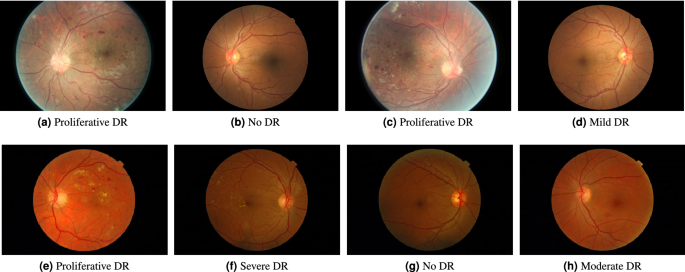

Diabetic retinopathy remains one of the leading causes of preventable vision loss, and medical imaging–based AI has become a powerful tool for early detection. Research in this area has demonstrated that deep learning models can match or exceed human performance under controlled conditions. Yet, deploying these models in real-world clinical workflows reveals challenges that are often invisible at the research stage.
One of the most immediate challenges is data variability. Retinal images collected across different clinics, camera devices, and acquisition protocols can differ significantly in quality, resolution, illumination, and noise. Models trained on standardized datasets frequently struggle when exposed to this diversity. Addressing this gap requires architectural robustness, careful preprocessing strategies, and validation across heterogeneous data sources rather than reliance on a single benchmark dataset.
Explainability is another critical requirement in medical imaging systems. Clinicians need to understand not only a model’s prediction, but also the visual reasoning behind it. Heatmaps, feature localization, and confidence scoring become essential components of the system rather than optional research artifacts. Without transparent decision support, even highly accurate models face resistance in clinical adoption.
Regulatory and compliance considerations further shape system design. In healthcare environments, model updates cannot be treated as routine software changes. Version control, traceability of training data, and reproducibility of results are essential for auditability. In practice, this means that AI models for diabetic retinopathy must be embedded within carefully governed pipelines that balance innovation with patient safety and regulatory accountability.
Perhaps the most valuable insights emerge after deployment. Real-world feedback often reveals edge cases such as rare retinal pathologies, imaging artifacts, or population-specific patterns that were underrepresented in the original training data. These observations frequently drive new research questions, closing the loop between clinical practice and academic investigation.
Translating diabetic retinopathy AI research into production medical imaging systems is not simply an engineering exercise. It is an extension of the research process itself, where models are continuously tested against reality. I believe that progress in this space will increasingly depend on researchers who can navigate both rigorous algorithmic development and the practical constraints of clinical deployment.

Venkata Kotam Raju Poranki is an internationally recognized researcher, innovator, and technology leader specializing in artificial intelligence, healthcare informatics, and enterprise systems optimization. With over 20+ years of professional experience spanning the United States and India, he has led pioneering work in AI-driven diagnostic tools and 340B healthcare systems that serve underprivileged and indigenous populations.
Mr. Poranki began his career as a Technology Lead at Metaminds, before advancing into complex healthcare and financial technology domains at Prime Technology Group. Between 2007 and 2019, he architected large-scale, AI-powered 340B program solutions, directly contributing to the modernization of pharmacy inventory control, patient qualification systems, and regulatory compliance engines. From 2019 to 2021, he spearheaded research training and product localization efforts in India, helping grow a sustainable pipeline of talent to continue expanding these innovations globally.
He currently holds a critical leadership role at Zions Bancorporation in the U.S., where he integrates AI into risk analysis and digital health initiatives. Mr. Poranki is the author of several peer-reviewed journal articles published in Springer, IEEE, and other respected venues. His patented AI-based diabetic retinopathy diagnostic system, CEFNet, has demonstrated over 99% accuracy and has been hailed as a breakthrough in early-stage blindness prevention.
In addition to his research and development work, Mr. Poranki is a peer reviewer for Scientific Reports and Signal, Image and Video Processing, and he serves as the Vice President of IEEE Young Professionals. His work reflects a deep commitment to technological innovation with meaningful social impact.
Follow the Topic
-
Scientific Reports
An open access journal publishing original research from across all areas of the natural sciences, psychology, medicine and engineering.

Related Collections
With Collections, you can get published faster and increase your visibility.
Cancer Prevention and Control
Publishing Model: Hybrid
Deadline: Feb 19, 2027
Healthy Aging
Publishing Model: Open Access
Deadline: Dec 31, 2026