From Rejection to Publication: What My First Journal Journey Taught Me
Published in Social Sciences and Civil Engineering
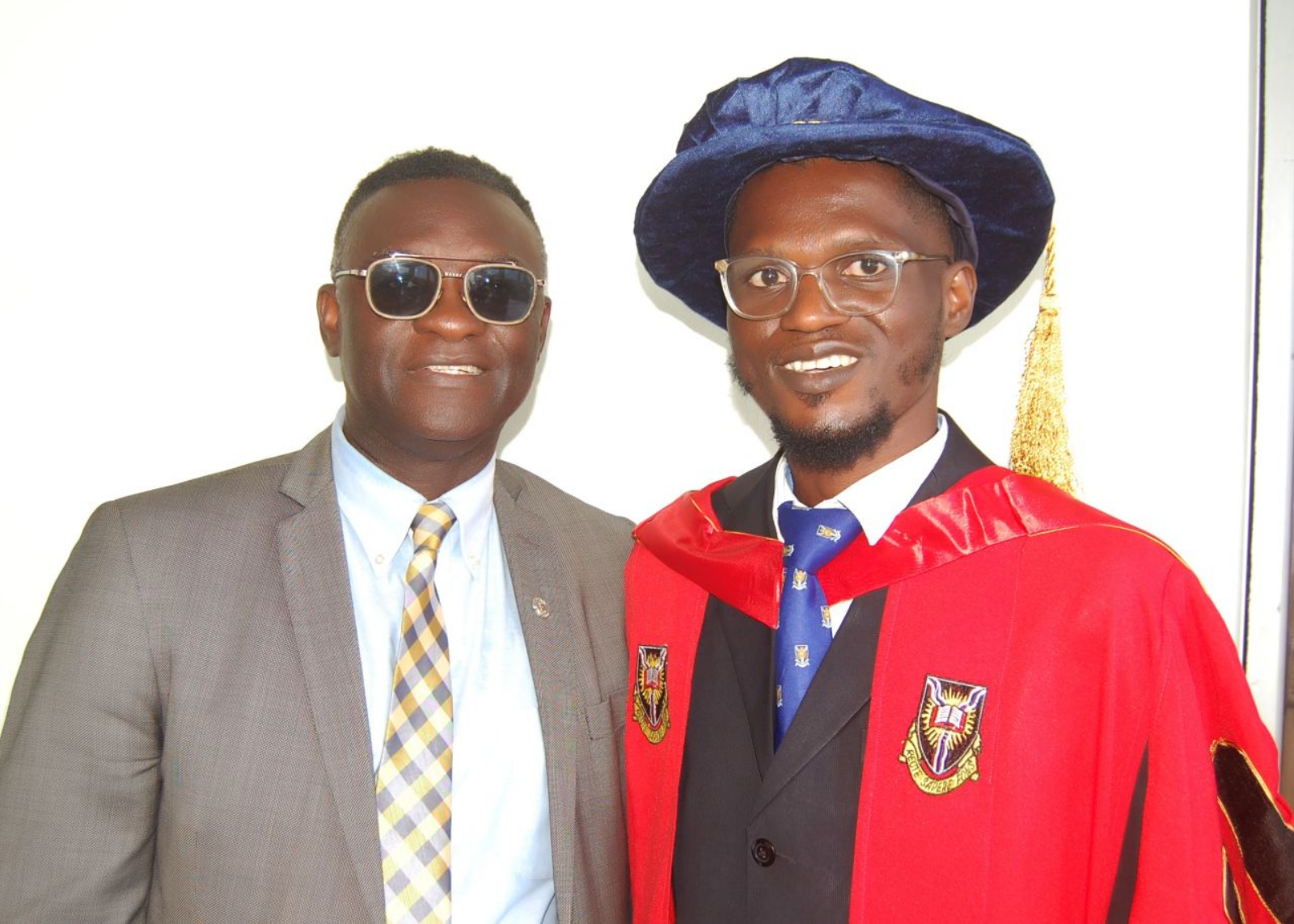
When I began my academic career at Covenant University in 2025, I quickly encountered a reality that many early-career researchers understand: the pressure to publish in reputable, Scopus-indexed journals.
I had recently completed my Ph.D., but I had not yet experienced firsthand the peer-review process in reputable international journals. So, like many researchers at the beginning of their careers, I was eager to publish my work and establish myself in the academic community.
One of the manuscripts I developed during this period was based on research I had begun writing in 2020/2021. However, getting the work published turned out to be a much longer journey than I had anticipated.
The rejection phase
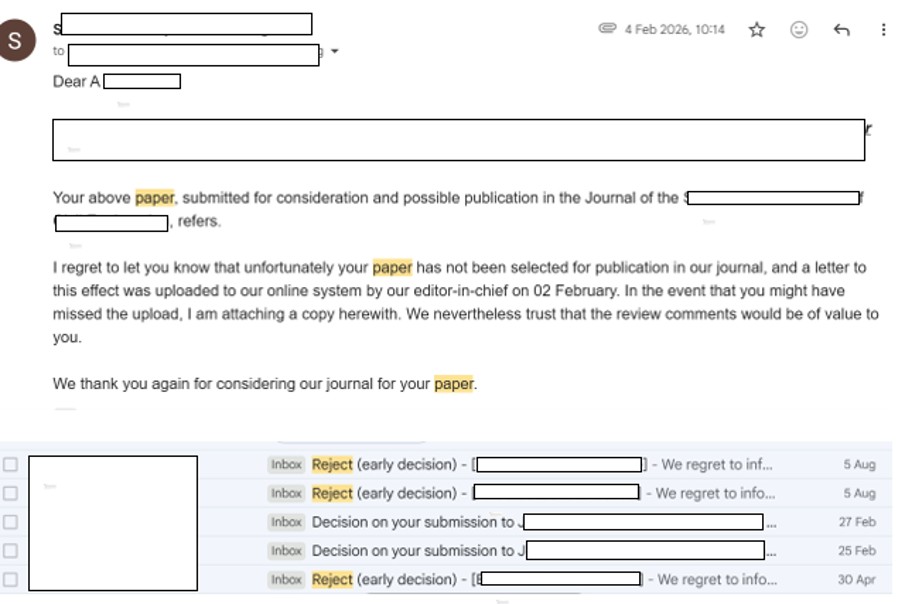
I initially submitted an earlier version of the manuscript to a journal around December 2025 or early 2026. It was rejected. I subsequently submitted it to several other Scopus-indexed journals, but the manuscript continued to face rejection.
At some point, the repeated rejection became more than editorial decisions. They forced me to reflect on the quality of my work and my approach to scientific publishing.
I began asking myself some difficult questions. What was missing from the manuscript? Was the problem a mismatch between the paper and the journals I had selected, or did the work itself need substantial improvement? How could I transform the manuscript from something I wanted to publish into a study that made a clearer and more convincing contribution to literature?
These questions marked a turning point.
Instead of continuing to submit essentially the same manuscript to different journals, I decided to reassess the work more fundamentally. I revisited the research framing, strengthened explanation of its novelty, improved the analysis, refined the methodology and worked to communicate the scientific contribution more clearly.
Learning through peer review
The manuscript eventually reached Discover Concrete and Cement, a Springer Nature journal. This time, it proceeded to peer review.
The reviewers raised substantial questions concerning the novelty, experimental design, statistical modelling, optimisation, variability, interpretation of durability, field validation, economic analysis and limitations of the study.
Initially, receiving extensive reviewer comments was intimidating. However, I gradually began to understand that critical reviews are not necessarily obstacles to publication. When approached constructively, they can become an important part of the process through which research improves.
I worked through the comments systematically. Some required additional analysis; others required rewriting or a clearer explanation of the methods. Several prompted me to acknowledge limitations that I had previously overlooked. I also had to reconsider how I presented the contribution and significance of the findings.
The manuscript underwent substantial revision. By the time the paper was accepted, I could see how much the work had developed from its earlier versions.
The experience taught me that a manuscript should not be treated as a finished product simply because the initial research and writing have been completed. It must also withstand critical examination, and the author must be willing to respond thoughtfully to that examination.
A Personal lesson in research ownership
There was another important lesson during this journey: learning to take greater ownership of my research.
At one point, I felt the pressure to find additional authors or explore ways of accelerating the publication process. My supervisor and co-author, Professor Abel O. Olorunnisola, helped me step back and reflect on the kind of researcher I wanted to become.
His guidance encouraged me to focus on the intellectual and analytical development of the manuscript rather than simply getting it published.
I came to appreciate the importance of developing my own capacity to identify weaknesses, improve analyses, respond to reviewers and defend the scientific contribution of my work, while benefiting from the guidance and experience of my supervisor.
This became one of the most valuable aspects of the entire experience.
The acceptance
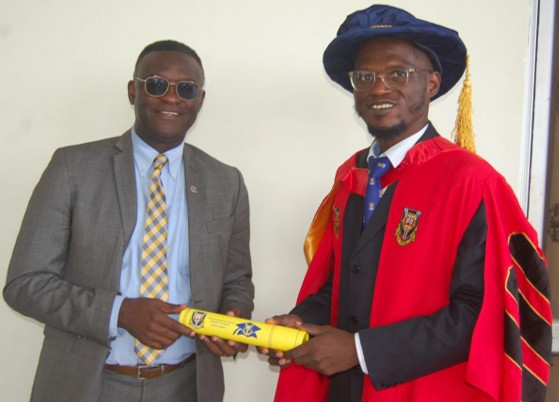
On 29 September 2026, I received the news that the final version of my article had been published in Discover Concrete and Cement.
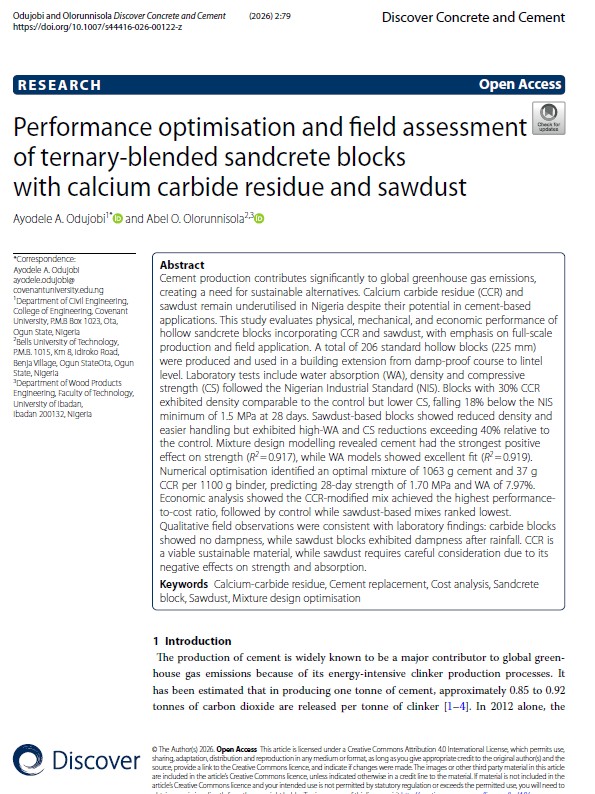
The paper titled:
Performance optimisation and field assessment of ternary-blended sandcrete blocks with calcium carbide residue and sawdust
DOI: 10.1007/s44416-026-00122-z
The study investigates the use of calcium carbide residue and sawdust in sandcrete blocks, examining their performance and the potential for optimising the resulting material.
Seeing the published article was a significant milestone. However, the achievement meant more to me because of everything that had happened between the early manuscript and the final publication.
Read the full open-access article here:
What I learned
Looking back, I now realised that the most valuable outcome was not simply seeing the word Published beside my research.
I learned to receive criticism without automatically taking it personally. I learned that rejection can provide useful information, although it does not always mean that a manuscript is fundamentally flawed. Sometimes the journal is not the right fit; sometimes the research needs deeper analysis; and sometimes the manuscript requires clearer communication of its contribution.
I also learned that scientific writing is an iterative process. A paper can improve considerably when its author is willing to question earlier assumptions, reconsider interpretations and respond carefully to constructive criticism.
Most importantly, I began to understand that publishing is not merely about securing acceptance. It is about developing the skills and judgement needed to produce increasingly rigorous and useful research.
A message to early-career researchers
To other early-career researchers experiencing repeated rejections, I would offer this advice: do not allow a rejection letter to become a verdict on your potential as a researcher.
Take time to understand the feedback. Examine the journal's scope and expectations. Reassess the methodology, strengthen the analysis and make the contribution clearer where necessary. Seek constructive advice from experienced researchers, and remain willing to improve the work.
My early rejections were frustrating, but they became part of my education as a researcher. They challenged me to look more critically at my own work and helped me understand the demands of publishing in peer-reviewed journals.
The journey also reminded me that academic development takes time. Each manuscript presents an opportunity to improve and each review process can teach us something about our research and ourselves.
Acknowledgements
I am grateful to my supervisor and co-author, Professor Abel O. Olorunnisola, for his guidance throughout this process. I also appreciate the anonymous reviewers whose comments helped strengthen the manuscript and everyone who contributed to the research and fieldwork.
I particularly acknowledge Mr Mubarak A. Muili for his assistance with the costing of materials in Ibadan.
This publication represents one milestone in my academic journey. The learning continues and there is much more research to pursue.
For researchers who have experienced repeated manuscript rejections, what has been the most valuable lesson you learned from the peer-review process?
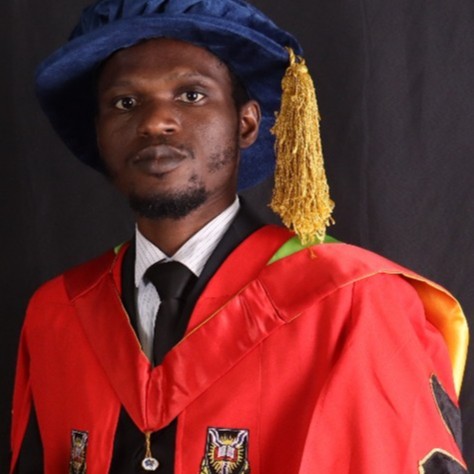
I am a Lecturer in the Department of Civil Engineering at Covenant University, Nigeria. I hold a Ph.D. in Biocomposites Engineering and a Master's degree in Civil Engineering (Structural and Materials option) from the University of Ibadan, alongside a Bachelor's degree in Wood Products Engineering.
My research focuses on sustainable construction materials, waste valorisation and the development of cementitious composites using agricultural and industrial wastes, residues and by-products. I am particularly interested in investigating how these resources can be transformed into useful construction materials with improved mechanical performance, durability and environmental sustainability.
My research interests include sustainable concrete, supplementary cementitious materials, bio-based construction materials, natural fibre-reinforced composites, waste-derived materials, materials characterisation, concrete durability and the optimisation of construction-material performance.
Beyond experimental research, I am interested in connecting universities, industry and government to investigate real-world waste-management challenges and develop practical solutions through resource recovery and circular-economy approaches. I also enjoy mentoring students and developing research projects that connect materials engineering with environmental sustainability.
I welcome opportunities for interdisciplinary research, international collaboration, joint publications and industry-linked research in sustainable construction materials, waste valorisation and cementitious composites.
Follow the Topic
-
Discover Sustainability
A multi-disciplinary, open access, community-focussed journal publishing results from across all fields relevant to sustainability research whilst supporting policy developments that address all 17 of the United Nations Sustainable Development Goals (SDGs).
-
Discover Civil Engineering
This is a fully open access, peer-reviewed journal that supports multidisciplinary research and policy developments across the field of civil engineering.
-
Frontiers of Structural and Civil Engineering
-
Journal of Civil Structural Health Monitoring
-
Discover Concrete and Cement
A fully open access, peer-reviewed journal supporting multidisciplinary research and policy developments across all fields relevant to concrete and cement.





Related Collections
With Collections, you can get published faster and increase your visibility.
Climate Resilient, Smart and Sustainable Futures: Integrated Solutions for a Just and Inclusive Planet
Given the growing concern over the impact of climate change-induced extreme weather events, transformative responses to the climate crisis are required to integrate resilience building, Sustainable Development Goals (SDGs), digital and smart technologies, equitable governance, and sectoral pathways (including heritage conservation, tourism, and aviation). This collection invites transdisciplinary research that advances knowledge on integrated solutions for climate-resilient, smart, and sustainable futures, especially in the contexts of the developing world. This collection is seeking research that bridges theoretical advances, empirical studies, and policy/practice implications with a strong preference for studies that speak to real-world transitions, justice, inclusivity, and cross-sectoral collaboration. Topics of interest for this collection include:
• Climate Impact, Resilience and Mitigation
• Sustainable Development Goals Integration
• Smart change and digital transformations
• Policy, law, and governance
• Heritage, tourism, aviation, and services under climate change
Keywords: Climate Change, SDGs, Smart Change, Climate Resilience, Policy and Governance, Tourism, Nature-Based Solutions
Publishing Model: Open Access
Deadline: Mar 30, 2027
Environmental Management and the SDGs: Innovations, Challenges, and Future Directions
Achieving the Sustainable Development Goals (SDGs) requires innovative and effective approaches to environmental management. This Collection welcomes research that addresses practical solutions, emerging challenges, and new directions in managing environmental resources in support of SDGs such as clean water (SDG 6), clean energy (SDG 7), sustainable cities (SDG 11), responsible production (SDG 12), climate action (SDG 13), and protection of terrestrial and aquatic ecosystems (SDG 14 & 15). We invite articles presenting scientific advancements, applied case studies, policy insights, and assessment tools that help governments, communities, and industries strengthen sustainability and environmental resilience in both developing and developed regions.
Keywords: Sustainable development, Environmental management, Climate resilience, Environmental assessment (EIA/SEA/SIA), Renewable energy, Circular economy, Biodiversity, Municipal solid waste management, Environmental policy and governance
Publishing Model: Open Access
Deadline: Dec 01, 2026