From Transmission to Disability: A Fractional Perspective on HBV Dynamics
Published in Microbiology, Computational Sciences, and Biomedical Research

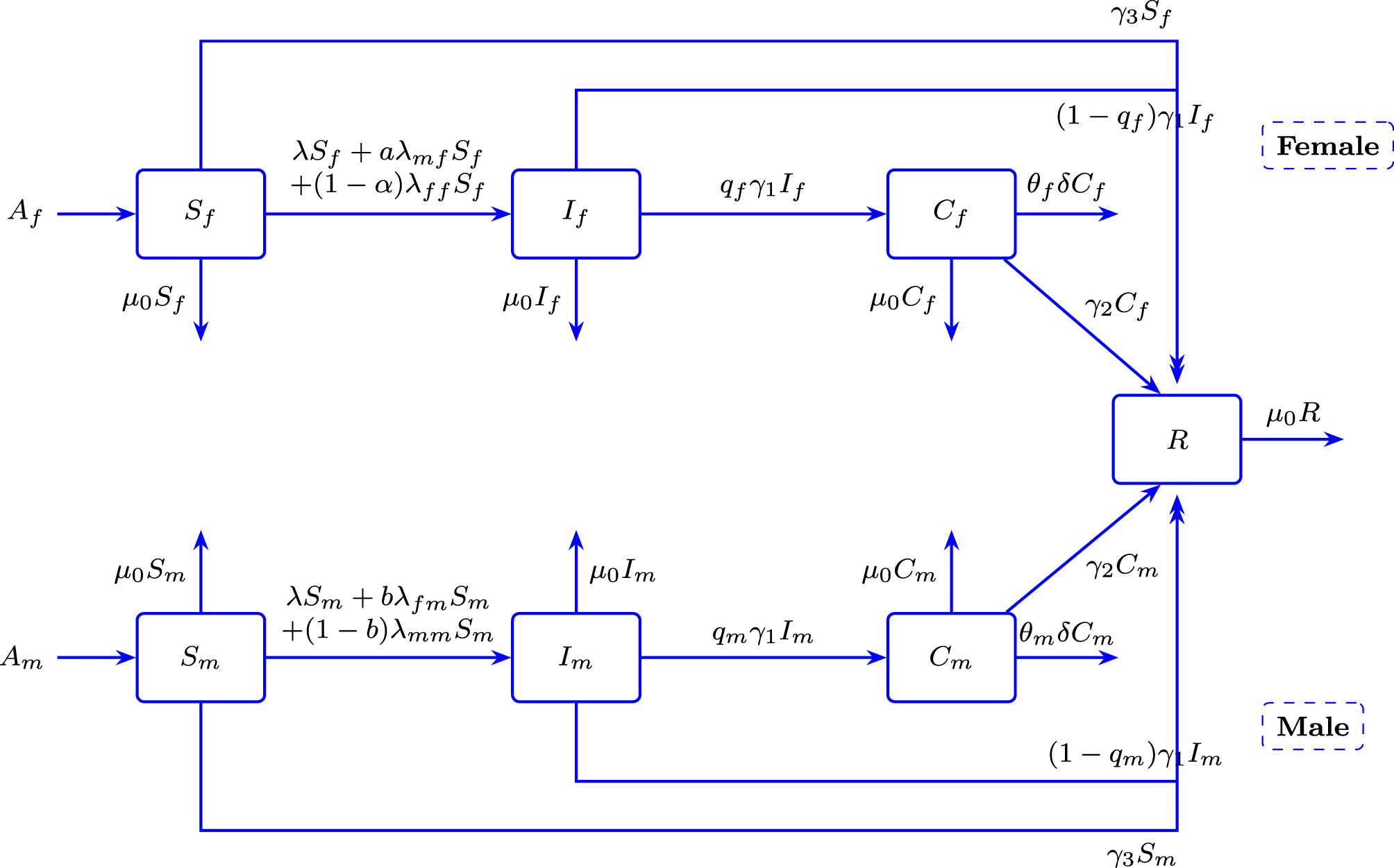

What if infectious disease models systematically underestimate long-term human suffering?
Infectious disease modeling should not stop at transmission dynamics. It must also capture the long-term health consequences that shape real-world impact.
In our recent study published in BMC Infectious Diseases, we developed a fractional-order mathematical framework to model hepatitis B virus transmission across heterogeneous contact structures while explicitly incorporating disability burden into the system.
Unlike classical integer-order approaches, the model integrates memory effects using a Mittag–Leffler kernel, enabling a more realistic representation of disease progression and persistence over time.
A key contribution of this work is the introduction of disability-aware parameters that quantify long-term functional impairment among infected individuals. By incorporating metrics such as Years Lived with Disability and Disability-Adjusted Life Years, the model connects epidemiological dynamics with measurable health outcomes.
Through analytical and numerical investigations, including reproduction number analysis and sensitivity assessment, the results highlight the critical role of vaccination, transmission behavior, and carrier dynamics in shaping both infection spread and long-term disability burden.
This work contributes to a growing research direction that integrates mathematical modeling, artificial intelligence, and public health to support predictive, data-driven healthcare strategies.

Bridging engineering, artificial intelligence, and health systems, Prof. Kamel Guedri develops advanced computational frameworks to model complex physical and biological phenomena with real-world impact.
Prof. Kamel Guedri is a Full Professor of Mechanical Engineering at Umm Al-Qura University, Saudi Arabia. His research lies at the intersection of advanced heat transfer, multi-component nanofluids, and AI-assisted computational modeling for complex thermal and biomedical systems.
He specializes in the thermophysical characterization and numerical modeling of hybrid, tri-hybrid, and tetra-hybrid nanofluids, with a particular focus on entropy generation, non-Newtonian fluid behavior, and energy-efficient thermal management. His work integrates high-fidelity simulations with machine learning techniques to enhance prediction accuracy and optimize system performance.
A defining direction of his recent work lies in extending mathematical modeling beyond traditional boundaries. It incorporates memory-driven fractional dynamics and disability-aware epidemiological frameworks to better quantify long-term health outcomes. His contributions include integrating disability burden metrics such as DALYs and YLDs into infectious disease models, enabling a more comprehensive understanding of disease impact and supporting predictive, data-driven healthcare strategies.
Prof. Guedri leads and contributes to interdisciplinary research addressing real-world challenges in energy systems, biomedical engineering, and smart environments, including high-density and extreme scenarios such as Hajj and crowd-related systems.
With over 300 peer-reviewed publications and an h-index of 48, he actively collaborates on projects that bridge engineering, artificial intelligence, and societal applications. His research aims to advance sustainable, intelligent, and high-performance systems for next-generation engineering and health technologies.
Follow the Topic
-
BMC Infectious Diseases
This journal is an open access, peer-reviewed journal that considers articles on all aspects of the prevention, diagnosis and management of infectious and sexually transmitted diseases in humans, as well as related molecular genetics, pathophysiology, and epidemiology.

Related Collections
With Collections, you can get published faster and increase your visibility.
Infectious diseases in pregnancy
BMC Infectious Diseases invites submissions for a Collection on Infectious diseases in pregnancy.
Infectious diseases during pregnancy represent a critical area of concern for maternal and fetal health. Infections such as syphilis, HIV, and Zika virus can have severe implications for both the mother and the developing fetus, leading to complications such as congenital infections, vertical transmission, and adverse pregnancy outcomes. Understanding the mechanisms of maternal infections and their potential impacts on fetal development is vital for optimizing prenatal care and improving health outcomes. This Collection seeks to explore the latest research in this field, focusing on the complexities and challenges associated with infectious disease management in pregnancy.
Addressing infectious diseases in pregnancy is essential not only for safeguarding maternal health but also for preventing long-term effects on child health and development. Advances in prenatal screening and diagnostic techniques have improved our ability to detect and manage infections, enabling timely interventions that can significantly reduce risks. Furthermore, increased awareness and research into gestational infections have led to better guidelines for healthcare providers, fostering a more proactive approach to managing maternal-fetal health during pregnancy. Continued research in this field could lead to further advancements in treatment and prevention, including vaccines, biomarkers, and screening.
We invite clinicians and researchers in infectious disease management, obstetrics, public health, immunology, epidemiology, maternal-fetal medicine, and related fields to contribute original research articles on topics including but not limited to:
- Maternal infections and fetal outcomes
- Congenital infections and their management
- Vertical transmission of infectious agents
- Advances in prenatal screening techniques
- Perinatal infections: risks and interventions
This Collection supports and amplifies research related to SDG 3: Good Health and Well-being.
All manuscripts submitted to this journal, including those submitted to collections and special issues, are assessed in line with our editorial policies and the journal’s peer review process. Reviewers and editors are required to declare competing interests and can be excluded from the peer review process if a competing interest exists.
Publishing Model: Open Access
Deadline: Jul 30, 2026
Hepatitis virus infections and treatment
BMC Infectious Diseases invites submissions for a Collection on Hepatitis virus infections and treatment.
Hepatitis virus infections—including types A, B, C, D, and E—remain a significant global public health concern, collectively affecting hundreds of millions of people and contributing to a wide spectrum of liver-related diseases. These range from acute hepatitis and chronic liver inflammation to cirrhosis and hepatocellular carcinoma. Each hepatitis virus presents unique challenges in terms of transmission, disease progression, and treatment, with varying impacts across different regions and populations.
While hepatitis C has seen transformative progress with the development of Direct-Acting Antivirals (DAAs), hepatitis B continues to pose challenges due to its chronic nature and the need for lifelong management. Hepatitis A and E, typically transmitted via the fecal-oral route, are preventable through improved sanitation and vaccination, yet outbreaks still occur in resource-limited settings. Hepatitis D, which only occurs in conjunction with hepatitis B, adds complexity to diagnosis and treatment strategies.
Recent advances in diagnostics, therapeutics, and public health interventions have improved outcomes for many affected individuals. However, disparities in access to care, limited awareness, and gaps in screening and vaccination programs hinder global efforts to eliminate viral hepatitis as a public health threat. Continued research is essential to develop more effective prevention strategies, enhance treatment protocols, and understand the epidemiological and clinical nuances of each hepatitis virus. This Collection welcomes research that explores:
- Innovations in antiviral therapies across hepatitis types
- Epidemiology and transmission dynamics of hepatitis A–E
- Vaccine development and implementation strategies
- Novel diagnostic tools for acute and chronic hepatitis
- Public health approaches to hepatitis prevention and control
- Clinical implications of co-infections (e.g., HBV/HDV)
This Collection supports and amplifies research related to SDG 3: Good Health and Well-being.
All manuscripts submitted to this journal, including those submitted to collections and special issues, are assessed in line with our editorial policies and the journal’s peer review process. Reviewers and editors are required to declare competing interests and can be excluded from the peer review process if a competing interest exists.
Publishing Model: Open Access
Deadline: Jul 20, 2026


Please sign in or register for FREE
If you are a registered user on Research Communities by Springer Nature, please sign in
A powerful step by Dr. Kamel Guedri that connects disease transmission with real human impact, pushing epidemiological modeling toward more meaningful, outcome-driven insights.