From Waste Crisis to Circular Opportunity: Rethinking Municipal Solid Waste Governance in South Asia
Published in Earth & Environment and Law, Politics & International Studies






Municipal solid waste management has become one of the defining urban governance challenges of our time, especially in South Asia. Rapid urbanization, population growth, weak municipal infrastructure, and fragmented institutional arrangements have made it increasingly difficult for cities to manage rising volumes of waste effectively. A recent review article on urban governance and circular economy pathways for municipal solid waste management in South Asia offers a timely and important contribution to this debate.
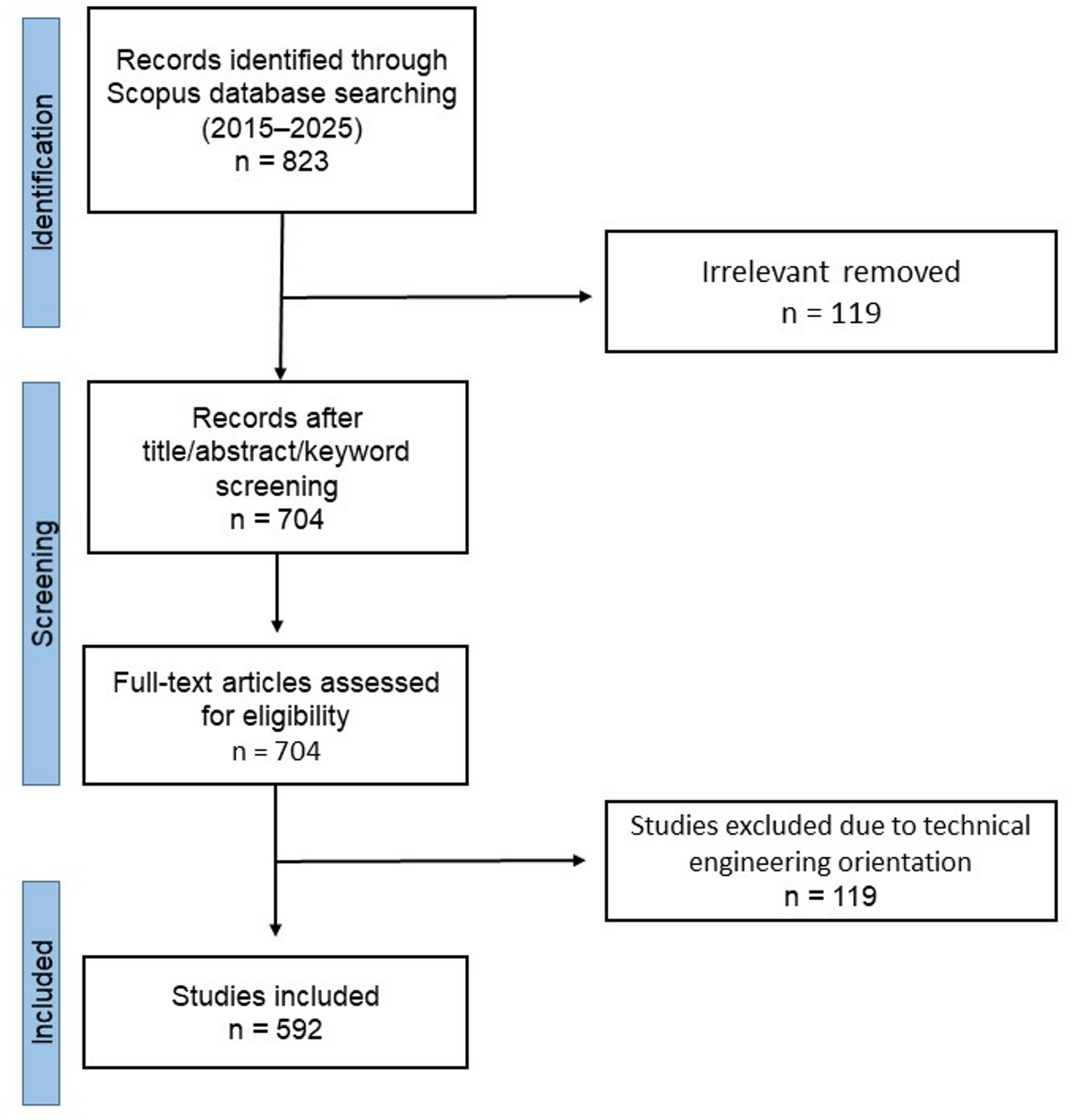
The article is based on a systematic and bibliometric review of 592 peer-reviewed studies published between 2015 and 2025. One of its clearest findings is that scholarly attention to this issue has grown rapidly over the past decade, increasing from fewer than 30 publications in 2015 to more than 130 in 2024. This sharp rise reflects a broader recognition that waste management is not just a technical issue. It is also closely tied to governance, sustainability, climate resilience, and public health.
A major insight from the review is that India, Bangladesh, and Pakistan account for more than 80% of municipal solid waste generated in South Asia, yet recycling rates remain low and open dumping is still widespread. The article argues that this is not simply the result of inadequate technology. Instead, it points to deeper structural issues such as weak policy coordination, limited financing, poor institutional capacity, and a lack of integration between national, municipal, and community-level actors.
The study also shows that the research landscape in South Asia is uneven. India and Bangladesh dominate publication output and institutional contributions, while countries such as Bhutan, Maldives, and Afghanistan remain underrepresented. This imbalance mirrors broader regional inequalities in research capacity, waste data systems, and governance attention. As a result, some of the countries facing unique waste management challenges are still not adequately reflected in the evidence base.
Another important contribution of the article is its discussion of a shifting policy and research agenda. Earlier work focused more heavily on disposal, landfills, and technical treatment methods. In contrast, recent studies increasingly emphasize circular economy approaches such as recycling, composting, waste-to-energy systems, stakeholder participation, and the inclusion of informal waste workers. This shift is significant because it reframes waste not as an end-of-pipe problem, but as part of a broader urban system tied to resource recovery, environmental protection, and livelihoods.
The central message of the article is clear: South Asia must move beyond fragmented and disposal-oriented waste systems toward governance models that are inclusive, integrated, and circular. That means better policy coherence, stronger local institutions, recognition of informal sector contributions, and greater alignment with sustainability goals such as SDG 11 and SDG 12. For policymakers, researchers, and urban practitioners alike, this review offers both a diagnosis of the current crisis and a roadmap toward a more resilient and sustainable future.
Full Article References
Hossain, I., Haque, A. A systematic and bibliometric review on urban governance and circular economy pathways for municipal solid waste management in South Asia. Discov Cities 3, 13 (2026). https://doi.org/10.1007/s44327-026-00195-2
Follow the Topic
-
Discover Cities
This is a fully open access, peer-reviewed journal that supports multidisciplinary research and policy developments across the field of urban science.

Related Collections
With Collections, you can get published faster and increase your visibility.
Cities, Infrastructure and Health
City infrastructure shapes health and health inequities in myriad interdependent ways: cities are drivers of economic policy and employment; they are sites of excellence, for example, education and healthcare, but also of crime and exploitation. Mobility within and between cities and regions is critical for economic development but is also responsible for air pollution, chronic disease, and road traffic injuries. The voracious demands of urban populations for housing, energy, food, and other resources bind cities to their peri-urban and rural neighbors, and across the world environmentally, economically, and socially. These and other examples shape physical health, mental well-being, safety, and equity.
While infrastructure is defined as the undergirding of society, the costs and benefits of revitalizing old or creating new infrastructure tend to narrowly focus on economics rather than how cities and regions function and grow. The climate crisis is placing massive pressure on existing and new infrastructure to both mitigate and adapt to a newer more volatile world. The COVID-19 pandemic profoundly tested (as will future pandemics) the function and capacity of city infrastructure globally through connecting infrastructure (especially transport but also the flow of finance) and locally where critical infrastructure services and their workforce were both the cause and solution to the spread of the pandemic.
The percentage of the global urban population is growing steadily and by 2050 is expected to reach 68%, meaning scholarship to drive decision-making, politics, and policy is urgent. Taking a health lens to infrastructure provides an ever deeper understanding of the links between cities as producers of healthy societies and a healthy planet. Influencing city infrastructure to protect and promote the health of the public is wholly political, but the research into the systemic policy and practice connections between city infrastructure and the creation of healthy built environments remains underdeveloped.
This Collection invites papers that capture innovations in city infrastructure policies and practices. The innovations can range from ways that information is collected and used, to activities to develop capacity and share knowledge within and between cities, to the interrogation of policy-making and political institutions. Given the ubiquitous interconnected nature of this challenge, we encourage papers with a global south lens. Given city and infrastructure policy and practice is essentially transdisciplinary we encourage papers that span disciplines. We aim for a collection of papers that foster policy innovation by providing a mix of empirical rigour and critical depth.
Keywords:Cities, Infrastructure, Practice, Policy, Health, Equity, Wellbeing, Urban, Planning, Institutions, Governance, Power, Evidence
Publishing Model: Open Access
Deadline: Jun 01, 2026
Urban Renewal for Social Equality and Sustainability: Planning, Design and Governance
Cities globally are undergoing unprecedented transformation. Urban renewal, once primarily driven by economic growth and physical infrastructure upgrades, now faces the critical imperative of addressing deep-seated social inequalities and the escalating climate crisis. Traditional models of redevelopment have often resulted in gentrification, displacement of vulnerable communities, and the erosion of cultural heritage, exacerbating rather than alleviating social stratification. Concurrently, the urgency of the climate emergency demands that urban regeneration integrates sustainable practices, enhances resilience, and promotes low-carbon living.
This collection argues that the goals of social equality and environmental sustainability are not merely complementary but are fundamentally intertwined in the pursuit of just and resilient cities. We seek to move beyond siloed approaches to explore the integrated and often contentious intersections of planning, design, and governance. How can urban renewal be reconceptualized and implemented as a vehicle for fostering inclusive communities, redistributive benefits, and ecological restoration?
Scope and Topics
We invite theoretical, empirical, and policy-oriented contributions that critically examine the nexus of equity and sustainability in urban renewal. We are particularly interested in papers that address, but are not limited to, the following themes:
Planning for Inclusive Futures: Critical analyses of planning policies and instruments (e.g., participatory planning, inclusionary zoning, community land trusts) that can prevent displacement and ensure affordable housing, access to green spaces, and social infrastructure in renewed areas.
Design for Equity and Ecology: Explorations of architectural and urban design strategies that promote social interaction, accessibility, cultural diversity, and bioclimatic performance. This includes research on nature-based solutions, circular economy principles in construction, and the design of public spaces as engines of social cohesion.
Cultural Space Protection and Renewal: Investigations into the role of tangible and intangible cultural heritage in urban renewal. We welcome studies on how to protect, adaptively reuse, and revitalize cultural spaces—from historic buildings and indigenous sites to community theaters and informal gathering spots—in ways that strengthen community identity, foster social cohesion, and promote sustainable tourism without triggering gentrification.
Governance and Co-Production: Investigations into innovative multi-actor governance models that facilitate meaningful community engagement, co-creation, and collaborative decision-making among residents, private developers, NGOs, and municipal authorities. Papers may explore challenges of power dynamics, accountability, and the scaling of grassroots initiatives.
Critical Case Studies: In-depth evaluations of specific urban renewal projects from around the world that have successfully—or unsuccessfully—navigated the trade-offs and synergies between social equity, sustainability, and cultural vitality.
Justice and Ethics: Theoretical contributions on spatial justice, climate justice, the right to the city, and the ethics of preservation in the context of urban transformation.
Keywords:Urban Renewal; Social Equity; Sustainability; Spatial Justice; Planning; Urban Design; Cultural Heritage; Governance; Gentrification; Climate Resilience; Community Participation
Publishing Model: Open Access
Deadline: Sep 30, 2026
Please sign in or register for FREE
If you are a registered user on Research Communities by Springer Nature, please sign in