From Waste to Resource: Unlocking the Value of Coffee Residues for Healthier Soils
Published in Sustainability and Agricultural & Food Science
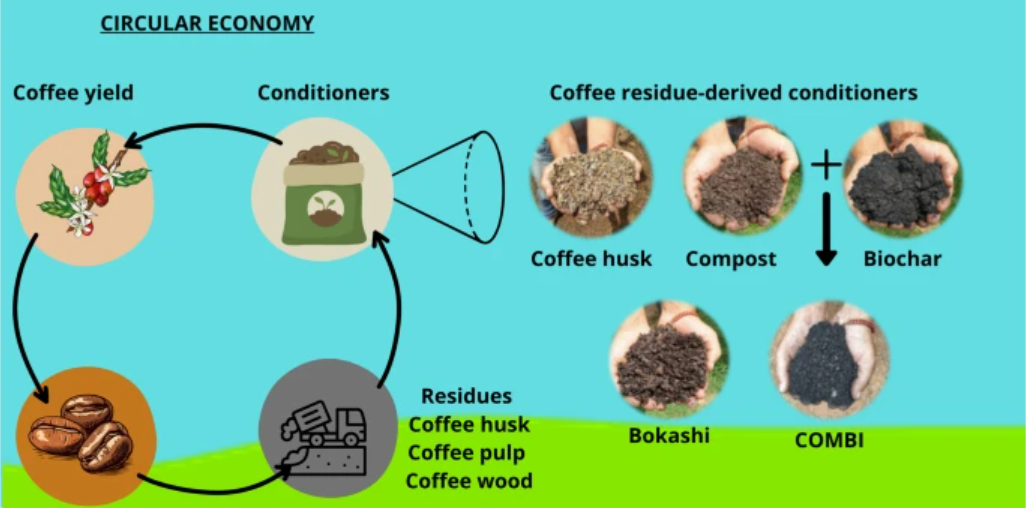
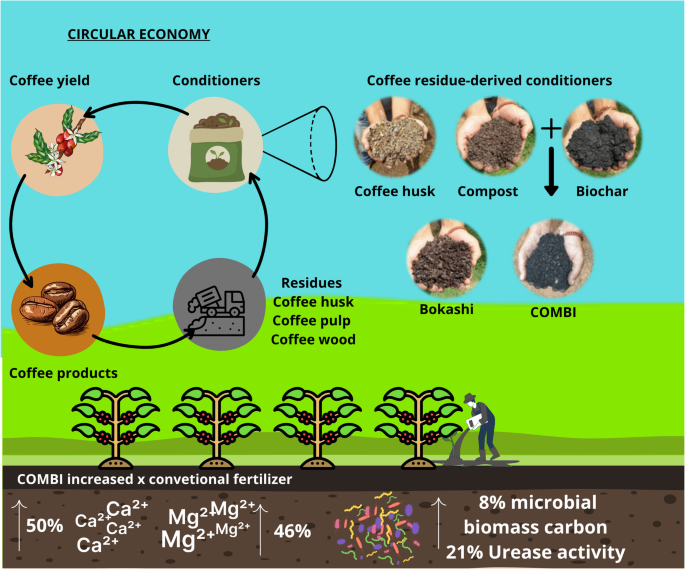

The study explores a simple but powerful idea: what if the “waste” generated in coffee production could become a key resource for building healthier soils? Across the coffee supply chain, large volumes of organic residues—such as husks and pulp—are produced every season. Too often, these materials are treated as a disposal problem. But this research reframes them as an opportunity: a renewable, locally available input that can help close nutrient loops and strengthen agricultural systems.
At the heart of the work is a comparison of different ways to transform these residues into useful soil amendments. Instead of applying raw by-products directly, the study evaluates processed materials such as compost, Bokashi, and biochar. Each method stabilizes the organic matter and enhances its value for crops, turning something potentially harmful into something beneficial. By putting these approaches side by side in real coffee fields, the researchers show not just what works, but how different processing strategies can shape soil outcomes.
What emerges from the results is a clear message: when properly managed, coffee residues can actively improve soil quality. Treated materials contribute to higher organic matter levels, better nutrient retention, and more active soil biology. In other words, they don’t just replace fertilizers—they help rebuild the soil as a living system. This is particularly important in intensively managed systems, where maintaining soil structure and biological function is increasingly challenging.
The broader significance of the study lies in its alignment with the concept of circular agriculture. Instead of relying heavily on external inputs, farms can reintegrate what they already produce, reducing waste and improving efficiency at the same time. This shift is not only environmentally sound—reducing pollution risks and resource losses—but also economically attractive, especially for producers facing rising input costs.
For researchers in different areas of agricultural science, the findings resonate beyond coffee. Many cropping systems generate organic residues with similar characteristics, and the principles demonstrated here—valorization, transformation, and reintegration—can be adapted widely. The study also underscores the importance of looking beyond yield alone, examining how soil health, microbial activity, and nutrient cycling interact to support long-term productivity.
Ultimately, the work reminds us that sustainability in agriculture is often less about introducing entirely new inputs and more about rethinking what we already have. By turning overlooked residues into valuable resources, the study offers a practical pathway toward more resilient, efficient, and regenerative production systems—one that connects soil science, waste management, and agronomy in a compelling and actionable way.
This post was created with the assistance of AI.

Follow the Topic
-
Journal of Soil Science and Plant Nutrition
The Journal of Soil Science and Plant Nutrition is an international, peer reviewed journal devoted to publishing original research findings in the areas of soil science, plant nutrition, agriculture, and environmental science.

What are SDG Topics?
An introduction to Sustainable Development Goals (SDGs) Topics and their role in highlighting sustainable development research.
Continue reading announcement