The animal microbiome as a partner in sustainable food production
Published in Microbiology, Sustainability, and Agricultural & Food Science
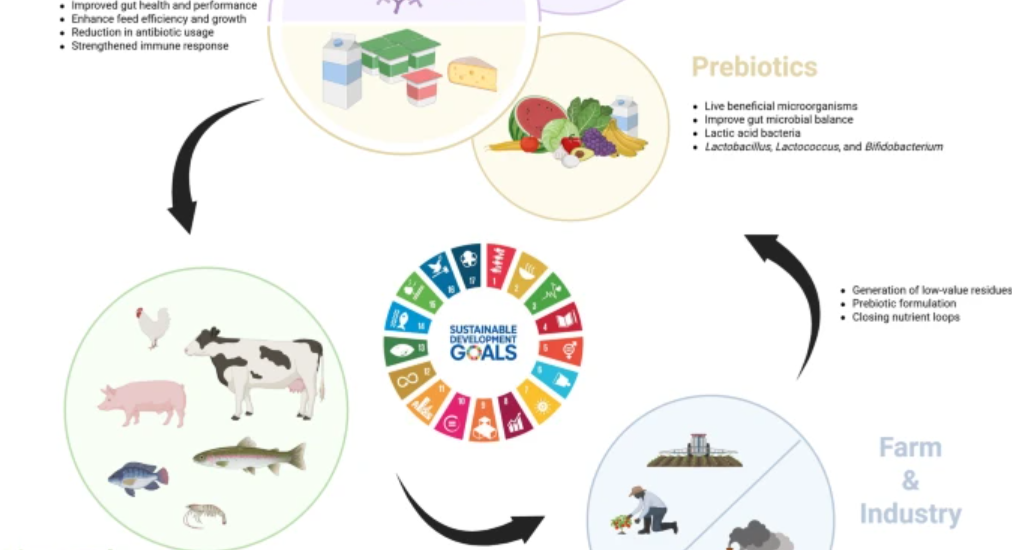


Modern animal production faces a complex challenge: producing more food while reducing environmental impacts, limiting antibiotic use, and responding to growing expectations around animal welfare. In this context, the gut microbiome has become an important area of research, offering new ways to support animal health through nutrition rather than pharmaceutical interventions.
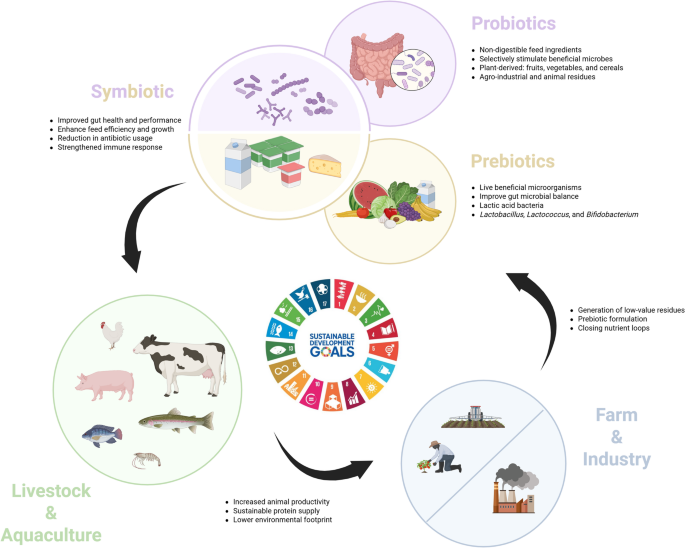
A recent, open access review published in the Brazilian Journal of Microbiology brings together findings from livestock and aquaculture research to examine how prebiotics and probiotics influence animal performance and health. The review covers poultry, swine, cattle, fish, and shrimp production, highlighting how microbiota-targeted strategies are being investigated across very different production systems.
The evidence synthesized by the authors shows that these interventions can help shape gut microbial communities, improve nutrient utilization, strengthen intestinal barrier function, and support immune responses. Across the studies surveyed, researchers have reported improvements in indicators such as weight gain, feed conversion, and resilience to physiological and environmental stressors. The review also discusses their role in reducing the prevalence of pathogens including Salmonella, Escherichia coli, and Vibrio species.
Circular bioeconomy
One aspect that makes this field particularly interesting is its connection with broader sustainability goals. The authors describe how agro-industrial by-products, including fruit and cereal processing residues, can be repurposed as sources of functional ingredients. They also discuss emerging substrates such as the black soldier fly (Hermetia illucens), illustrating how animal nutrition research is increasingly intersecting with circular bioeconomy approaches.
The review also revisits a topic that continues to receive attention worldwide: reducing dependence on antimicrobials in food production. According to the authors, prebiotics and probiotics offer opportunities to support animal health while contributing to efforts aimed at addressing antimicrobial resistance. Rather than presenting these tools as universal solutions, the paper examines the biological mechanisms that may explain their benefits and the conditions under which they are most effective.
Importantly, the authors note that this work is a narrative review rather than a systematic review or meta-analysis. Given the diversity of animal species, production systems, interventions, and outcome measures covered, the article provides an integrative overview of the field rather than a quantitative assessment of effectiveness. Even so, the review offers a valuable perspective on how microbiome-centered nutrition is becoming part of the conversation around the future of sustainable animal production.
Author's note: I used Microsoft Copilot to assist in creating this post.

Follow the Topic
-
Brazilian Journal of Microbiology
This is an international peer-reviewed journal encompassing all fundamental and applied aspects of microbiology.

What are SDG Topics?
An introduction to Sustainable Development Goals (SDGs) Topics and their role in highlighting sustainable development research.
Continue reading announcement