Global Progress, Unequal Gains: Diet and Cancer Burden
Published in Healthcare & Nursing and Cancer
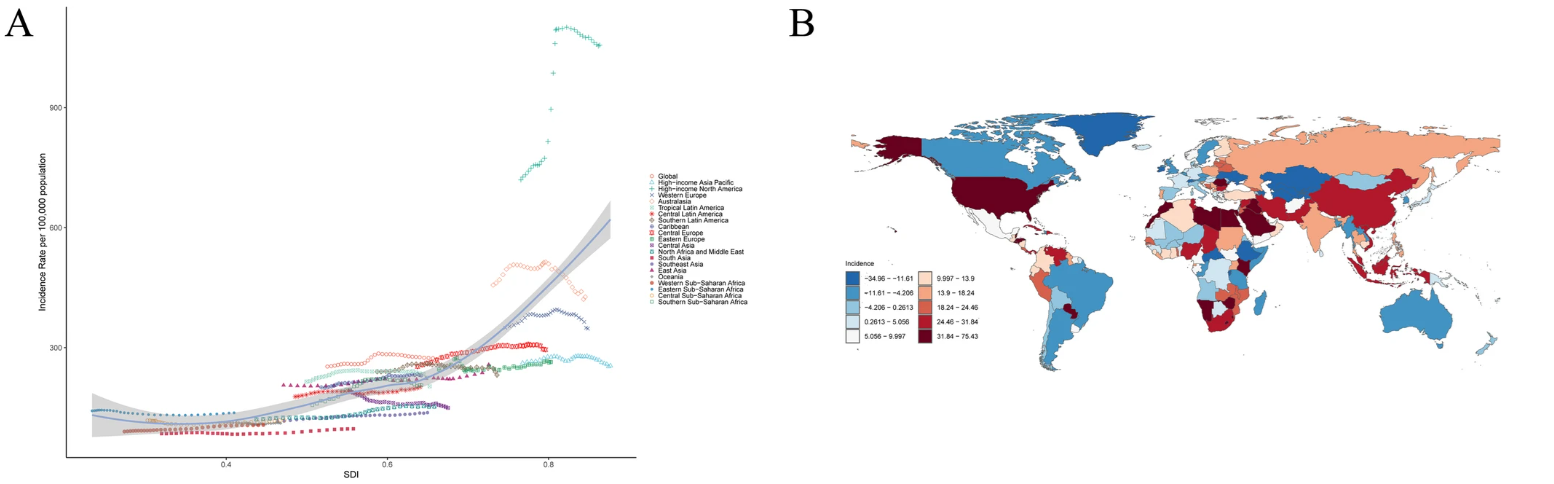

Global cancer trends present an apparent contradiction. Between 1990 and 2021, the age-standardized incidence rate increased, while mortality and disability-adjusted life-year rates declined. These changes suggest progress in reducing fatal and disabling outcomes, but they also conceal substantial differences between countries, regions and population groups.
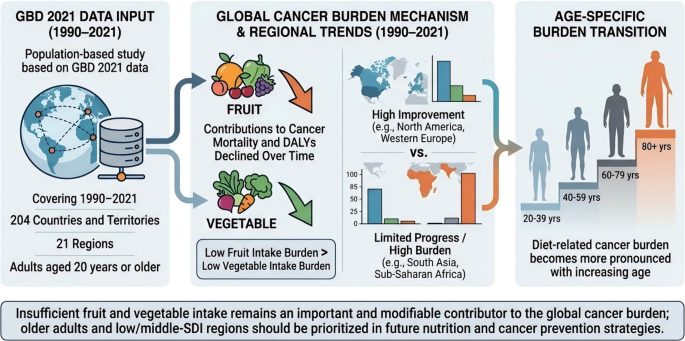
A new study published in Nutrire examines one part of this complex picture: the cancer burden attributable to low fruit and vegetable intake. The authors analyzed Global Burden of Disease 2021 estimates covering 204 countries and territories, 21 regions and five levels of the Socio-demographic Index. Their analysis spans 1990 to 2021 and includes projections of global cancer trends through 2035.
The global figures indicate considerable declines in both dietary risk categories. Cancer mortality attributable to low vegetable intake fell from 1.89 to 0.66 deaths per 100,000 people between 1990 and 2021. The corresponding rate for low fruit intake decreased from 1.30 to 0.77. By 2021, low fruit intake had become the slightly larger of the two contributors to cancer mortality and DALYs at the global level. The study assesses these risks separately, so their estimates should not be added together as a combined dietary effect.
Progress was far from uniform
The burden associated with low fruit intake was especially high in Southern Sub-Saharan Africa and South Asia, while that associated with low vegetable intake was concentrated mainly in Sub-Saharan Africa. Improvements were also less consistent in lower socio-demographic Index (SDI) settings. For example, the cancer disability-adjusted life-year (DALY) rate attributable to low vegetable intake remained relatively high in the low SDI group, declining from 47.54 to 37.33 per 100,000, compared with a decrease from 59.05 to 7.56 in the high-middle-SDI group. Several regional estimates for low vegetable intake had wide uncertainty intervals crossing zero and therefore require cautious interpretation.
The differences extend across age and sex. Diet-attributable cancer burden increased markedly with age, and global mortality and DALY rates associated with both dietary risks were higher among males than females. These patterns support a more differentiated view of nutrition-sensitive cancer prevention, one that considers age, sex, geography and socioeconomic context rather than relying on a single global profile.
The authors project broadly stable global cancer incidence through 2035, alongside continued declines in mortality and DALY rates. These are model-based trajectories rather than precise forecasts. The study is ecological and relies on Global Burden of Diseases-modeled estimates, so it cannot establish that a person’s fruit or vegetable intake caused an individual cancer outcome. It nevertheless shows where diet-attributable burden remains comparatively high and why improving access to affordable, healthy foods should form part of broader cancer-control strategies.
Author's note: I used Microsoft Copilot to assist in creating this post.

Follow the Topic
-
Nutrire
Nutrire publishes rigorous, impactful research that advances human nutrition and food science from molecule to population - translating discovery into clinical practice and public‑health action.

Related Collections
With Collections, you can get published faster and increase your visibility.
Nutrition and Menopause: Strategies for Women’s Health and Well-being in Midlife and Beyond
Scope and objectives
Menopause represents a pivotal stage in women’s lives, characterized by profound hormonal changes that influence metabolism, body composition, bone density, cardiovascular health, and psychological well-being. These physiological transitions often coincide with lifestyle shifts and increased vulnerability to chronic conditions such as osteoporosis, cardiovascular disease, and metabolic syndrome. Nutrition emerges as a cornerstone for mitigating these risks and enhancing quality of life during midlife and beyond.
This Topical Collection aims to provide a comprehensive platform for cutting-edge research and evidence-based strategies that address the intersection of nutrition and menopause. By consolidating knowledge from clinical trials, observational studies, systematic reviews, and innovative interventions, we seek to advance understanding of how dietary patterns, nutrient intake, and lifestyle factors can optimize health outcomes for women during the menopausal transition and postmenopause.
Key objectives include (but are not limited to):
- Exploring Mechanisms: Understanding how hormonal changes interact with nutritional status, metabolism, and gut microbiome composition.
- Evaluating Interventions: Assessing the efficacy of dietary strategies (e.g., Mediterranean diet, plant-based diets, phytoestrogen-rich foods) in alleviating vasomotor symptoms, improving bone health, and reducing cardiometabolic risk.
- Promoting Healthy Aging: Identifying nutritional approaches that support cognitive function, mental health, and physical vitality in midlife women.
- Personalized Nutrition: Investigating nutrigenomics, digital health tools, and tailored dietary plans for individualized care.
- Global and Cultural Perspectives: Examining how cultural dietary practices and socioeconomic factors influence menopause-related health outcomes.
This Topical Collection will serve as a resource for clinicians, dietitians, researchers, and policymakers committed to improving women’s health through nutrition science.
How to submit
Please do not forget to select the collection during the submission process and also to mention the collection in your cover letter.
Publishing model
Nutrire is a hybrid journal: you can publish either in the traditional model (no fees to authors) or open access (an APC applies). More information here.
Publishing Model: Hybrid
Deadline: Ongoing